NASA Science
A Trio of Tropical Cyclones in the Pacific
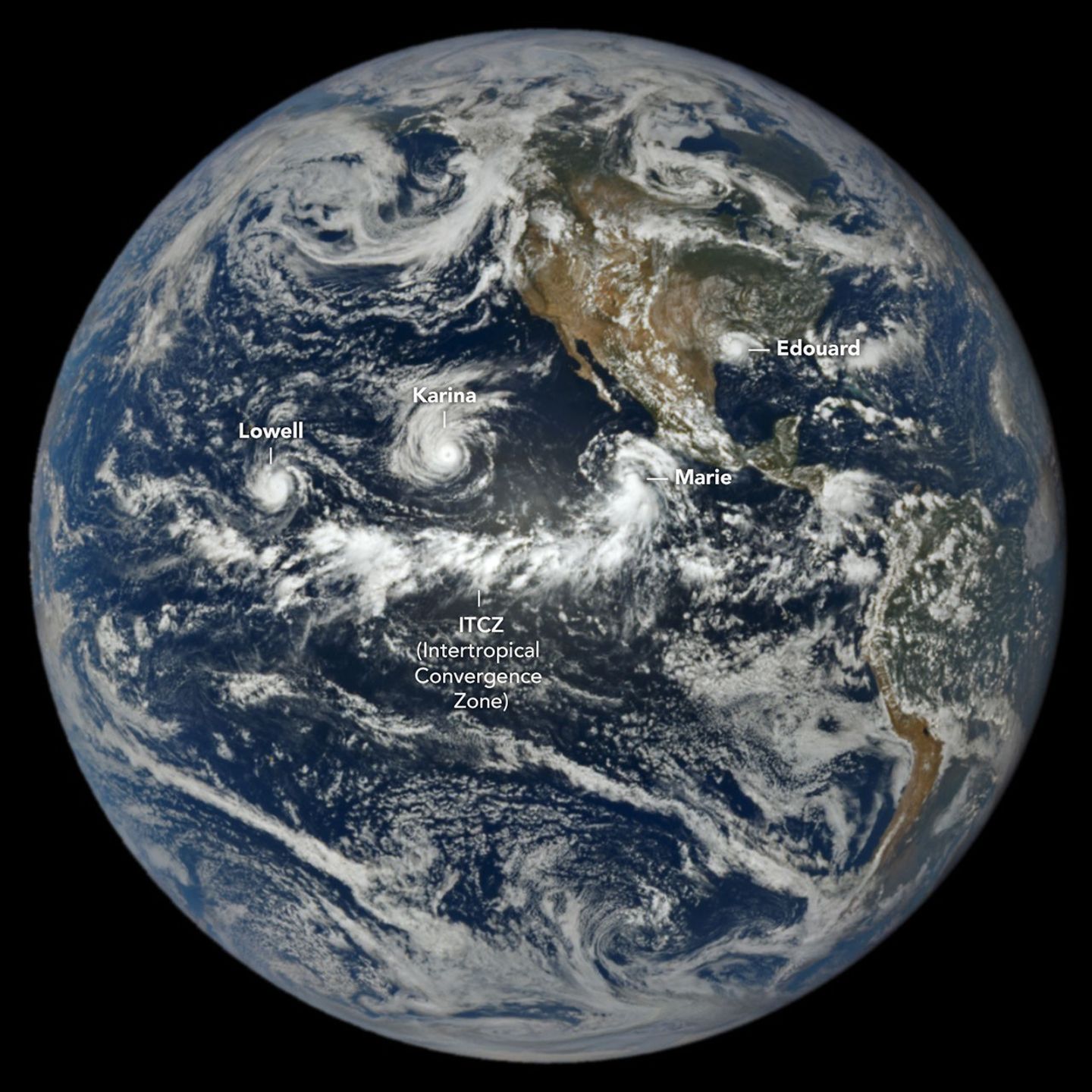
When hurricane forecasters released their seasonal outlooks in spring 2026, the El Niño brewing in the Pacific contributed to predictions of below-normal activity in the Atlantic basin but above-normal activity in the northeastern and central Pacific basins. In early September, near the climatological peak of hurricane season, those spring outlooks were on target, with the eastern Pacific buzzing with activity and the Atlantic notably quiet.
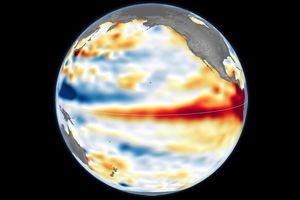
As of September 3, the Northeast Pacific had produced 15 named storms and six hurricanes, well above the norm for that point in the season. The Atlantic basin, meanwhile, laboring under unfavorable wind shear conditions, had produced just five named storms and no hurricanes. El Niño typically enhances hurricane activity in the eastern and central Pacific basins because of the unusually warm water temperatures it brings to those parts of the ocean. It tends to suppress hurricane activity in the Atlantic basin by shifting large-scale circulation patterns in a way that makes it harder to sustain storms there.
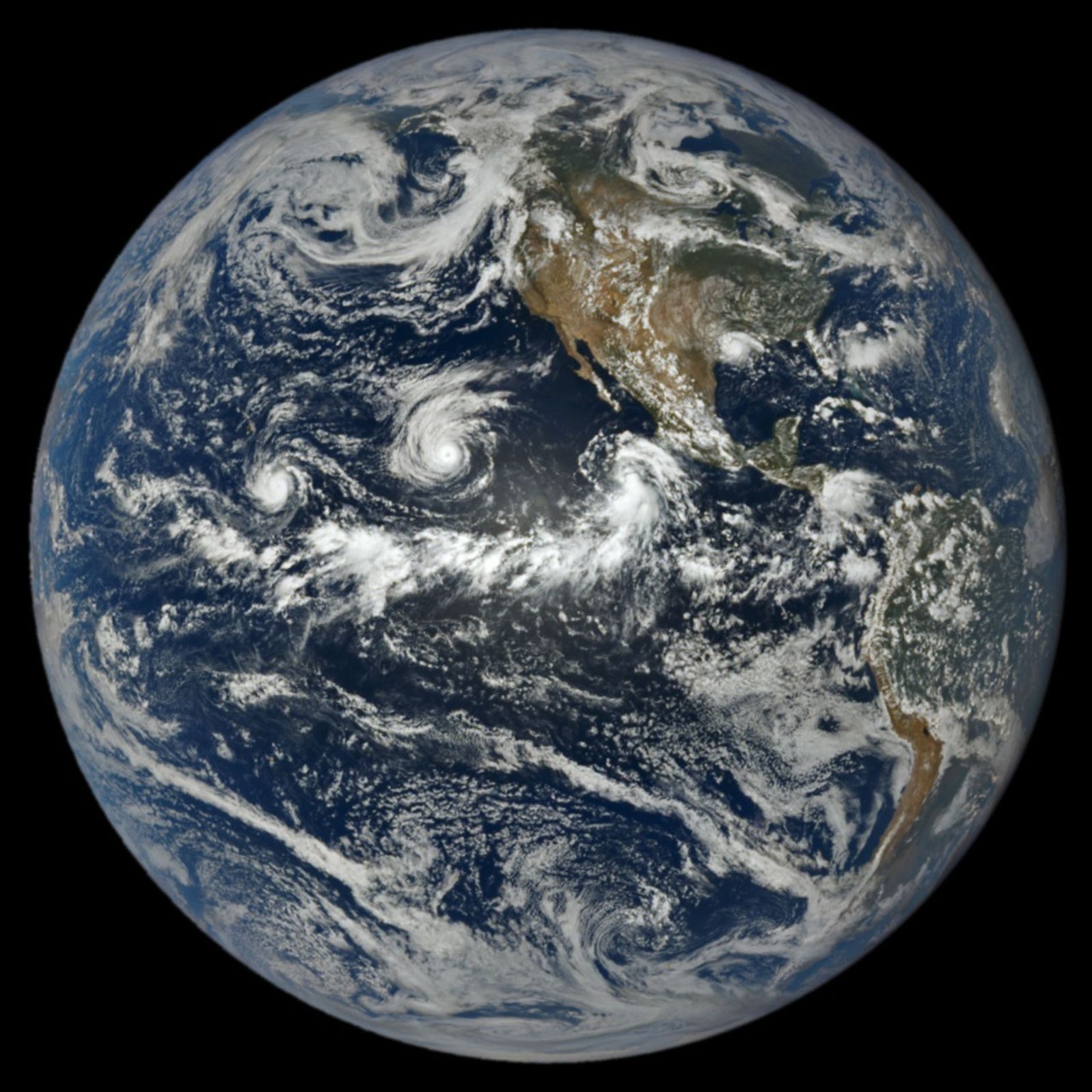
At 1:14 p.m. Pacific Daylight Time (20:14 Universal Time) on September 1, NASA’s EPIC (Earth Polychromatic Imaging Camera) on the DSCOVR (Deep Space Climate Observatory) satellite captured an image of three tropical cyclones churning simultaneously in the Pacific, along with one in the Atlantic. A band of clouds and thunderstorms associated with the Intertropical Convergence Zone (ITCZ) is visible to the south of the storms. The spacecraft was nearly 1 million miles from Earth and just shy of 93 million miles from the Sun when the image was acquired.
The trio of storms in the Pacific were Lowell, Karina, and Marie. Of the three, Lowell became the strongest, with winds reaching category 5 strength for several hours on September 2. Around the same time, Karina, spinning a few thousand kilometers to the east, achieved category 4 strength, a rare case of category 4 and 5 hurricanes occurring simultaneously in the area. Marie, spinning southwest of Baja California, was still a tropical storm when the image was acquired but was strengthening as it moved northwest.
In the Atlantic, Tropical Storm Edouard was visible to EPIC over Louisiana and Texas, shortly after the short-lived storm made landfall. It brought torrential rains and strong winds that downed trees and power lines. Some areas received 15 to 24 inches (38 to 61 centimeters) of rain, according to National Weather Service meteorologists.
As of September 3, the Atlantic basin’s total accumulated cyclone energy (ACE) index was 4.4, about 9 percent of normal for that date, according to statistics compiled by Colorado State University meteorologists. Meanwhile, the Northeast Pacific basin’s ACE was 130, about 50 percent above normal. The ACE index incorporates both the intensity and longevity of storms, making it easier to compare individual storms and seasons.
Several NASA Earth-observing platforms provide data that can aid in emergency preparedness before landfall and damage assessment and response afterward. Use the “Events” tab on NASA’s Worldview browser to track current hurricanes and explore related NASA data products.
NASA Earth Observatory image by Lauren Dauphin, using data from DSCOVR EPIC. Story by Adam Voiland.
References & Resources
- AccuWeather (2023, June 6) Experts say this metric is a more reliable way to quantify the true strength of hurricane season. Accessed September 3, 2026.
- Colorado State University (2026, September 3) Northern Hemisphere Tropical Cyclone Activity for 2026. Accessed September 3, 2026.
- NASA Earthdata, Hurricanes. Accessed September 3, 2026.
- NASA, El Niño. Accessed September 3, 2026.
- NASA Space Place (2025, April 3) How Do Hurricanes Form? Accessed September 3, 2026.
- National Hurricane Center (2026, September 3) Top News of the Day. Accessed September 3, 2026
- Newsweek (2026, September 2) El Niño is Reshaping this Year’s Hurricane Season. Accessed September 3, 2026.
- NOAA (2026, June 2) How does El Niño Impact Atlantic Hurricane Season. Accessed September 3, 2026.
- NOAA (2026, May 21) NOAA 2026 Eastern Pacific Hurricane Season Outlook. Accessed September 3, 2026.
- Yale Climate Connections (2026, September 2) Edouard delivers an outsized flash-flood punch to eastern Texas. Accessed September 3, 2026.
You may also be interested in:
Stay up-to-date with the latest content from NASA as we explore the universe and discover more about our home planet.
The powerful storm delivered extreme rainfall and damaging winds to the state, passing the Island of Hawaiʻi as a category…
The first named storm of the 2026 Atlantic hurricane season brought intense rainfall and the threat of flash flooding to…
Satellite observations of sea surface height indicated that the 2026 event continued to strengthen in early June.




The post A Trio of Tropical Cyclones in the Pacific appeared first on NASA Science.
Peatland Fires Darken Skies in Indonesia
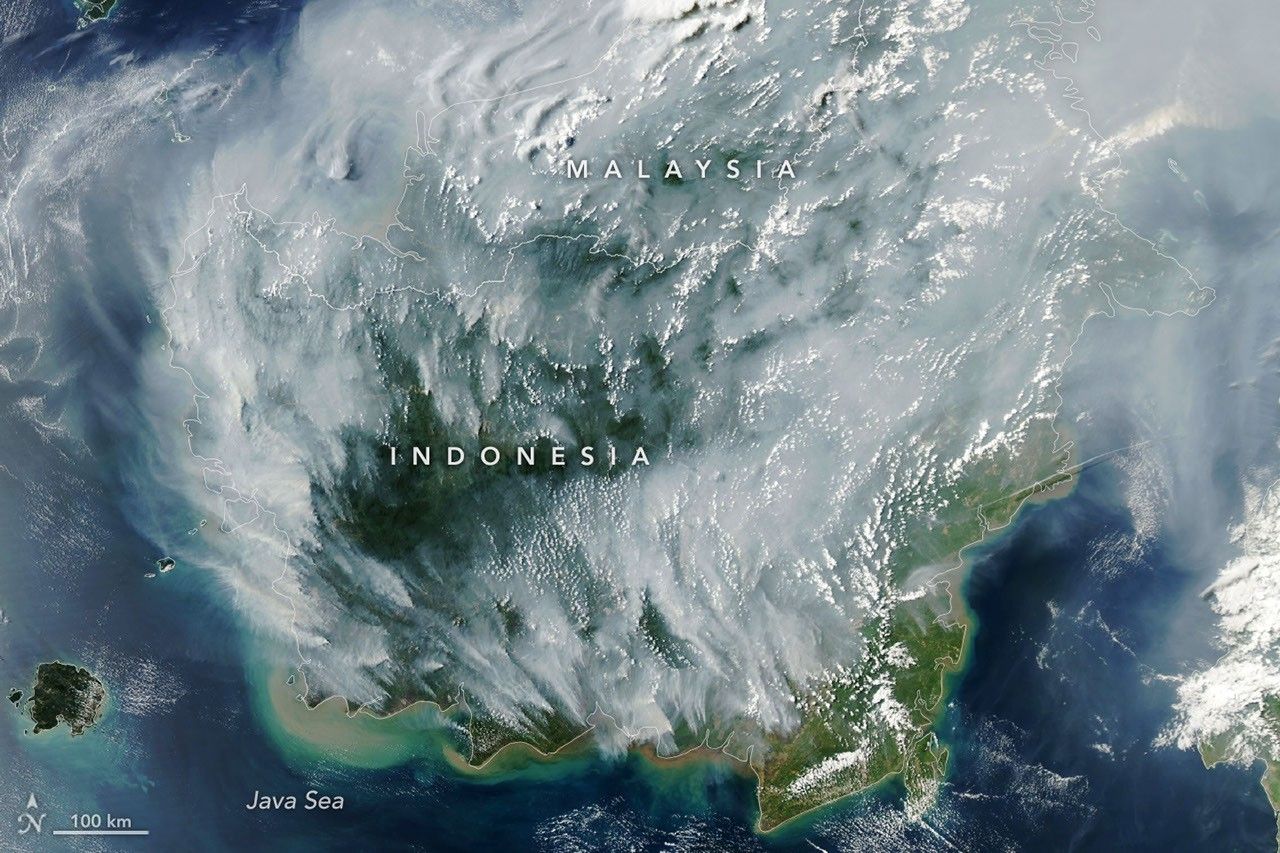
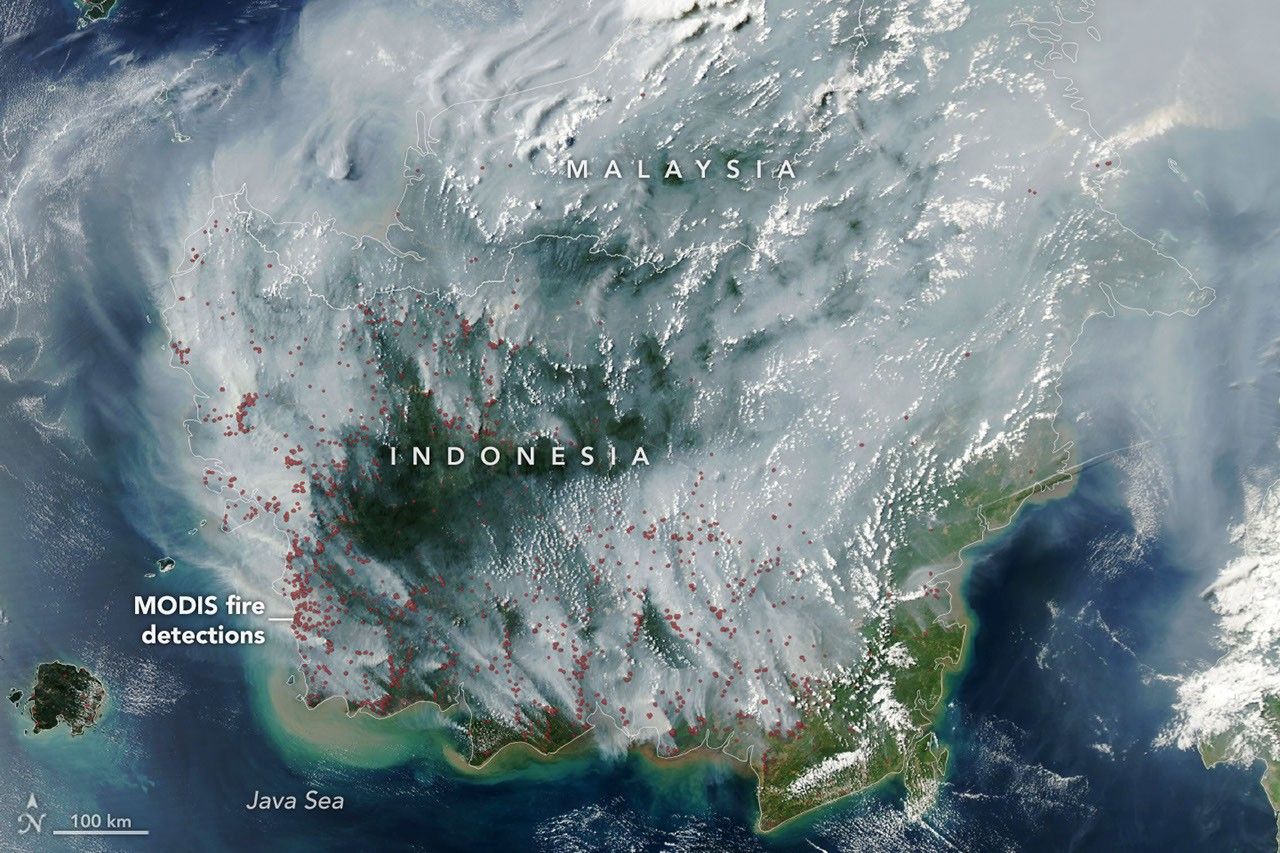
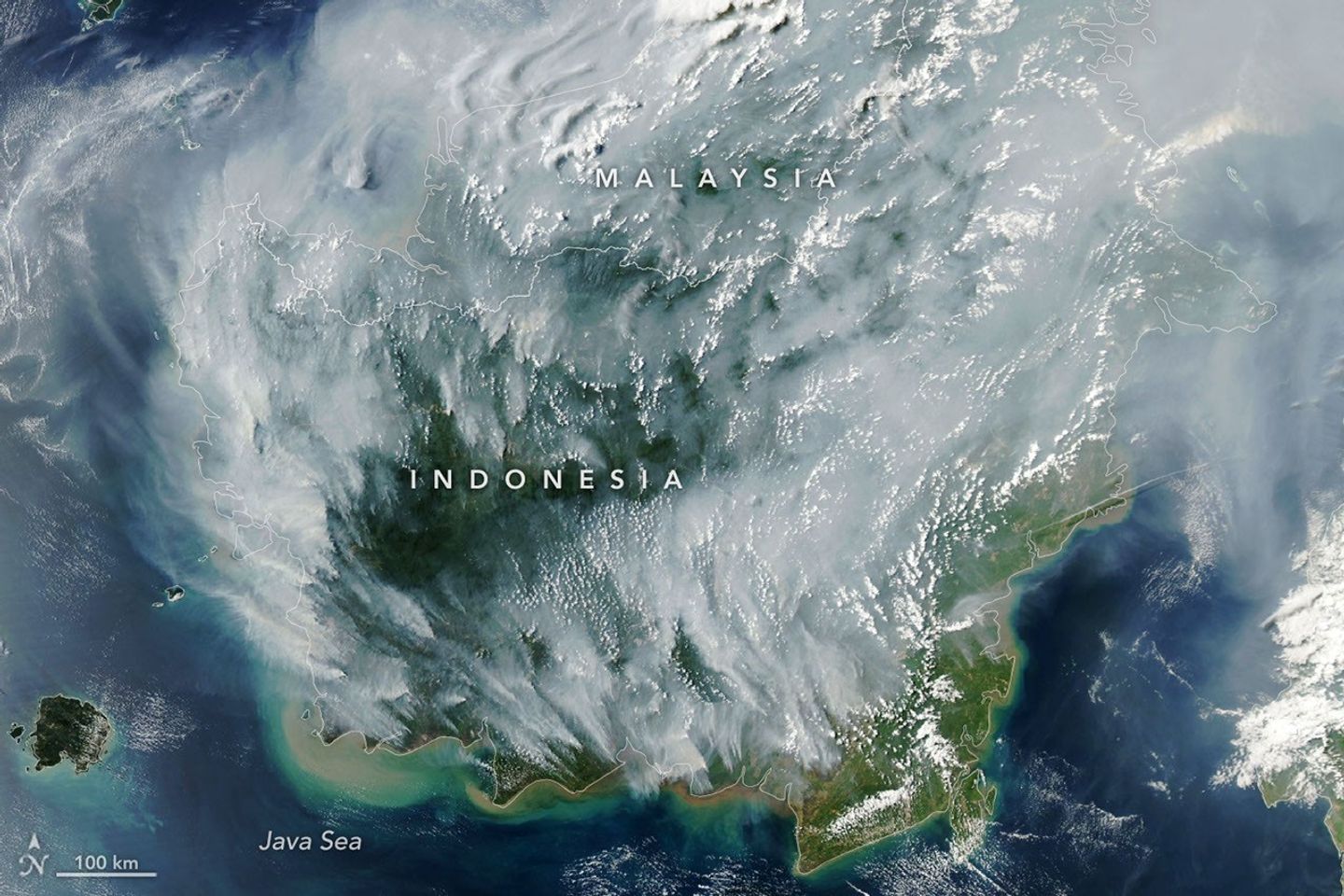
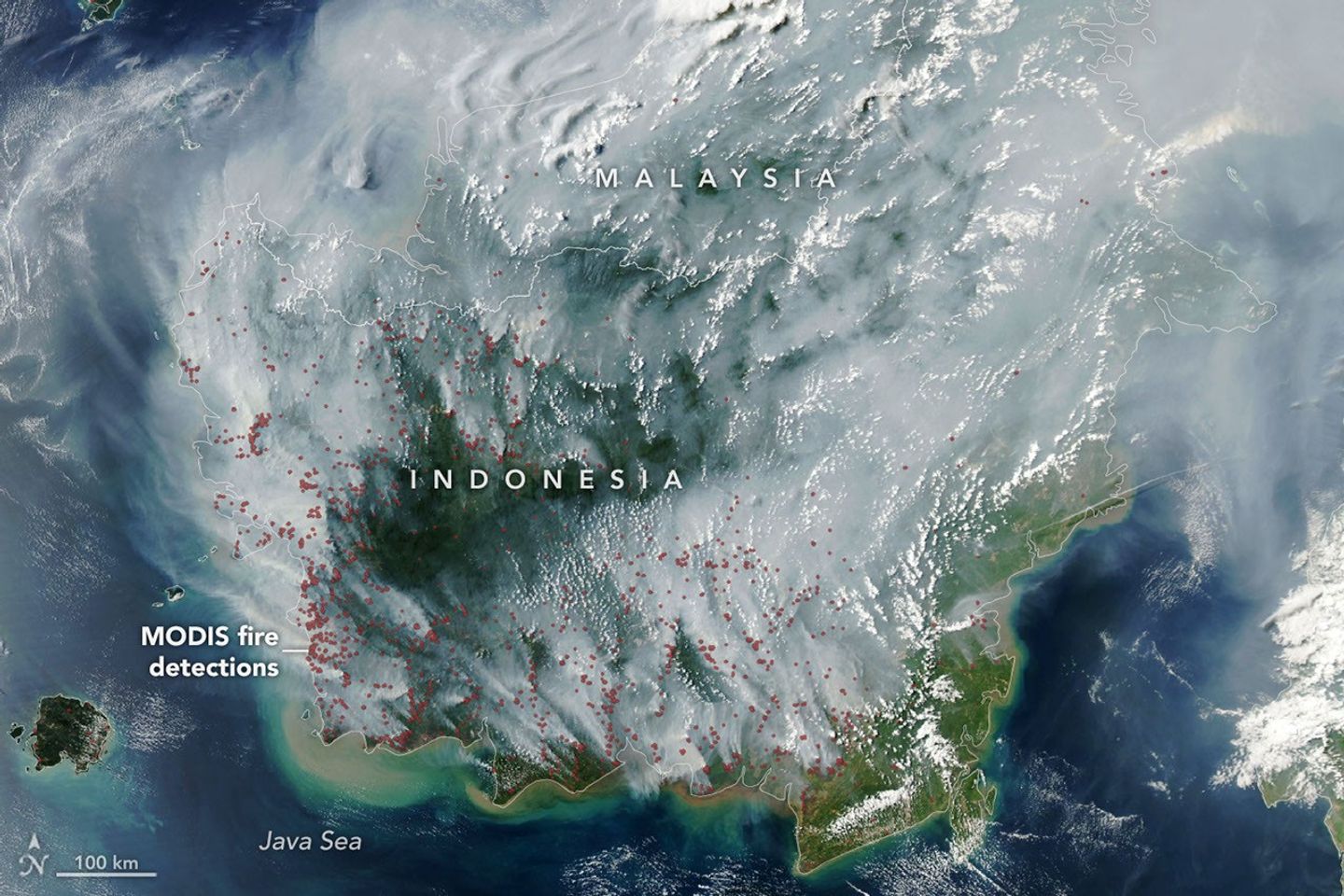
If there were an apex predator among fires, tropical peatland fires would be a top contender. These fires, which burn in dried wetland soils, are slow-burning, highly polluting, and notoriously difficult to extinguish because they smolder at low temperatures and often burn underground through expansive deposits of peat. By one estimate, peat fires generate three times more fine particulate matter than other tropical forest fires, five times more sulfur dioxide, three times more organic carbon, and two times more methane and carbon monoxide.
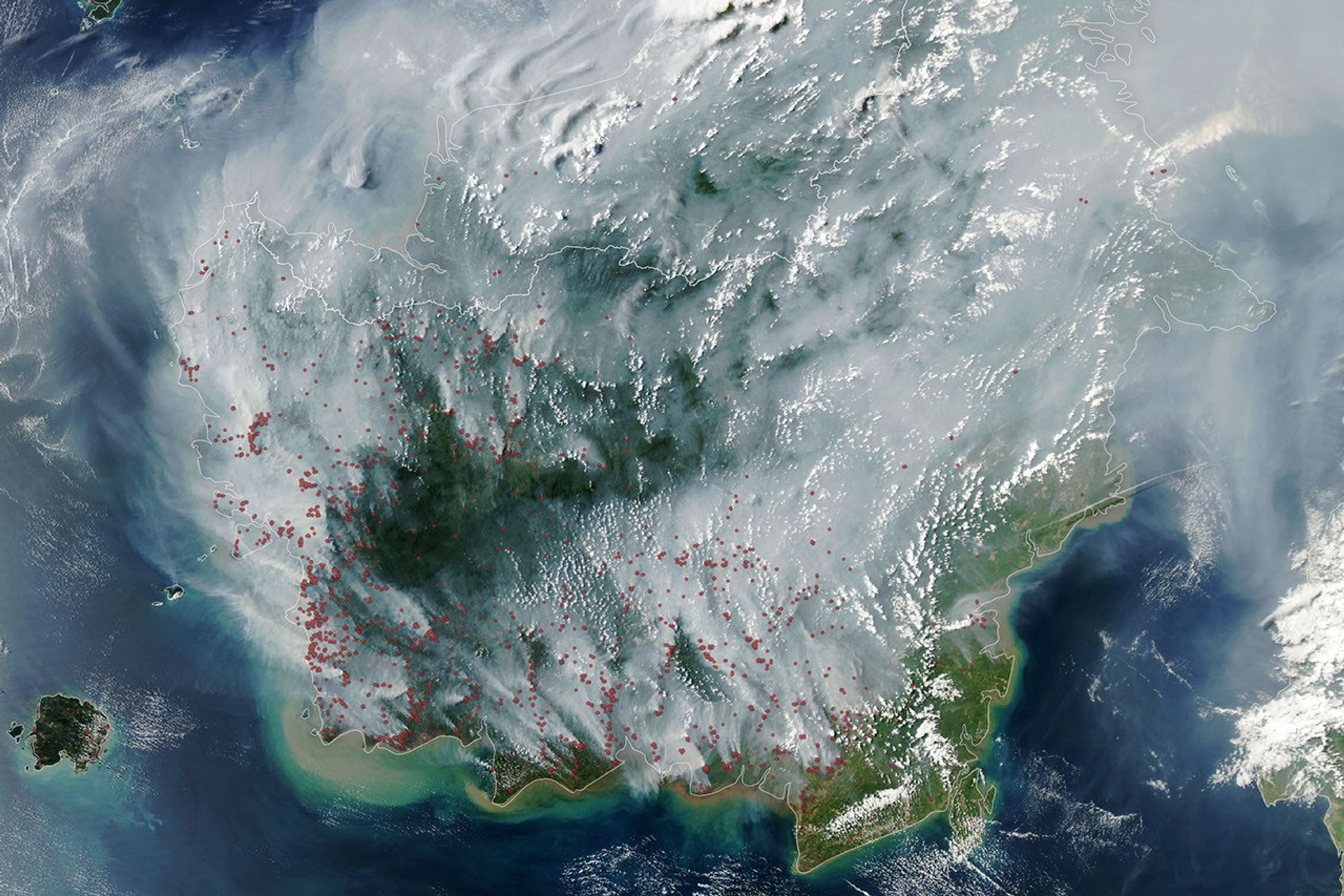
Fire season was underway in Indonesia when the MODIS (Moderate Resolution Imaging Spectroradiometer) on NASA’s Aqua satellite captured this image on September 1, 2026. In the map on the right, each red dot depicts one “fire detection.” A fire detection is a pixel in which the sensor and an algorithm determined there were thermal anomalies indicative of fire. Multiple detections can be generated by a single fire.
Peat fires are a recurring challenge in Indonesia, which is home to about 36 percent of the world’s tropical peatlands. When parched by drought, the archipelago’s peat landscapes have become unrelenting infernos on several occasions over the past three decades, with fires producing blankets of smoke for weeks on end and upending daily life for millions of people.
While fires occur in Indonesia every year, previous El Niño years—1997 and 2015 especially—produced the most extreme burning in recent decades. The climate pattern, assessed by NOAA as present and strengthening in August, typically leads to sharp reductions in rainfall in Indonesia, particularly when combined with a positive phase of the Indian Ocean Dipole, which was also present.
“Indonesia is only about three weeks into its fire season, but we’re seeing fire activity track sharply upward, similar to 2015,” said Robert Field, a Columbia University researcher who developed a tool called the Global Fire Weather Database that produces experimental, real-time fire weather forecasts. “The strong El Niño is making the dry season drier over the fire-prone parts of the country and exacerbating burning—just as we anticipated it would,” he said. In 2015, after burning for more than three months, Indonesia’s fires had released 1.75 billion tons of greenhouse gas equivalents—more than Japan emits in a year. As of September 2, Indonesia’s 2026 fires, having burned for about a month, have released roughly 10 percent as much as the 2015 fires.
As in 2015, Indonesia was in the midst of a severe and widespread drought in summer 2026. About 90 percent of the country received little to no rainfall in early August, according to data from the Indonesian meteorological agency. Normally, it’s too wet for fires to spread through underground peat deposits in Kalimantan, Sumatra, and Papua, but they can in dry conditions. “Surface fires are less of a concern, but when fires get underground, they just won’t stop,” Field said. “They’ll keep burning until the rains come in October or November.”
The Indonesian government uses NASA and NOAA observations from the MODIS and VIIRS sensors to track active fires in near-real-time. Indonesia’s Ministry of Forestry MODIS- and VIIRS-based fire-monitoring platform SiPongi, for instance, tallied 946 hotspots on August 31, 2026.
However, it’s difficult for MODIS and VIIRS to detect fires through thick smoke or clouds, within the forest understory, or underground in peat deposits. When Indonesian fires become the most intense, the number of fires recorded by VIIRS or MODIS can actually decrease. “The worst smoke events, paradoxically, can be the hardest to observe from space with MODIS and VIIRS,” said Mark Cochrane, an ecologist at the University of Maryland Center for Environmental Science who has conducted field research on peat fires in Indonesia for nearly a decade.
The large-scale construction of irrigation canals and drainage of peat swamps in the 1990s, part of an effort to establish massive rice farms, contributed to the flammability of the region today by significantly lowering the water table in wetland areas, Cochrane said. He also noted that oil palm and other plantation forestry is common in this region. Yet after an unusually grim fire season in 2015, governments and other organizations have worked to dam up some irrigation canals and restore wetlands. There have also been renewed efforts to improve firefighting capacity and reduce the number of fires that people accidentally ignite.
“This year will be a real stress test of the measures that were put in place after 2015,” said Shi Jun Wee, a University of Maryland graduate student. Wee is working on a team partnering with NASA and MapBiomas to develop new algorithms and techniques to detect more understory fires than MODIS and VIIRS can by tapping into shortwave infrared observations from Landsat and Sentinel-2 satellites. As the fires progress, he plans to track developments using NASA’s Worldview data browser, FIRMS (Fire Information for Resource Management System), HLS (Harmonized Landsat and Sentinel-2) observations, and GFED (Global Fire Emissions Database).
On the ground in Indonesia and neighboring countries, the smoke is already causing widespread disruptions. Indonesian officials have warned that large swaths of the population have been exposed to hazardous smoke. Some schools started shifting to remote learning, nine national parks have closed, and several flights have been delayed due to heavy smoke, according to news reports.
“People tend to focus on these fires during an El Niño and then forget about them,” Cochrane said. “We need sustained focus, even during the years when they aren’t as bad, to solve this,” he said. “These fires create a tremendous amount of emissions.”
NASA Earth Observatory image by Lauren Dauphin, using MODIS data from NASA EOSDIS LANCE and GIBS/Worldview. Story by Adam Voiland.
References & Resources
- BMKG (2026, August 13) Analisis Dinamika Atmosfer Dasarian I Agustus 2026. Accessed September 2, 2026.
- Channel News Asia (2026, September 2) Indonesia closes 9 national parks temporarily following forest fires; prioritises firefighting in 6 provinces. Accessed September 2, 2026.
- The Conversation (2026, August 23) Borneo forest fires spike again: Why El Niño isn’t the sole culprit. Accessed September 2, 2026.
- Field, R., et al. (2016, August 1) Indonesian fire activity and smoke pollution in 2015 show persistent nonlinear sensitivity to El Niño-induced drought. PNAS, 113 (33) 9204-92.
- Kementerian Kehutanan Republik Indonesia (2026, August 31) Update Terbaru Karhutla: Hotspot Menurun, Penanganan Diperkuat. Accessed September 2, 2026.
- NASA Earth Observatory (2015, December 1) Seeing Through the Smoky Pall: Observations from a Grim Indonesian Fire Season. Accessed September 2, 2026.
- ReliefWeb (2026, August 25) IDN: Fire – 07-2026 – Indonesia: Forest Fires and Haze in Sumatra and Kalimantan. Accessed September 2, 2026. Accessed September 2, 2026.
- Van der Werf, G., et al. (2025) Landscape fire emissions from the 5th version of the Global Fire Emissions Database (GFED5). Scientific Data, 12, 1870.
- Yokelson, R., et al. (2022) Tropical peat fire emissions: 2019 field measurements in Sumatra and Borneo and synthesis with previous studies. ACP, 22, 10173-10194.
You may also be interested in:
Stay up-to-date with the latest content from NASA as we explore the universe and discover more about our home planet.
In fire-prone ecosystems in Australia’s Northern Territory, prescribed burns are lit to minimize the severity of fires later in the…

Wildland fires in early August 2026 pushed air quality to unhealthy levels, destroyed hundreds of structures, and triggered mandatory evacuations…
The blaze burned more than 150 square miles and swept through parts of a ski resort.
The post Peatland Fires Darken Skies in Indonesia appeared first on NASA Science.
Drought Intensifies Across Puerto Rico
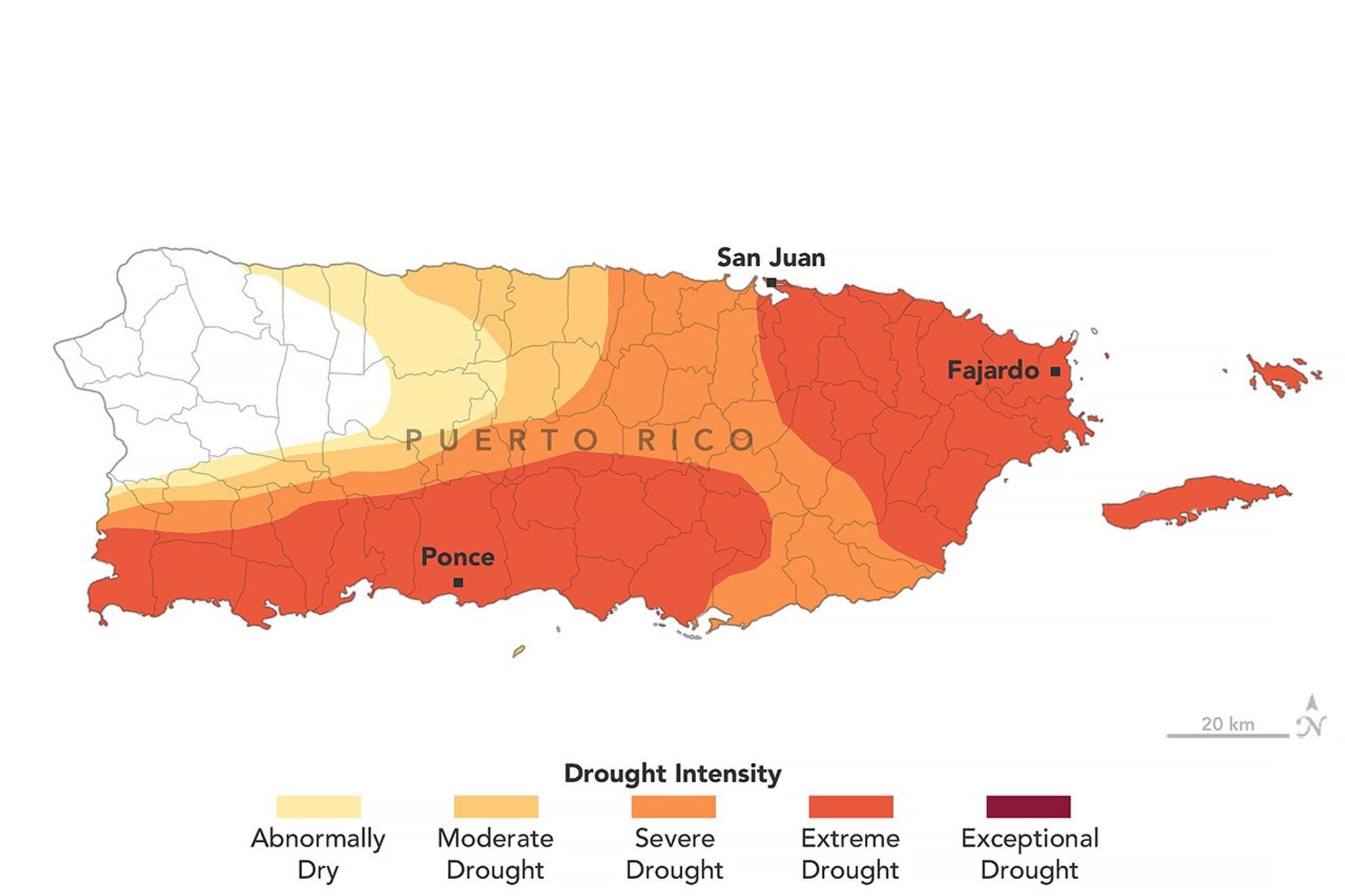
The month of May typically marks the onset of the wet season in Puerto Rico. But in 2026, rain had largely failed to materialize as of late August, and much of the U.S. territory found itself in the throes of drought. The dry conditions have contributed to water shortages and rationing in some areas, leading Puerto Rico’s governor to declare a state of emergency in late July and the U.S. government to issue a drought disaster declaration for more than two dozen cities and towns in late August.
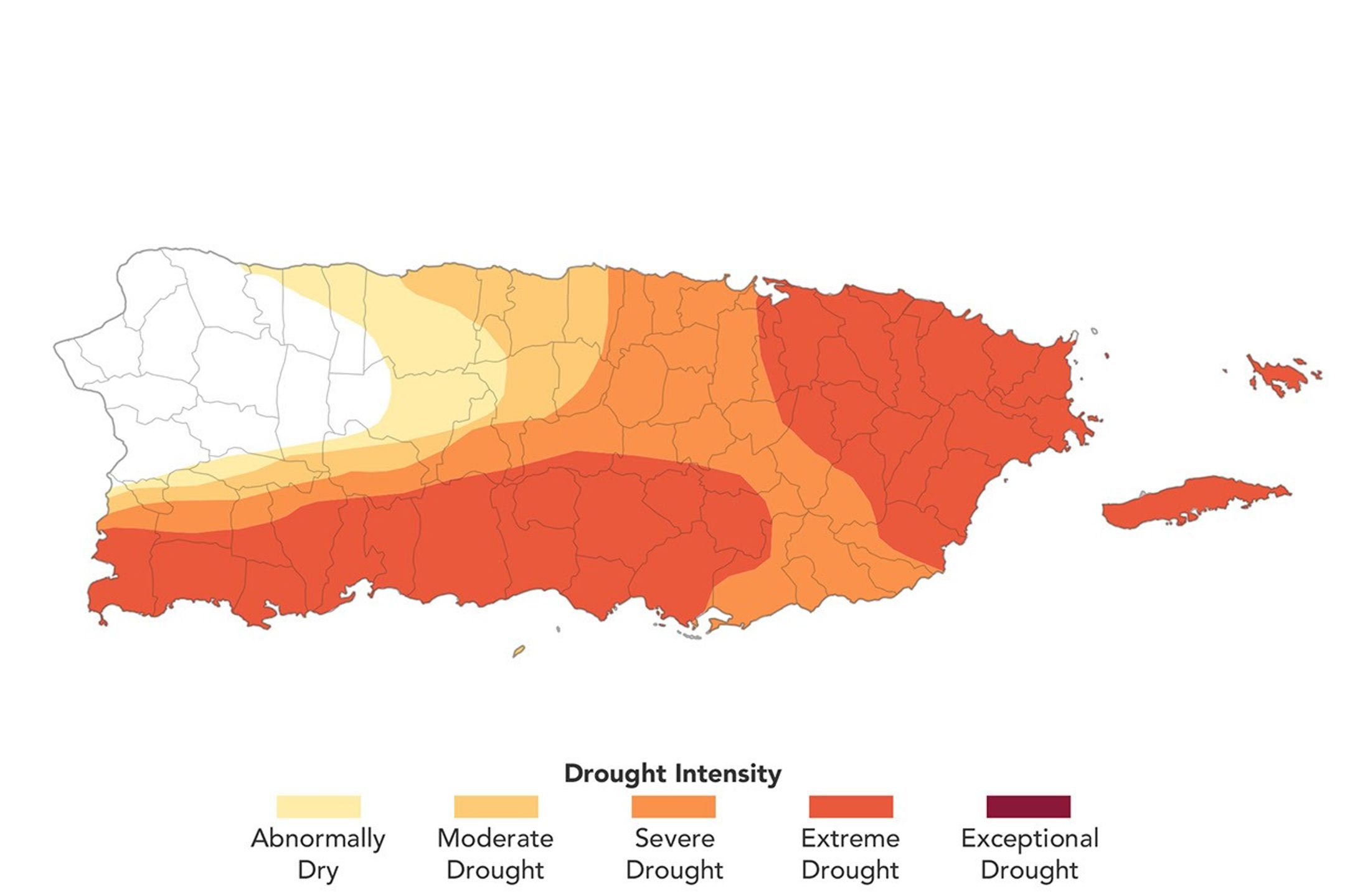
This map depicts the extent and severity of drought in Puerto Rico on August 25, 2026. It was produced by the U.S. Drought Monitor, a partnership between the National Drought Mitigation Center at the University of Nebraska-Lincoln, the U.S. Department of Agriculture (USDA), the National Oceanic and Atmospheric Administration, and NASA. NASA has contributed Earth observations and expertise to the project for many years, and in 2026, the partnership was strengthened when two agency scientists joined the small team that authors the weekly drought assessments.
Effects of the hot and dry conditions appeared in a variety of satellite data products and ground-based observations that the U.S. Drought Monitor considers when creating its weekly assessments, said David Mocko, a senior research scientist in the Hydrological Sciences Laboratory at NASA’s Goddard Space Flight Center. For recent updates to Puerto Rico’s drought maps, satellite estimates of soil moisture, as well as weather, streamflow, and well observations, were particularly important factors, he said. Mocko authored the U.S. Drought Monitor update for August 18, 2026. He and Jonathan Case of NASA’s Marshall Space Flight Center are the first from the agency to produce the weekly maps.
As of August 25, 2026, three-quarters of Puerto Rico was experiencing at least moderate drought, according to the group’s assessment. Zones of extreme drought (dark orange) in the eastern and southwestern regions of the main island had expanded in the previous week to cover 44 percent of the territory.
Three months earlier, no part of Puerto Rico was experiencing drought, and less than 20 percent of its area was classified as abnormally dry. Conditions were wetter than normal across the U.S. Caribbean in late winter and early spring, the National Integrated Drought Information System (NIDIS) reported—but then they dried significantly.
From mid-May through mid-July, most of Puerto Rico received less than 60 percent of normal precipitation, according to NIDIS. In southern and southwestern areas, rainfall totals were less than 20 percent of normal, amounting to a deficit of 3 to 6 inches (76 to 152 millimeters). Unusually high temperatures contributed to the drying—San Juan had one of its warmest Julys on record, for example. Streamflow reached record lows in rivers such as the Rio Fajardo in the northeast.
Strained water resources have affected farmers, ranchers, and residents across the territory. Water rationing has been in place for several municipalities since early August, according to news reports, with observers noting that infrastructure issues have exacerbated shortages. For farmers, parched soils have impacted the growth of everything from fruit and cacao trees to banana and coffee plants, leading to crop losses, while ranchers face depleting hay reserves.
U.S. Drought Monitor maps, published since 1999, assist federal, state, local, and tribal decision makers with drought response. The USDA, for instance, uses them in a “fast track” process for disaster designations, which can then direct emergency resources to those affected.
NASA Earth Observatory image by Michala Garrison, using data from the U.S. Drought Monitor at the University of Nebraska-Lincoln. Story by Lindsey Doermann.
References & Resources
- AP News (2026, August 26) US declares drought disaster for parts of Puerto Rico as dry conditions persist. Accessed September 1, 2026.
- National Centers for Environmental Information (2026, June 11) Drought Defined: A Deep Dive into the U.S. Drought Monitor. Accessed September 1, 2026.
- National Integrated Drought Information System (2026, July 23) Drought Update for Puerto Rico and the U.S. Virgin Islands. Accessed September 1, 2026.
- Puerto Rico Federal Affairs Administration (2026, August 26) Governor Announces USDA Approval of Drought Disaster Declaration for Puerto Rico. Accessed September 1, 2026.
- The University of Alabama in Huntsville (2026, March 31) UAH Earth System Science Center scientist selected as U.S. Drought Monitor author. Accessed September 1, 2026.
- U.S. Drought Monitor (2026, August 27) Puerto Rico. Accessed September 1, 2026.
- Yale Climate Connections (2026, August 13) What you need to know about the water crisis in Puerto Rico. Accessed September 1, 2026.
You may also be interested in:
Stay up-to-date with the latest content from NASA as we explore the universe and discover more about our home planet.
Drought in the Rio Grande basin contributed to New Mexico’s largest reservoir dwindling to its lowest level in decades.
The mountains of Utah and Colorado are among the areas of the western U.S. that are low on snow and…
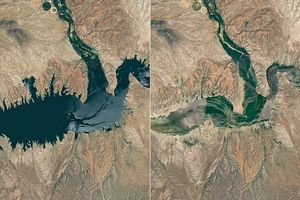
Drought and water releases drained the Arizona reservoir to levels that have led to widespread fish deaths.
The post Drought Intensifies Across Puerto Rico appeared first on NASA Science.
Ice Island Survives Run-In With Joe Island
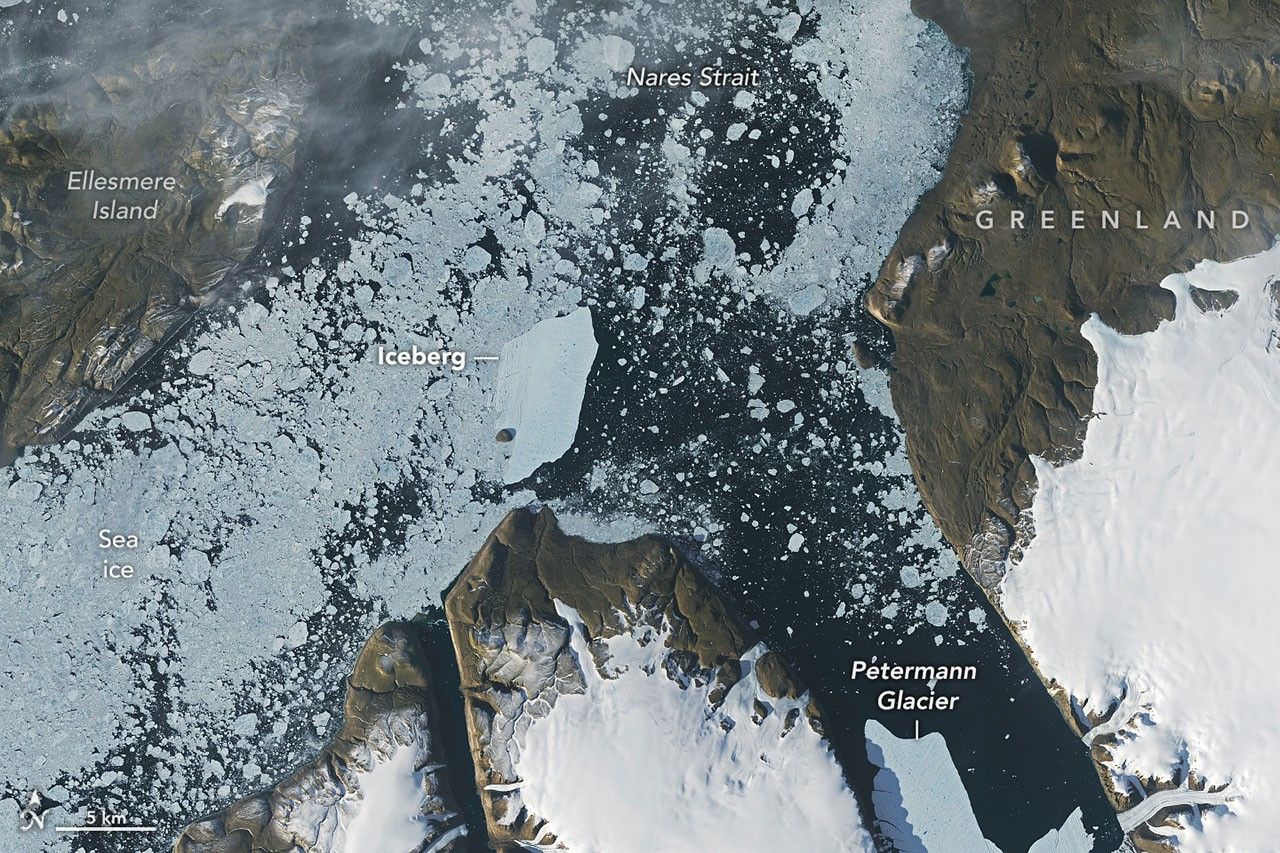
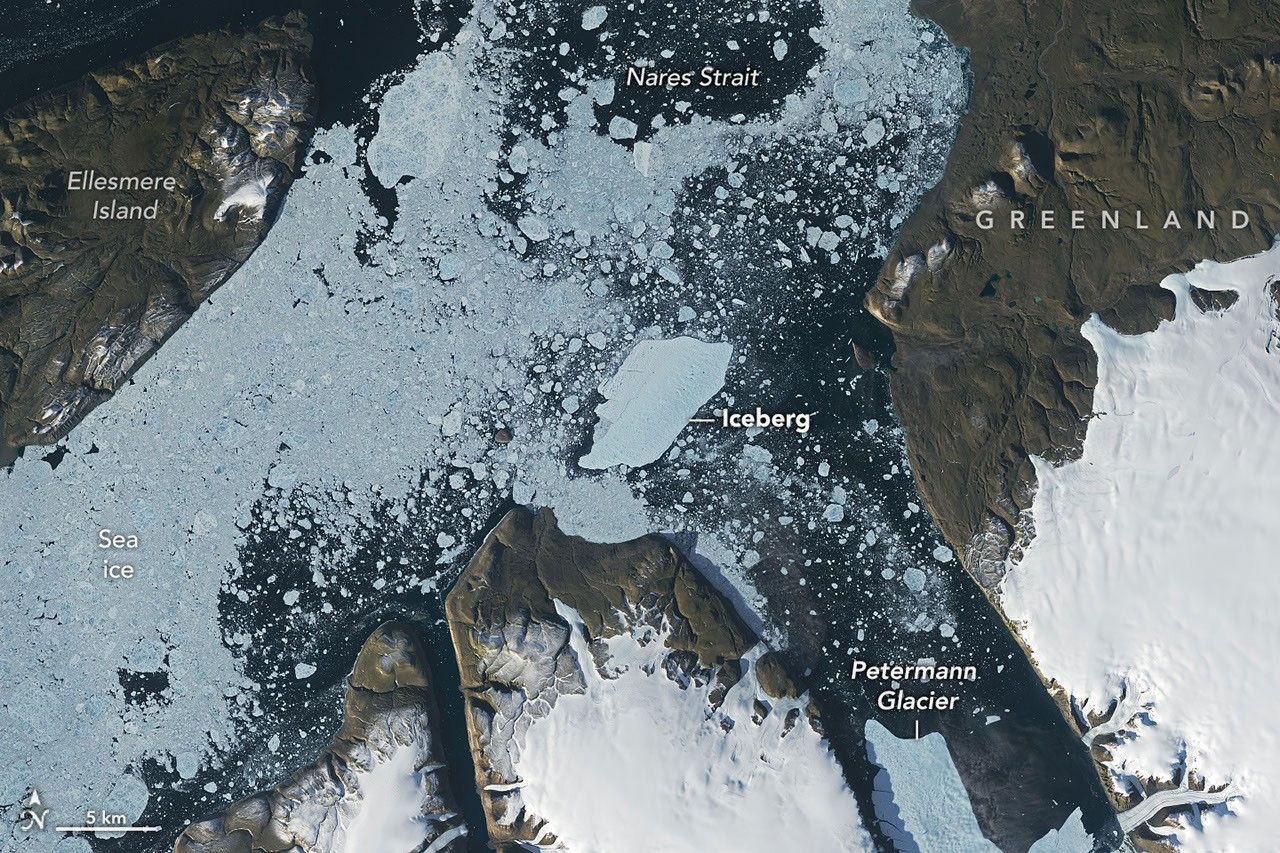
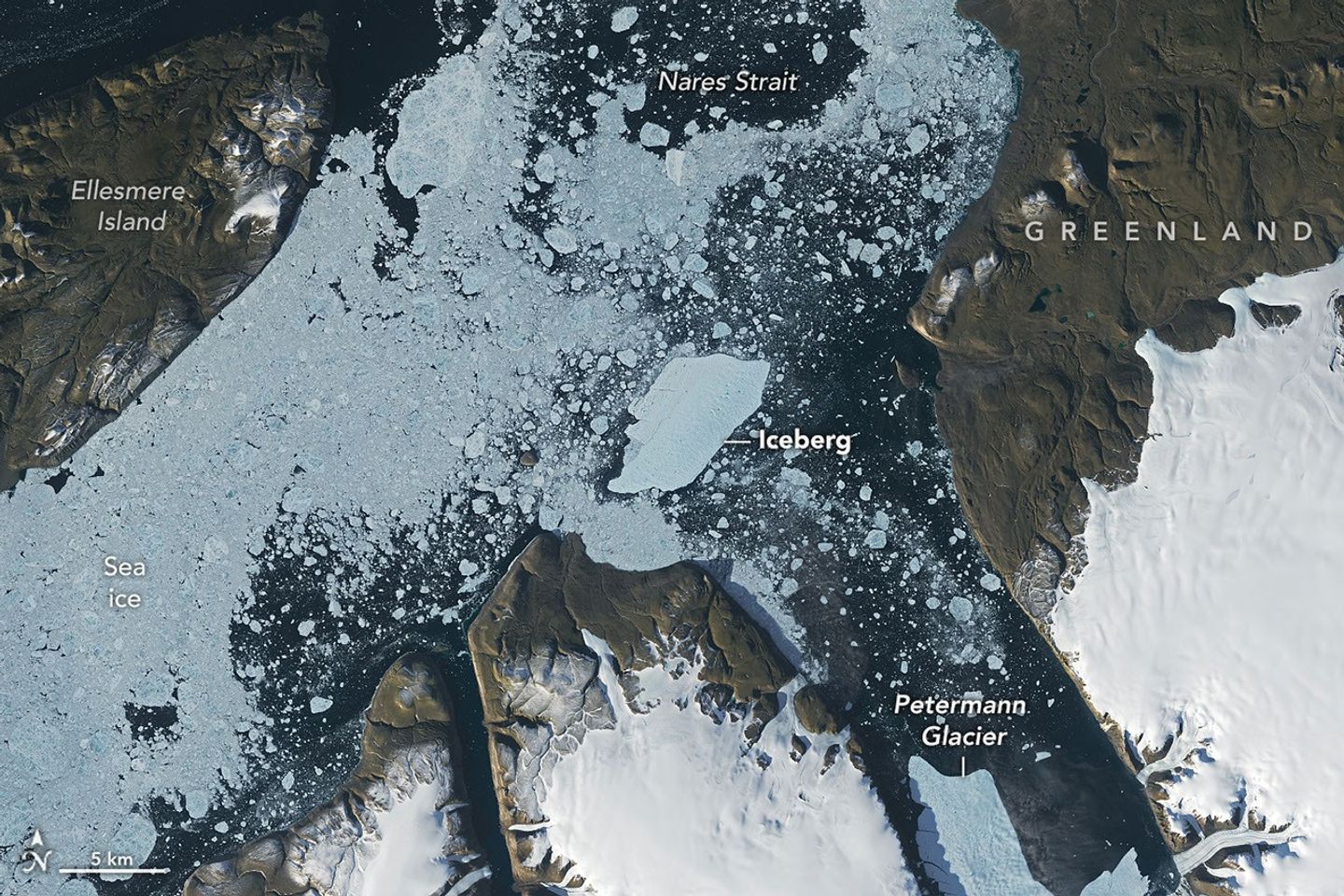
Summer is prime iceberg season in Greenland’s glacier-fed fjords, and 2026 was no exception. Especially notable was the berg that broke from the Petermann Glacier along Greenland’s northwest coast in August. Roughly the size of St. Thomas in the U.S. Virgin Islands, it was the largest calving event by any Arctic glacier since 2020.
Iceberg calving is a routine part of an outlet glacier’s life cycle. Scientists watch the process closely, however, along with numerous other observations of the ice and its environment, for longer-term signs of instability. Petermann is one of Greenland’s largest marine-terminating glaciers and acts as a gatekeeper for ice flowing from the ice sheet into the ocean. Its future stability has implications for sea level rise.
The calving event of summer 2026 was spotted on August 4 by Adam Garbo, a doctoral student in glaciology at the University of Ottawa, in imagery from the European Space Agency’s Sentinel-1 mission. Garbo and an international team of colleagues have been using remote sensing to study and track the glacier’s ice tongue.
The team reported that the large tabular iceberg, or “ice island,” measured just over 76 square kilometers (29 square miles) at the time it calved—the largest to break from the glacier since the ice island of 2012 (130 square kilometers). The 2012 calving followed earlier major events in 2008 (31 square kilometers) and 2010 (just over 250 square kilometers).
The August 2026 event could have been even bigger. Garbo and colleagues had been expecting a major calving once one of the large rifts they were monitoring finally cut all the way across Petermann’s ice tongue. “What surprised us was that the calving instead followed a different fracture, producing a smaller ice island than we had originally anticipated,” Garbo said. As of late August, two large rifts remained and were expected to eventually produce new ice islands of roughly 94 square kilometers and 84 square kilometers, though the timing remained uncertain.
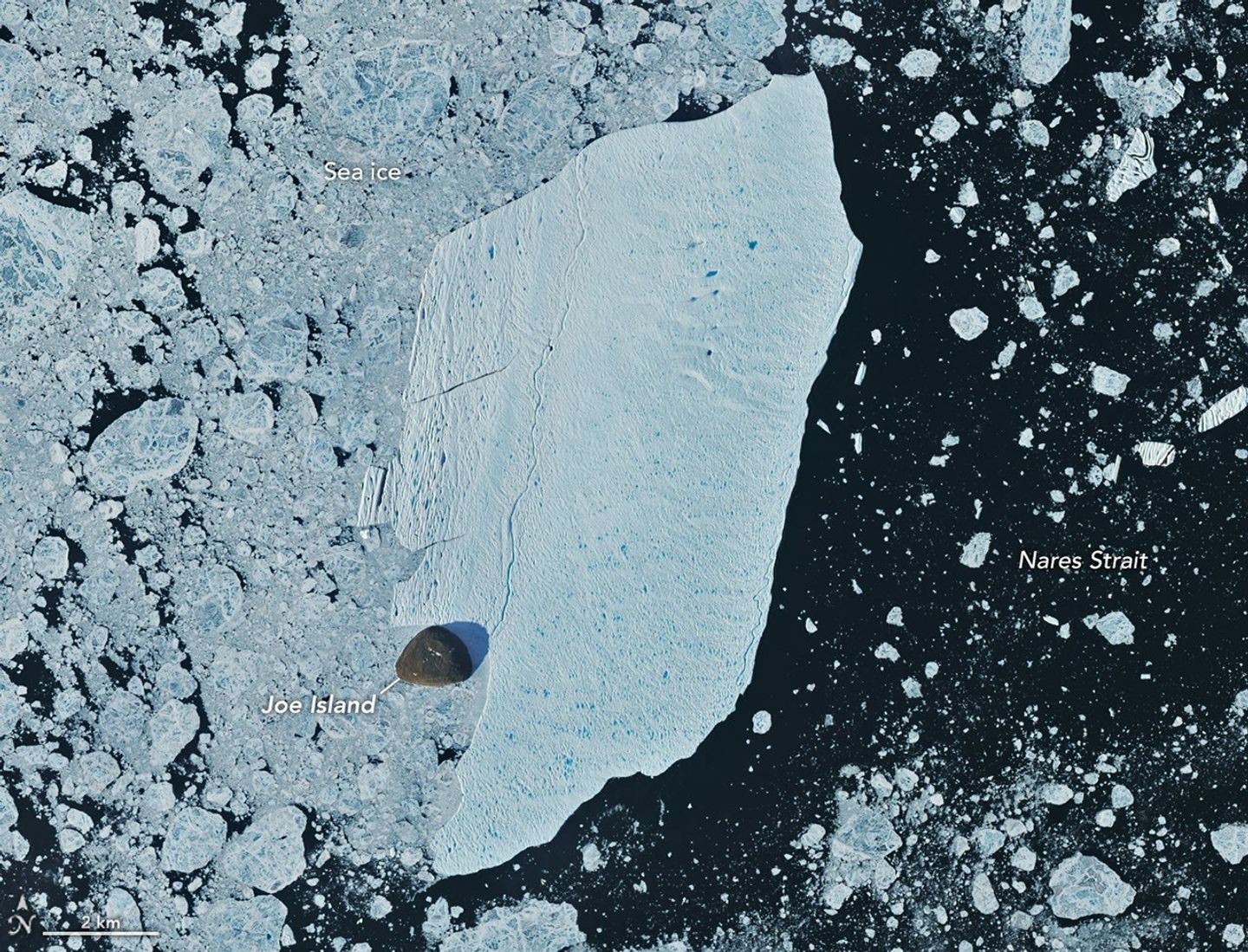
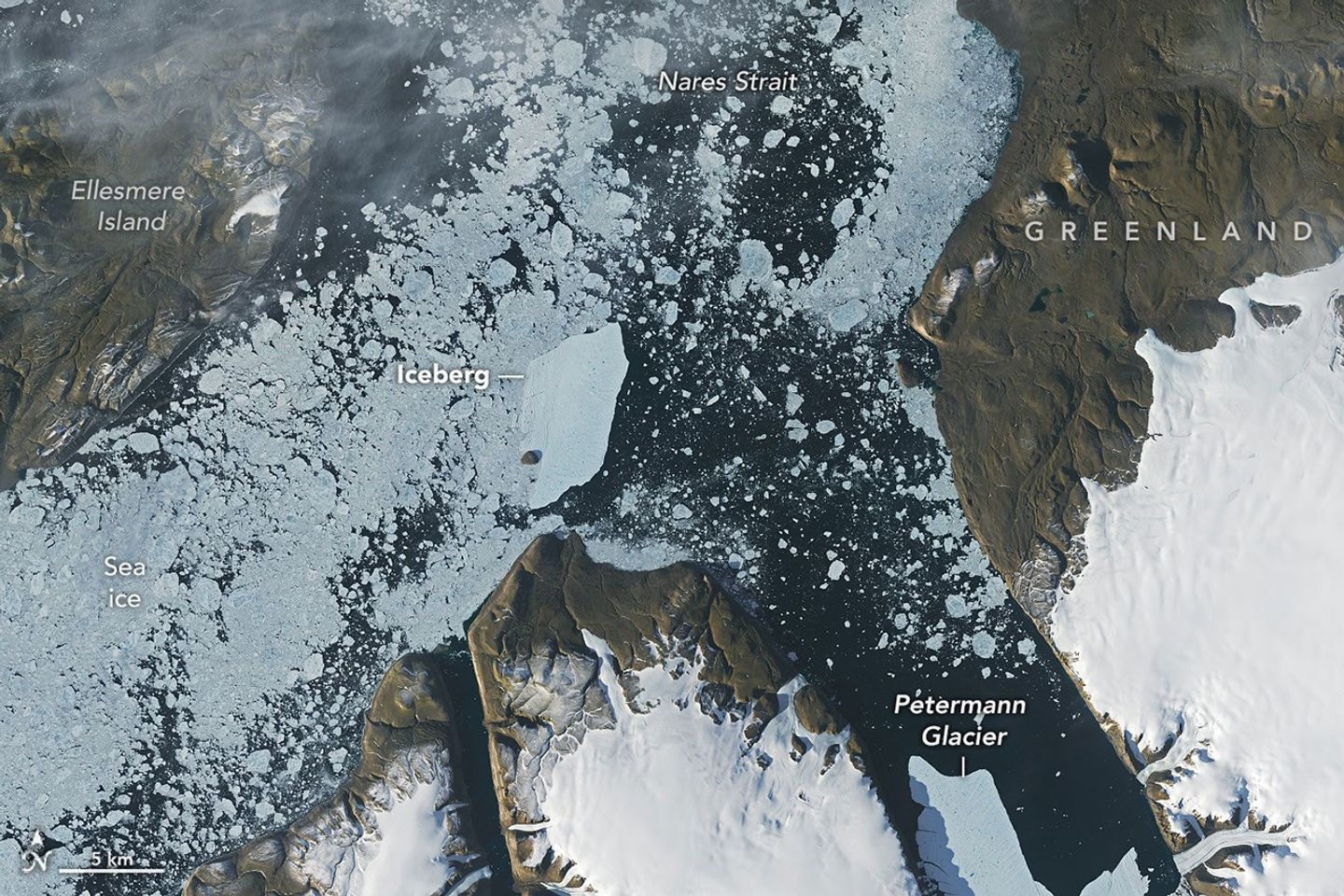
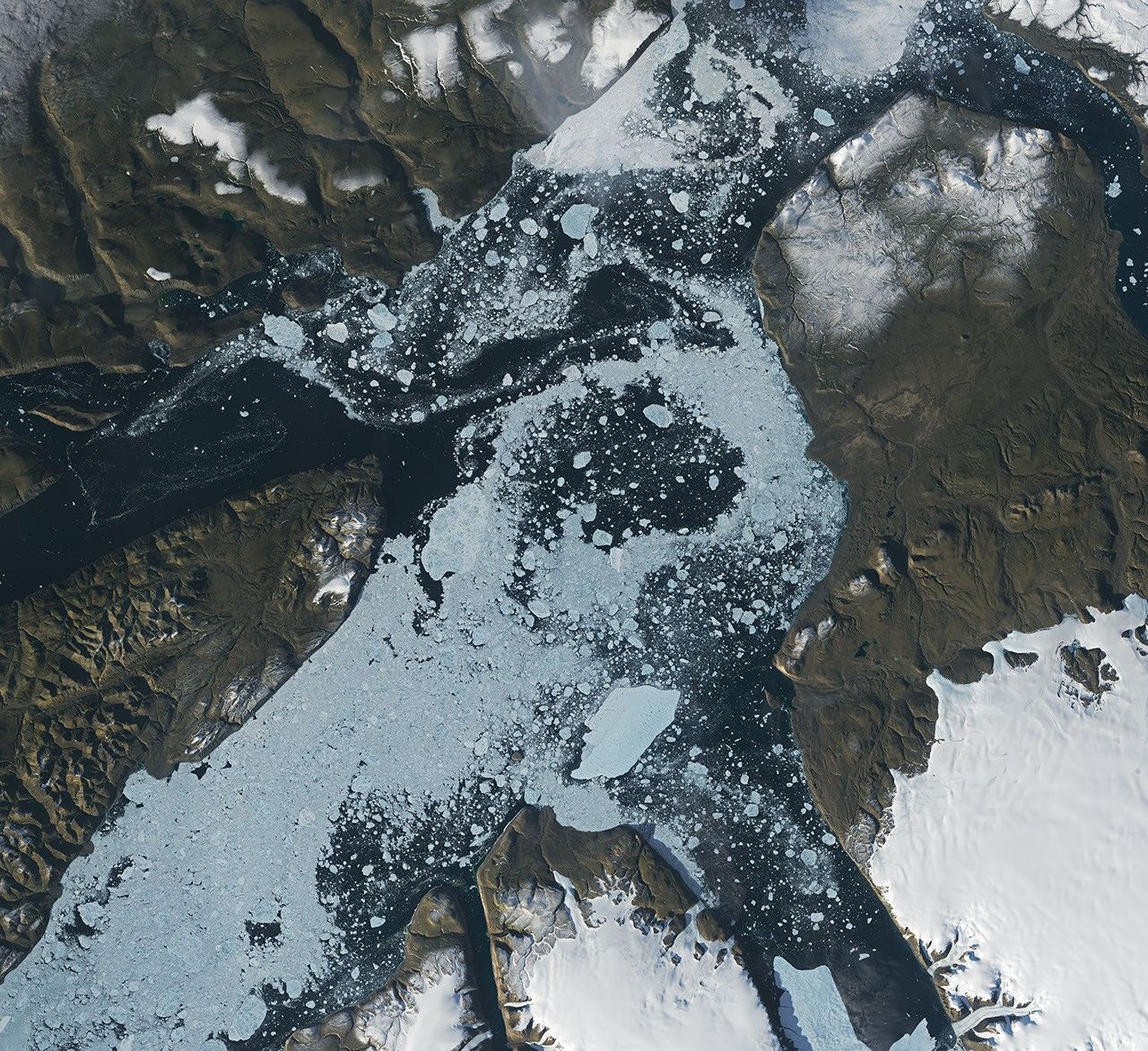
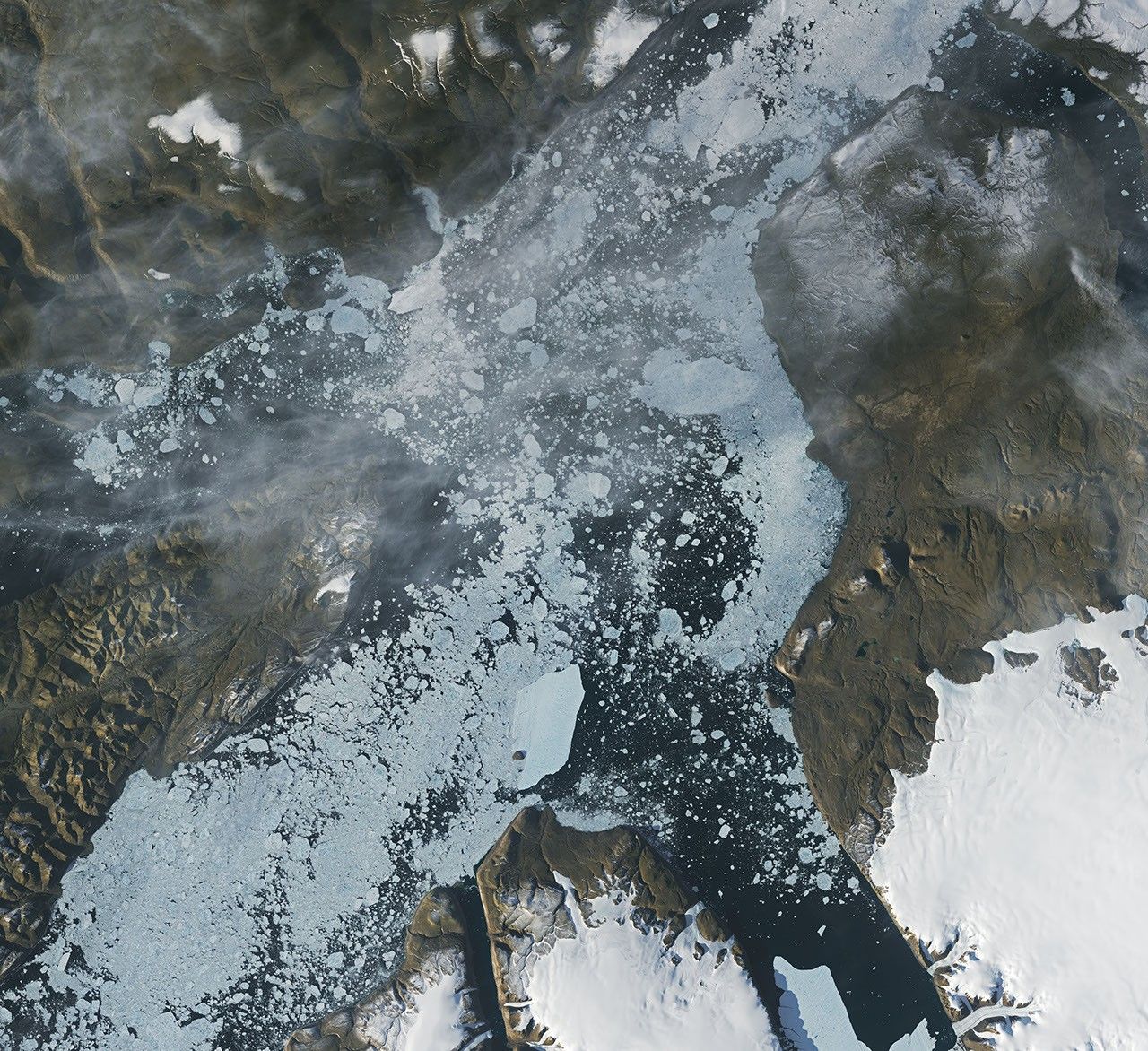
Glaciologist Mauri Pelto of Nichols College has also been tracking the iceberg, using images from NASA-USGS Landsat satellites, as it drifted down Petermann Fjord toward Nares Strait. In the week since it calved, the berg drifted an average of 3 kilometers per day. It continued toward the fjord’s junction with Nares Strait, where it rammed into a small rocky outcrop known as Joe Island (Joe Ø). The brief encounter is visible in images captured by the OLI (Operational Land Imager) on Landsat 9 on August 23 (top right) and August 24 (top left). A detailed view of the August 24 image is shown above.
Joe Island sits at the mouth of Petermann Fjord, making it one of the first obstacles a departing ice island meets. Collisions with it—like the one that split the 2010 ice island in two—often mark the start of a berg’s breakup. Petermann bergs tend to be thinner and more fragile than those calved by glaciers such as Greenland’s Jakobshavn and Helheim, and thinner still than Antarctica’s behemoths, Pelto noted.
“We were certainly watching closely as it interacted with Joe Island and were impressed that it survived the interaction without further fragmentation,” Garbo said.
The ice island was estimated to be less than 150 meters thick at the time of calving. Wind and surface currents have swept it out of the fjord, and satellite images show it pivoting away from Joe Island and continuing southwest through Nares Strait. As it drifts, it will fracture into smaller pieces as tides, winds, currents, and melting continue to weaken the ice.
Thicker bergs that calve from tidewater glaciers without floating ice-shelf extensions can drag and even become grounded on the seafloor within the fjord, while ice islands, like those from Petermann, might run aground later in their drift. Many ice islands have become “grounded” off the coasts of Coburg and Baffin islands.
Garbo and colleagues noted that ice islands and their fragments have been known to travel considerable distances, posing potential hazards to marine activities and infrastructure while also distributing freshwater through the ocean as they melt.
NASA Earth Observatory images by Lauren Dauphin, using Landsat data from the U.S. Geological Survey. Story by Kathryn Hansen.
References & Resources
- Åkesson, H., et al. (2022) Petermann ice shelf may not recover after a future breakup. Nature Communications, 13(2519).
- Crawford, A. J., et al. (2016) Journey of an Arctic Ice Island. Oceanography, 29(2), 254–263.
- Eos (2011, April 5) Context for the Recent Massive Petermann Glacier Calving Event. Accessed August 28, 2026.
- The European Space Agency (2026, August 21) Sentinel-1 captures major ice loss from Greenland glacier. Accessed August 28, 2026.
- Fahrner, D., et al. (2026) Petermann Glacier on the brink: Progress, challenges and insights. Science Advances, 12(33).
- From a Glaciers Perspective (2026, August 17) Petermann Glacier, NW Greenland Releases Massive Iceberg in August 2026. Accessed August 28, 2026.
- NASA Earth Observatory (2023, May 20) Retreat at Petermann Glacier. Accessed August 28, 2026.
- NASA Earth Observatory (2012, August 2) Ice Island Drifts away from Petermann Glacier. Accessed August 28, 2026.
- NASA Earth Observatory (2010, August 10) Ice Island calves off Petermann Glacier. Accessed August 28, 2026.
- uOttawa (2026, August 7) Greenland glacier break creates new ice island. Accessed August 28, 2026.
You may also be interested in:
Stay up-to-date with the latest content from NASA as we explore the universe and discover more about our home planet.
Scientists relied on satellite data to understand how the Antarctic glacier lost so much ice so rapidly.
One narrowing icefall remains the linchpin for the Alpine glacier—and it may not be long for this world.
A large iceberg, observed in summer 2026, had drifted more than 1,000 kilometers south from the northeastern Greenland bay where…
The post Ice Island Survives Run-In With Joe Island appeared first on NASA Science.
Pasterze Hangs on as Austria’s Largest Glacier
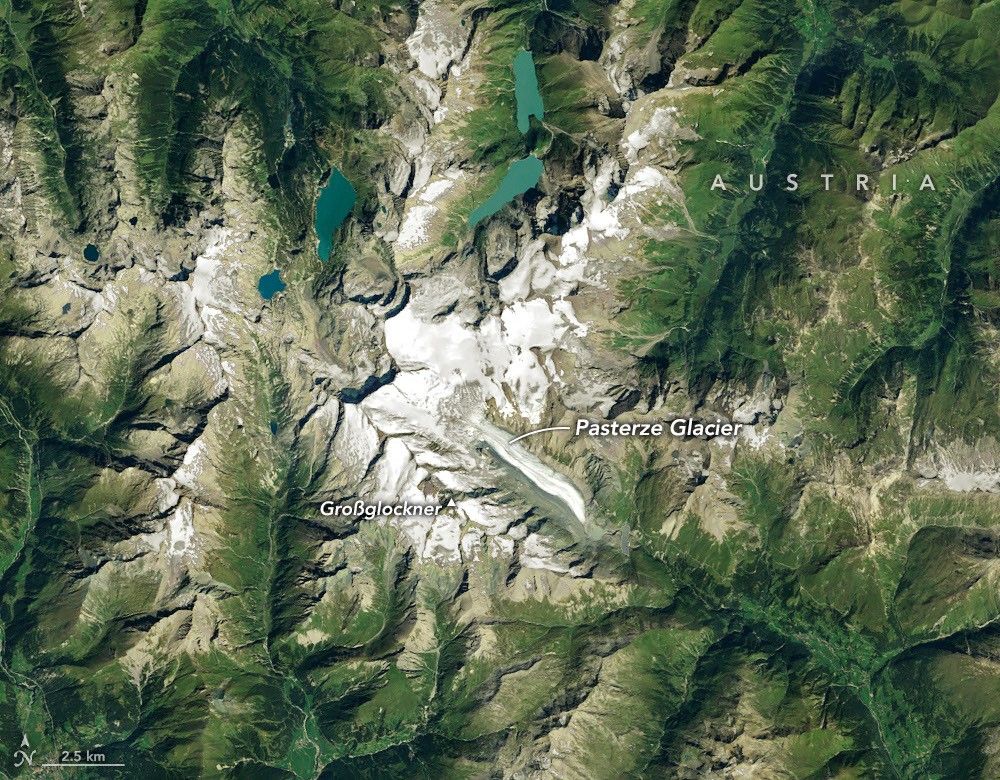
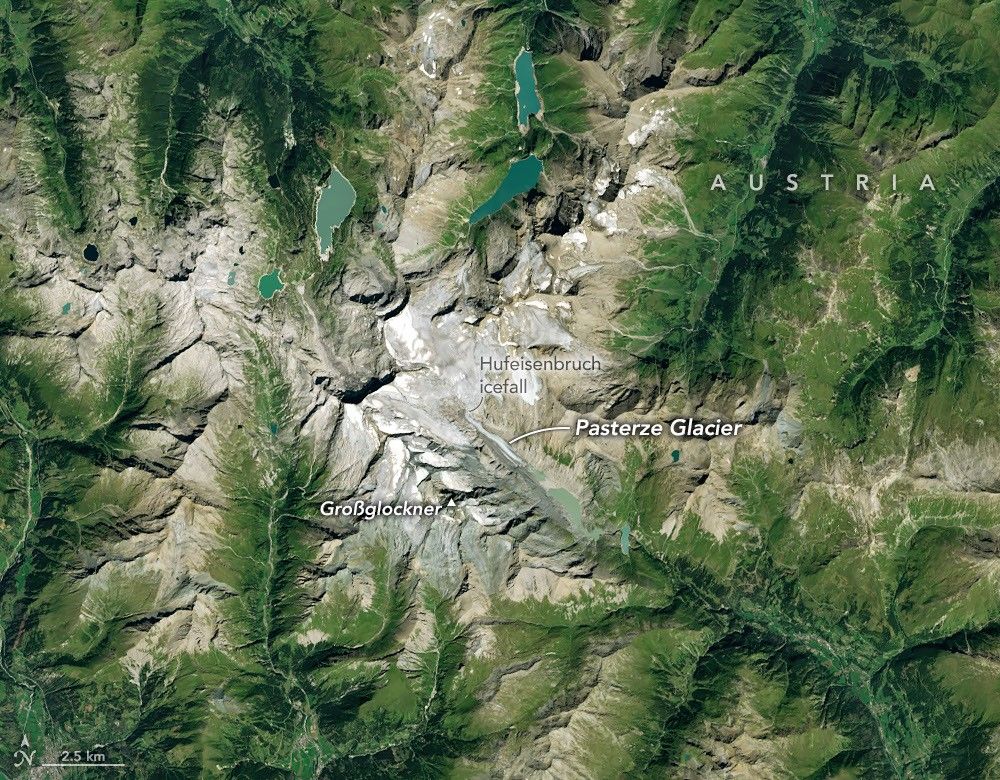
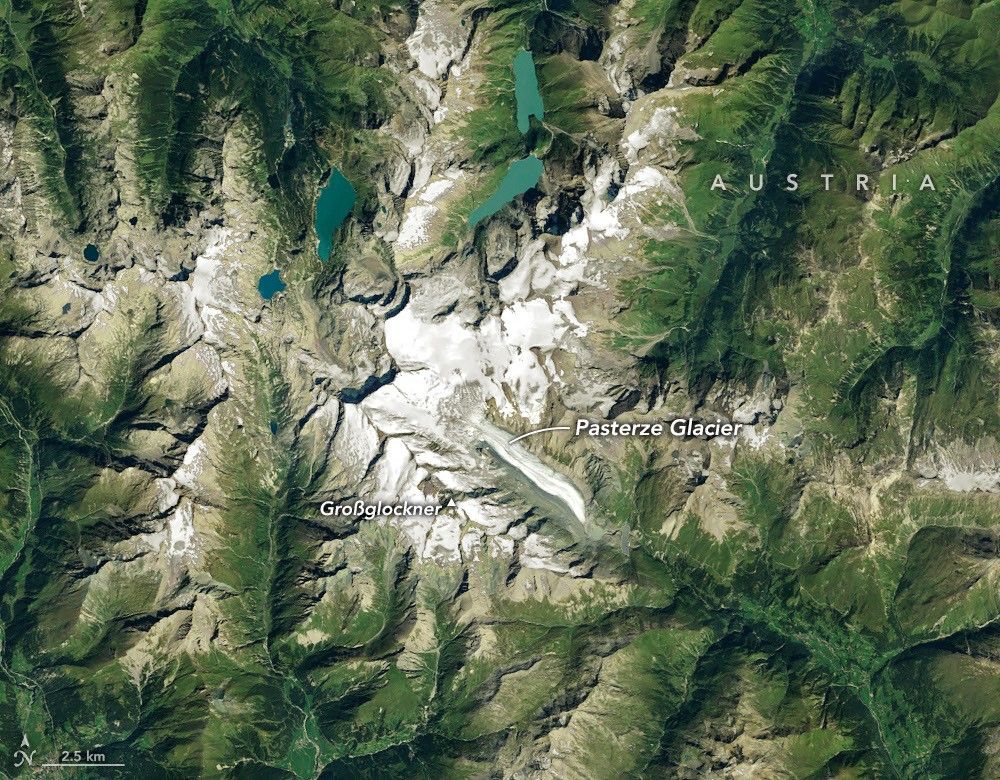
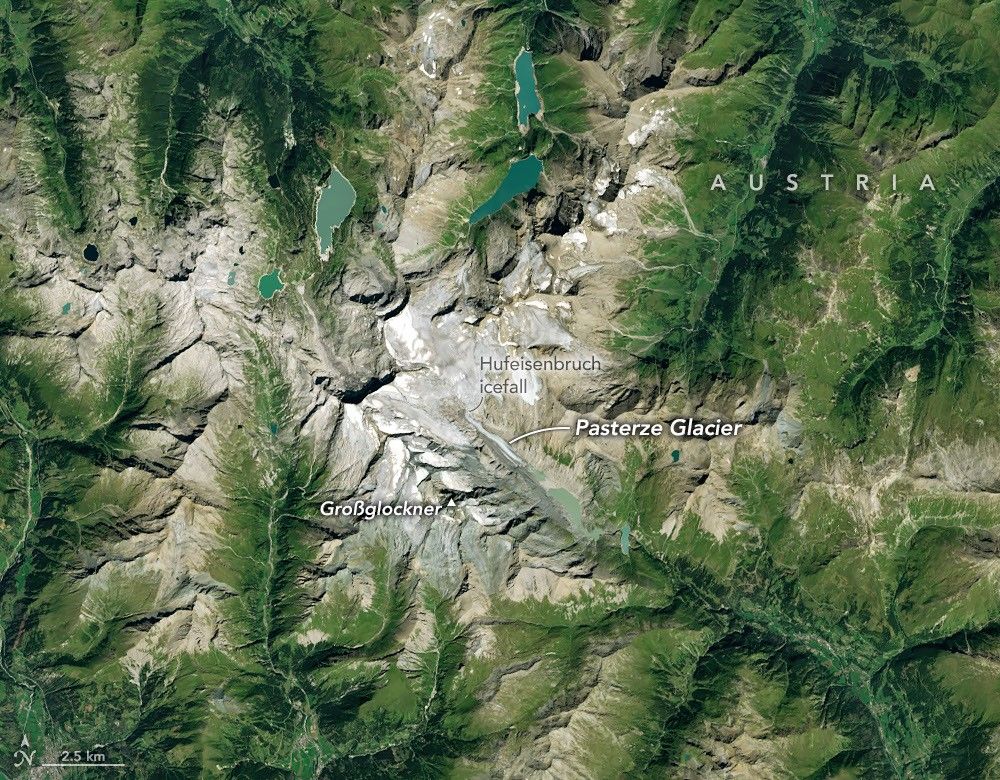
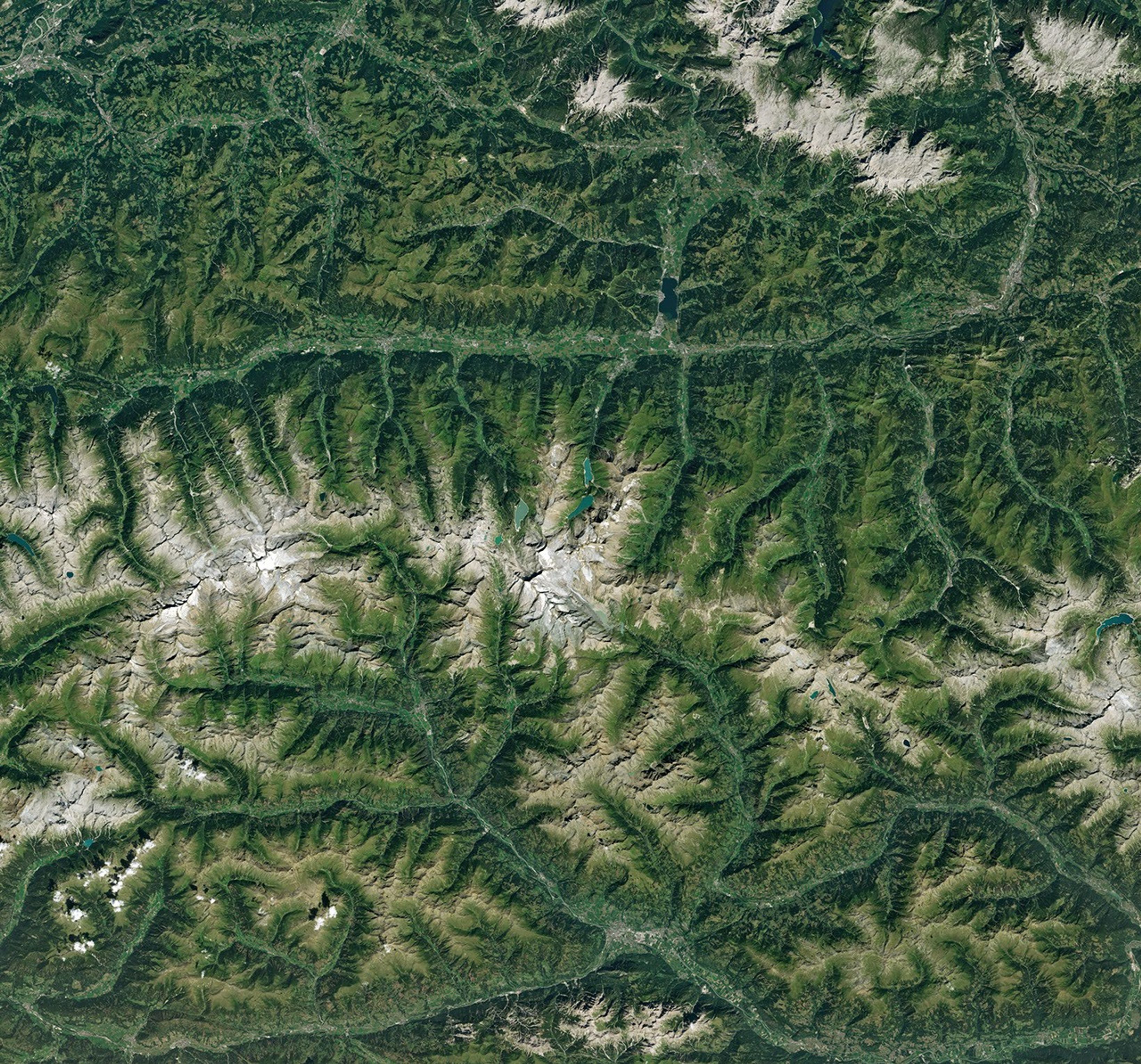
Amid Europe’s scorching summer of 2026, Austria’s largest glacier was holding on by one dwindling thread of ice. The last icefall connecting the upper and lower portions of the Pasterze Glacier in the Eastern Alps appeared poised to break, which would put an end to its reign as the country’s largest. Groups monitoring the glacier say the last conduit of ice may, depending on weather conditions, survive to see another year or two, or it may face its demise before the cold months arrive this year.
The NASA/USGS Landsat images above capture the glacier’s change from August 22, 1985, to August 15, 2026. In 1985 (left), the higher-elevation portion of the glacier, where ice accumulates, fed ice to the valley below through multiple icefalls. (Note that ice along the southern edge of the valley is covered in debris, giving it a dark appearance.) In 2026 (right), only one icefall, known as the Hufeisenbruch, remained. The glacial ice in the valley below had receded substantially, and a proglacial lake filled in much of the area the ice once occupied.
In retreat since the mid-1800s, the Pasterze has lost mass almost continuously and at increasing rates since 1980, according to scientists from the University of Graz, GeoSphere Austria, and the Austrian Alpine Club. Small advances have occurred in only seven years since 1879. Starting in the 2010s, the volume of ice supplied from higher elevations has been small enough to leave the ice in the valley almost stagnant.
By 2020, the penultimate ice connection to the upper accumulation zone was replaced by a waterfall, leaving the Hufeisenbruch icefall as the glacier’s precarious linchpin. Between 1998 and 2025, scientists from the University of Graz monitored the width of the icefall, finding a decrease from nearly 900 meters (3,000 feet) to just 120 meters (390 feet). Researchers attribute the change to decreasing ice inputs from above, along with increasing thermal energy emitted from ice-free rock faces that furthers the loss of ice.
Photos taken in mid-August 2026 confirmed the icefall was still intact, said Andreas Kellerer-Pirklbauer, a scientist in the geography department at the University of Graz and co-head of the glacier measurement service of the Austrian Alpine Club. Observers expect the connection to last until at least 2027, he said, based on its current condition and assuming relatively normal temperatures in the upcoming autumn and winter.
Coupled with the dramatic loss of ice at Pasterze, apparent in the images above, is the growth of a proglacial lake at its terminus. Kellerer-Pirklbauer and colleagues tracked the lake’s growth from 1998 to 2019 and found that its area increased exponentially over that time. The researchers also documented several large-scale buoyant calving events in which ice slabs in contact with the water broke off from the terminus or even from the lake bed. Researchers are interested in how these lakes form and evolve not only because they can contribute to increased rates of ice loss, but also because they can raise the risk of dangerous outburst floods.
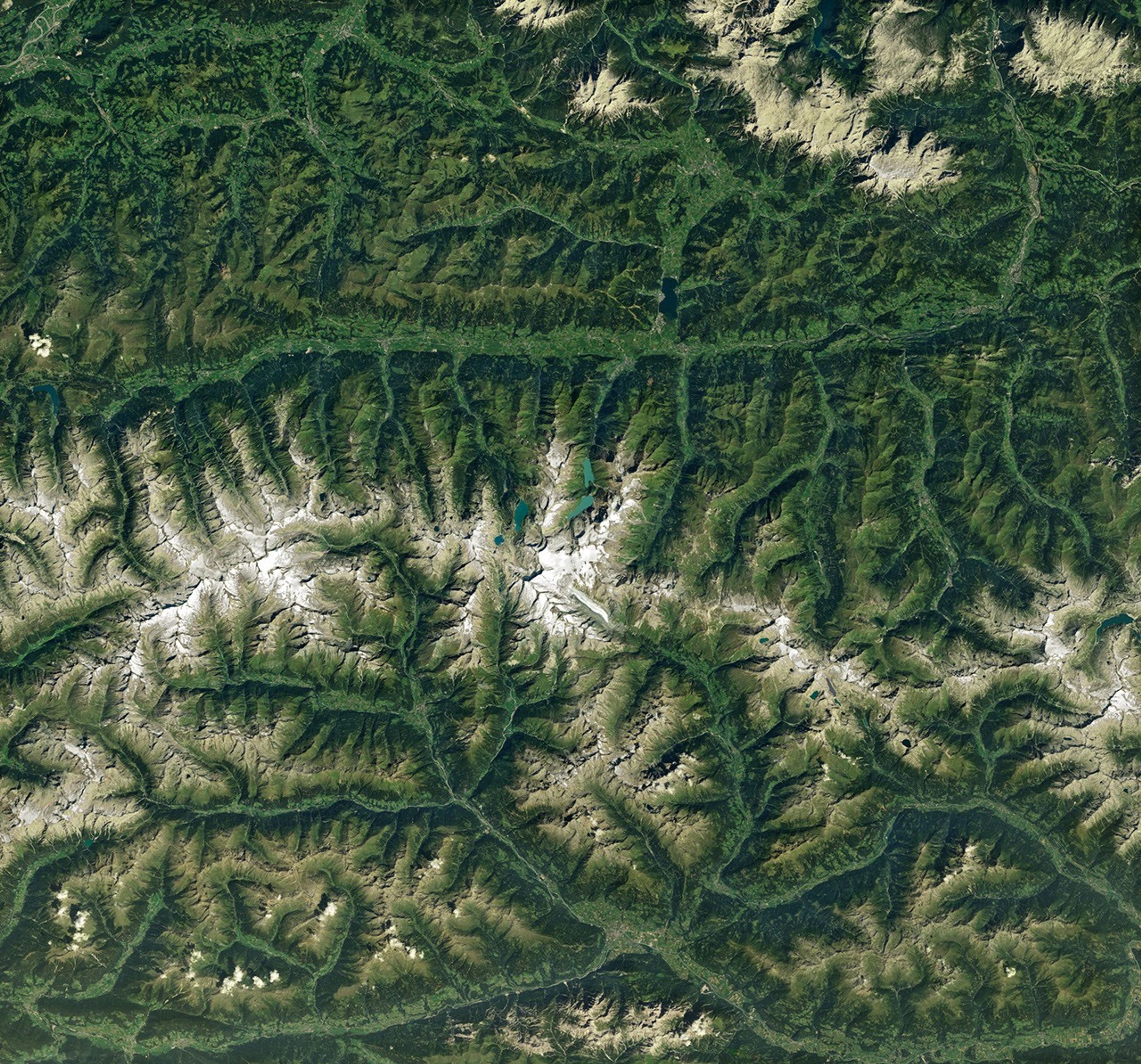
The sweltering spring and summer of 2026 have shone a spotlight on the Pasterze and the many other glaciers in the Alps already undergoing rapid retreat in the 21st century. A hot and dry spring in Austria was followed by the highest combined June and July temperatures on record in Western Europe, according to Europe’s Copernicus climate monitoring service. In 2024 and 2025, nearly all of Austria’s glaciers retreated, and signs in 2026 point toward yet more melt. When Pasterze’s Hufeisenbruch icefall does succumb to melting or collapse, the glacier will cede its status as Austria’s largest to Gepatschferner in the Ötztal Alps in Tyrol.
NASA Earth Observatory images by Michala Garrison, using Landsat data from the U.S. Geological Survey. Story by Lindsey Doermann.
References & Resources
- AP News (2026, March 13) All but 2 of Austria’s 96 glaciers have retreated over last 2 years. Accessed August 27, 2026.
- Austrian Alpine Club (2026, July 7) Austria’s largest glacier hanging by a thread. Accessed August 27, 2026.
- Kellerer-Pirklbauer, A., et al. (2021) Buoyant calving and ice-contact lake evolution at Pasterze Glacier (Austria) in the period 1998–2019. The Cryosphere, 15, 1237–1258.
- NASA Earth Observatory (2026, August 21) Europe’s Scorching Summer. Accessed August 27, 2026.
- NASA Earth Observatory (2004, June 7) Pasterze Glacier, Austria. Accessed August 27, 2026.
You may also be interested in:
Stay up-to-date with the latest content from NASA as we explore the universe and discover more about our home planet.
Scientists relied on satellite data to understand how the Antarctic glacier lost so much ice so rapidly.

Ice splintered off the southern Patagonia glacier and drifted across a growing glacial lake.
In summer 2026, a substantial iceberg calved from Petermann Glacier in northwest Greenland and swiftly drifted into Nares Strait, colliding…
The post Pasterze Hangs on as Austria’s Largest Glacier appeared first on NASA Science.
Ribbon-Cutting Event for NASA Deep Space Network’s Deep Space Station 23
Ribbon-Cutting Event for NASA Deep Space Network’s Deep Space Station 23

Description
Leadership from NASA Headquarters, the Jet Propulsion Laboratory, and the Deep Space Network (DSN) stand in front of the recently completed Deep Space Station 23 antenna at the Deep Space Network’s Goldstone complex near Barstow, California, on Aug. 25, 2026.
From left: Germaine Aziz (project manager, DSN Aperture Enhancement Project, JPL); Bradford Arnold (manager, Telecom Programs & Oversight, JPL); Keyur Patel (associate lab director for Flight Projects & Mission Success, JPL); Wanda Peters (deputy associate administrator, Research and Technology Mission Directorate, NASA Headquarters); Jimmy Kenyon (associate administrator, RTMD, NASA Headquarters); John McCullough (acting director, Space Communications and Navigation Program, NASA Headquarters); Gregory Heckler (deputy program manager for capability development, SCaN, NASA Headquarters); William Marinelli (development manager, SCaN, NASA Headquarters), Michael Levesque (project manager, DSN, JPL); and Frank Kaufholod (project manager, NASA Glenn Research Center).
They gathered at the recently completed DSS-23 antenna for a ceremonial ribbon cutting on Aug. 25, 2026. It’s the latest antenna to be added as part of the DSN’s Aperture Enhancement Project, which began in 2009 to upgrade and expand the network by adding six new 34-meter (114-foot) multifrequency beam-waveguide antennas. These versatile Deep Space Network dishes can enhance many missions operating over different radio frequencies.
The DSN allows missions to track, send commands to, and receive scientific data from faraway spacecraft. It is managed by JPL, a division of Caltech, in Southern California for SCaN, which is located at NASA Headquarters within RTMD.
For more information about the DSN, visit:
https://www.nasa.gov/communicating-with-missions/dsn/
The post Ribbon-Cutting Event for NASA Deep Space Network’s Deep Space Station 23 appeared first on NASA Science.
NASA Deep Space Network’s New Goldstone Antenna Goes Online
NASA Deep Space Network’s New Goldstone Antenna Goes Online
Description
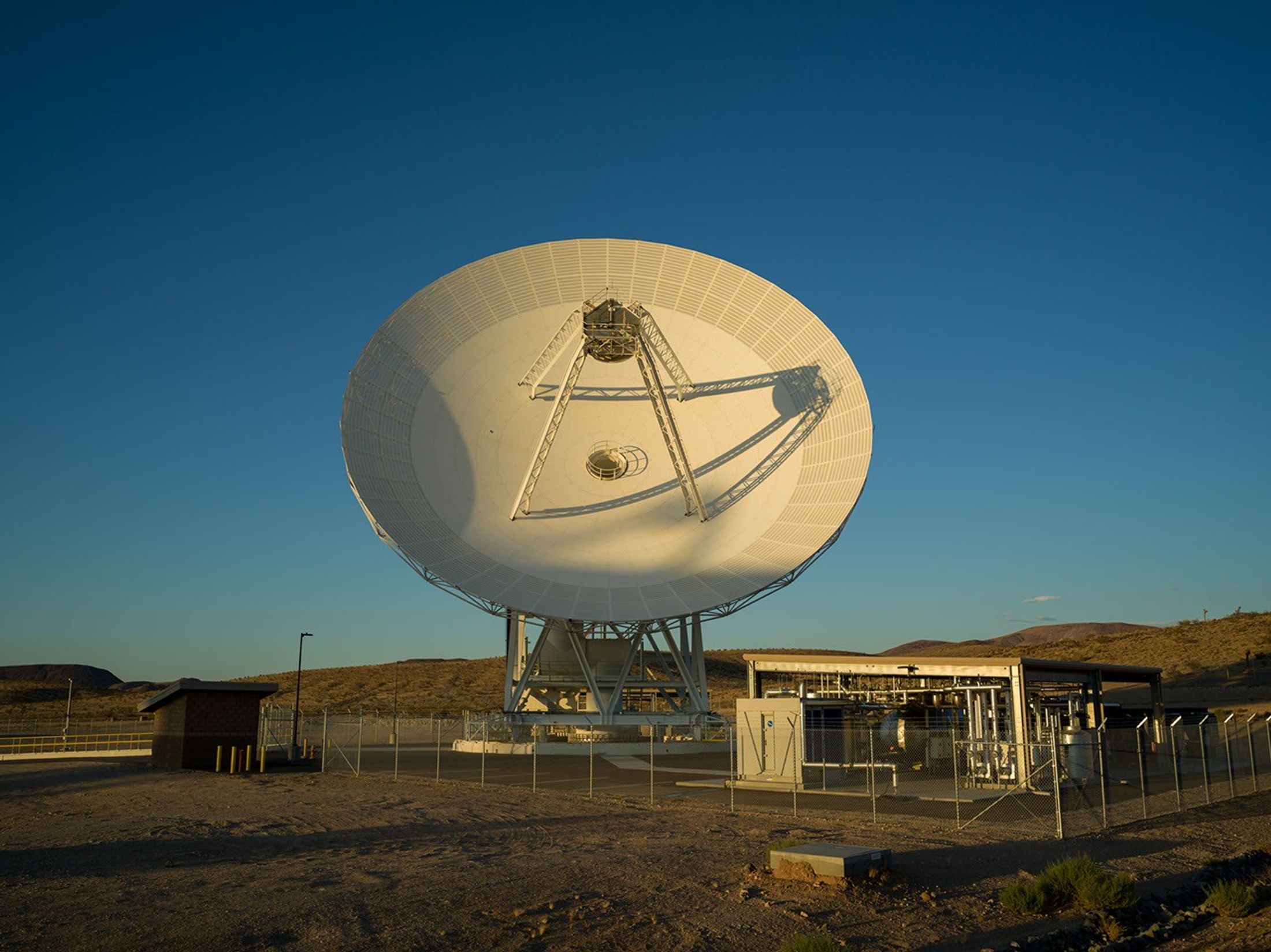
Long shadows are cast by the recently completed Deep Space Station 23 at the Deep Space Network’s Goldstone complex near Barstow, California, in August 2026. A 34-meter (114-foot) multifrequency beam-waveguide antenna, DSS-23 will boost the DSN’s capacity and enhance NASA’s deep space communications capabilities for decades to come.
NASA leadership and personnel as well as dignitaries gathered at the complete DSS-23 antenna for a ceremonial ribbon cutting on Aug. 25, 2026. It’s the latest antenna to be added as part of the Deep Space Network’s Aperture Enhancement Project, which began in 2009 to upgrade and expand the network by adding six new 34-meter multifrequency beam-waveguide antennas. These versatile Deep Space Network dishes can enhance many missions operating over different radio frequencies.
The DSN allows missions to track, send commands to, and receive scientific data from faraway spacecraft. It is managed by NASA’s Jet Propulsion Laboratory, a division of Caltech, in Southern California for the agency’s Space Communications and Navigation (SCaN) Program, which is located at NASA Headquarters within the Research and Technology Mission Directorate.
For more information about the DSN, visit:
https://www.nasa.gov/communicating-with-missions/dsn/
The post NASA Deep Space Network’s New Goldstone Antenna Goes Online appeared first on NASA Science.
Panorama Showcasing the 34-Meter Antennas of the DSN’s Goldstone Complex
Panorama Showcasing the 34-Meter Antennas of the DSN’s Goldstone Complex
Description
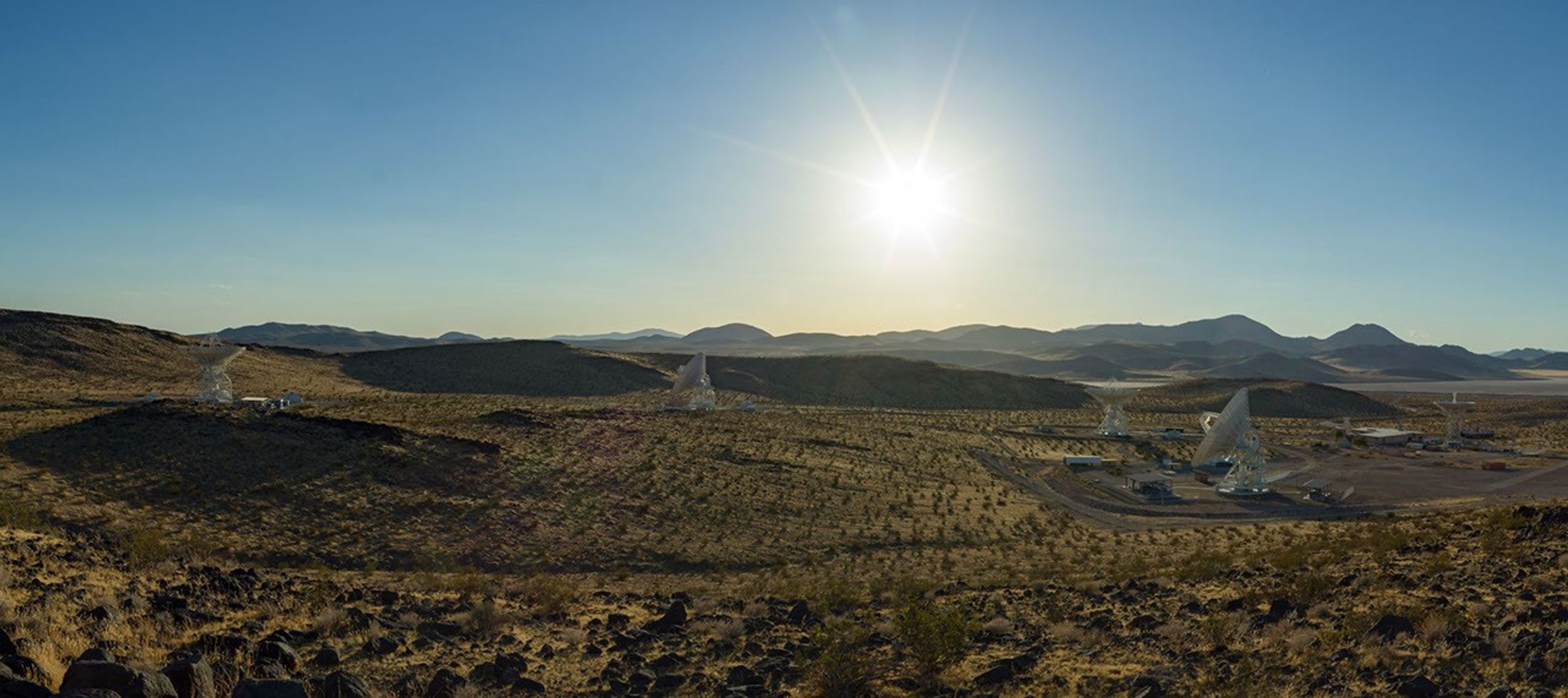
Five antennas soak in the summer sun at the Deep Space Network’s Goldstone complex near Barstow, California, in August 2026. The recently completed Deep Space Station 23, a 34-meter (114-foot) beam-waveguide antenna, can be seen to the right of the frame in the foreground. The other three 34-meter antennas are, from left, DSS-26, DSS-25, and DSS-24. At farthest right is a smaller 26-meter (85-foot) antenna, the retired “Apollo Antenna” that was built in 1967 as part of the Manned Space Flight Network and earned its nickname for providing tracking for the Apollo Program.
NASA leadership and personnel as well as dignitaries gathered at the complete DSS-23 antenna for a ceremonial ribbon-cutting on Aug. 25, 2026. It’s the latest antenna to be added as part of the Deep Space Network’s Aperture Enhancement Project, which began in 2009 to upgrade and expand the network by adding six new 34-meter multifrequency beam-waveguide antennas. These versatile Deep Space Network (DSN) dishes can enhance many missions operating over different radio frequencies.
The DSN allows missions to track, send commands to, and receive scientific data from faraway spacecraft. It is managed by NASA’s Jet Propulsion Laboratory in Southern California, a division of Caltech, for the agency’s Space Communications and Navigation (SCaN) Program, which is located at NASA Headquarters within the Research and Technology Mission Directorate.
For more information about the DSN, visit:
https://www.nasa.gov/communicating-with-missions/dsn/
The post Panorama Showcasing the 34-Meter Antennas of the DSN’s Goldstone Complex appeared first on NASA Science.
The Forested Floodplains of Congaree National Park
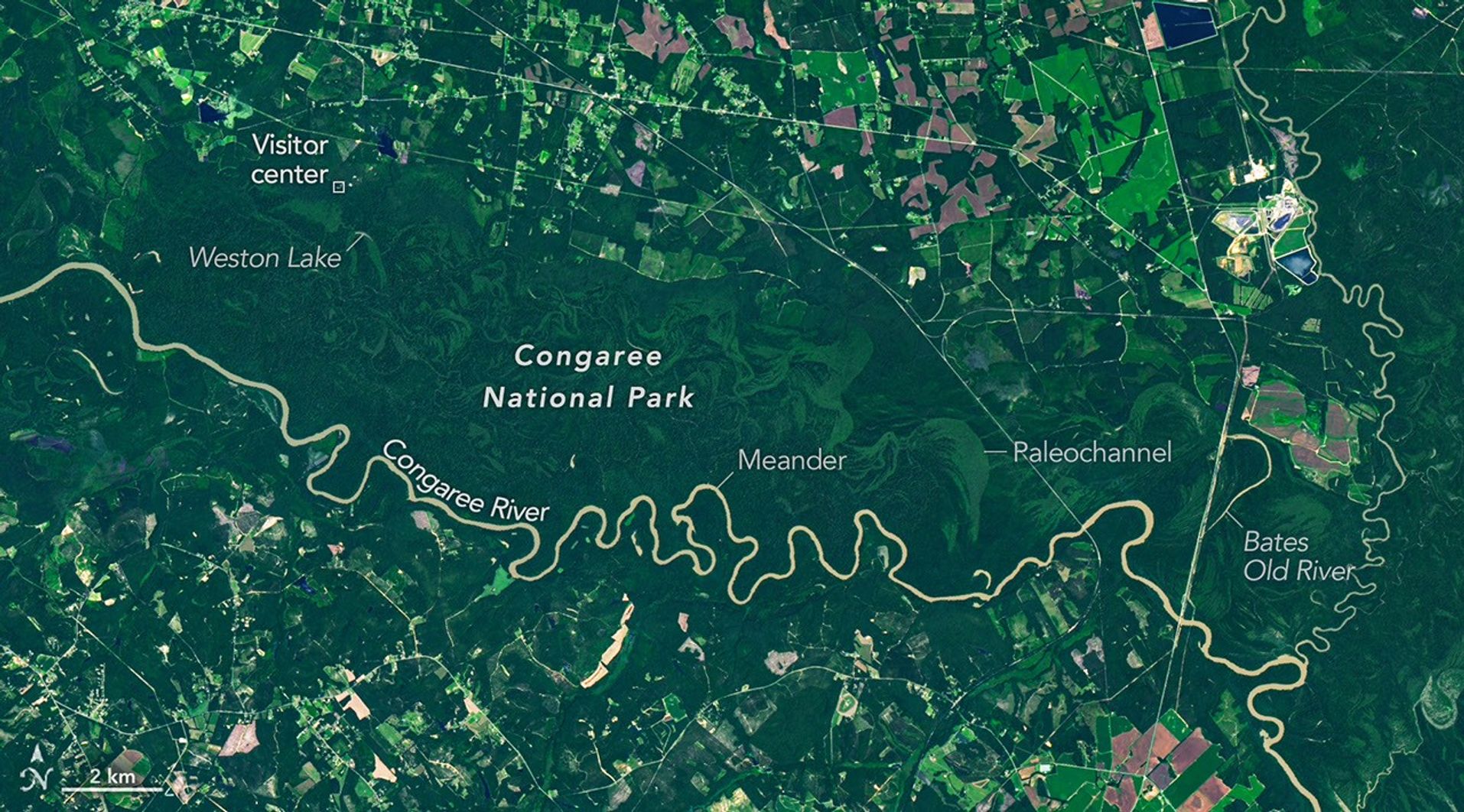
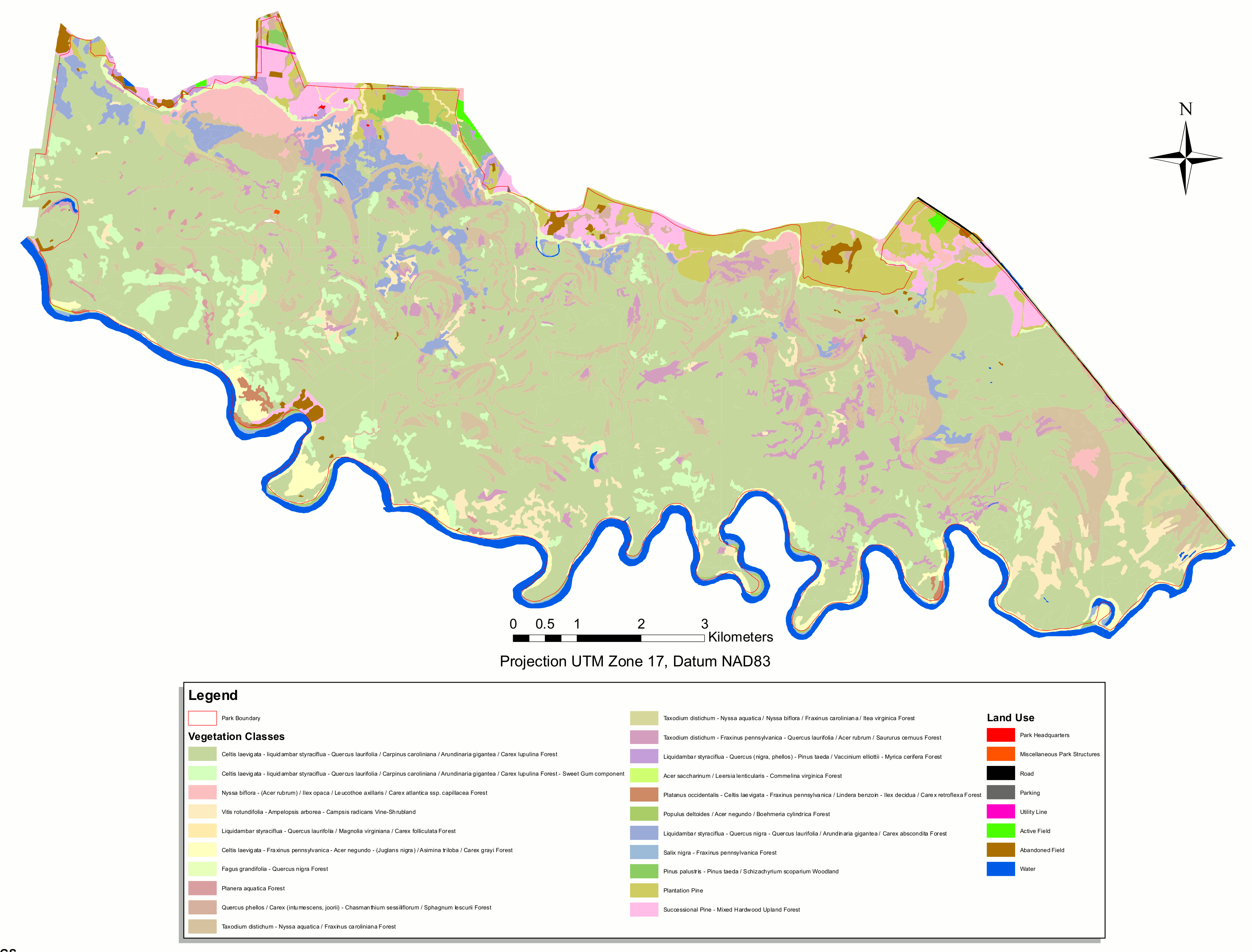
Among the 63 U.S. national parks, few are as defined by a single river’s floodplain as Congaree National Park in South Carolina. While the features are also prominent in other parks, a full 80 percent of Congaree National Park lies within the Congaree River floodplain.
It’s a place home to one of the largest intact tracts of old-growth bottomland hardwood forests in the United States. In this image captured by the OLI (Operational Land Imager) on Landsat 9, the river winds through the forested plain, along with curving bands of green that trace old channels, ridges, and swales left behind as the river gradually migrated across it. Slight differences in elevation in these paleochannels and other landforms affect how frequently they flood, producing distinct ecosystems that appear in contrasting shades of green.
The river flows through flat, soft terrain, which encourages the formation of bends and meanders. Water typically flows faster on the outside of bends, leading to more rapid erosion as the channel carves into the outer riverbank. It moves more slowly on the inside of bends, resulting in the deposition of sediment and the growth of sandy features called point bars. Over time, this process can cut off a bend from the main river channel, forming U-shaped oxbow lakes.
The National Park Service lists Weston Lake, 1.2 miles (1.9 kilometers) from the visitor center, as one of the park’s most permanent oxbow lakes, noting that it is relatively deep and lacks the shallow clay and silt layer found in most of the park’s other oxbow lakes, such as Devil’s Elbow. On the right side of the image is Bates Old River, a roughly 4-mile-long abandoned channel of the Congaree River and one of the longest oxbow lakes in South Carolina. Over time, abandoned channels and oxbow lakes can fill with sediment and become shallow wetlands. Some of these low-lying, water-filled features are known as sloughs, where flood-tolerant cypress-tupelo forests tend to grow.
While loggers targeted forests along the Congaree in the 1880s, challenges such as frequent flooding, interminably muddy roads, and mosquito-plagued conditions meant that most of the floodplain forests escaped the widespread logging that transformed other parts of the Southeast. By the 1950s, conservationists had begun to recognize how rare old-growth forests of this type had become in the region. Congress designated the area a national monument in 1976, and it became a national park in 2003.
As the river snakes its way through the park’s mostly flat terrain, it overflows its banks several times per year, usually in the winter and early spring but also in the summer and fall after hurricanes and major rainstorms. These floods distribute broad layers of nutrient-rich silt throughout the floodplain, nourishing the forests and contributing to the high concentration of unusually large trees in the park.
Over the decades, Congaree National Park has harbored a remarkable array of giant “champion” trees that have held national and state size records for their species. Though individual trees have gained and lost champion status as they have been damaged, have died, or been surpassed by newly measured trees elsewhere, Congaree trees such as the possumhaw (Ilex decidua), water hickory (Carya aquatica), loblolly pine (Pinus taeda), laurel oak (Quercus laurifolia), swamp tupelo (Nyssa biflora), and sweetgum (Liquidambar styraciflua) have held records at times.
During this National Park Week, celebrate by exploring Earth Observatory’s U.S. National Parks from Space collection. You can also check out the offerings of Earth to Sky, a collaborative program that connects NASA science with park service rangers across the nation.
NASA Earth Observatory image by Michala Garrison, using Landsat data from the U.S. Geological Survey. Story by Adam Voiland.

References & Resources
- American Forests (2009) Congaree: Where The Trees Are Still Tall. Accessed August 27, 2026.
- Atlas Obscura (2025, May 12) How One Biologist Drew a Hyper-Accurate, Ranger-Approved Map of Congaree National Park. Accessed August 27, 2026.
- Discover South Carolina, Champion Trees are Star Attraction at Congaree National Park. Accessed August 27, 2026.
- National Parks Conservation Association (2024, March 27) Congaree: ‘Champion’ Trees, Synchronous Fireflies and More. Accessed August 27, 2026.
- National Parks Conservation Association (2017) The Wild Congaree. Accessed August 27, 2026.
- National Park Maps, Congaree Forest Map. Accessed August 27, 2026.
- National Park Service, Last Stand for Floodplain Forests. Accessed August 27, 2026.
- National Park Service, Congaree National Park. Accessed August 27, 2026.
- National Park Service (2014) Congaree National Park: Geologic Resources Inventory Report. Accessed August 27, 2026.
- U.S. Environmental Protection Agency, Bottomland Hardwoods. Accessed August 27, 2026.
- U.S. Geological Survey Ecology of Congaree National Park. Accessed August 27, 2026.
You may also be interested in:
Stay up-to-date with the latest content from NASA as we explore the universe and discover more about our home planet.
Sites relevant to the start of the American Revolutionary War are interspersed throughout the modern-day Boston metropolitan region.
The colonial communities of “America’s historic triangle” played defining roles in the road to American independence.
The coastal dune field in Brazil looks like a desert but fills with freshwater lagoons every year.
The post The Forested Floodplains of Congaree National Park appeared first on NASA Science.
Rare, Widespread Snow in the Atacama Desert
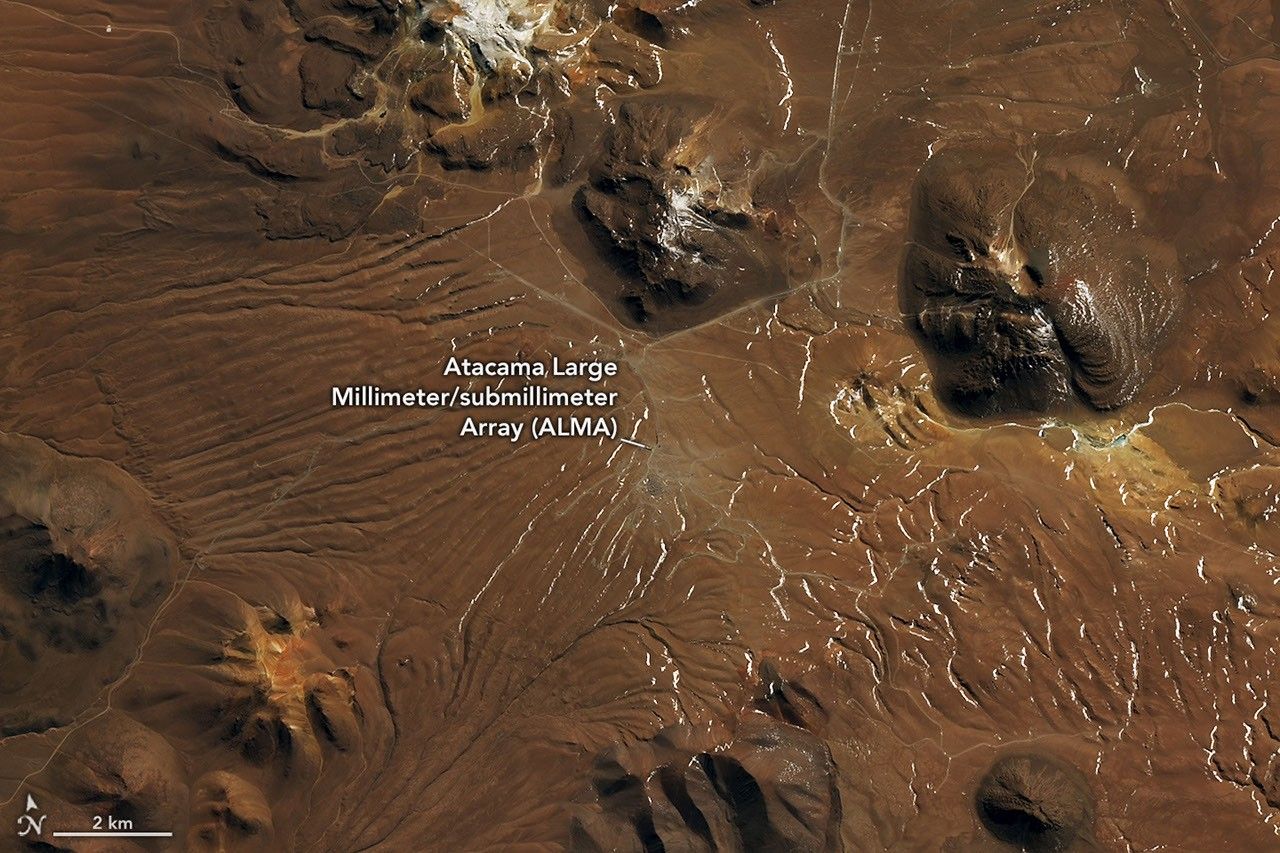
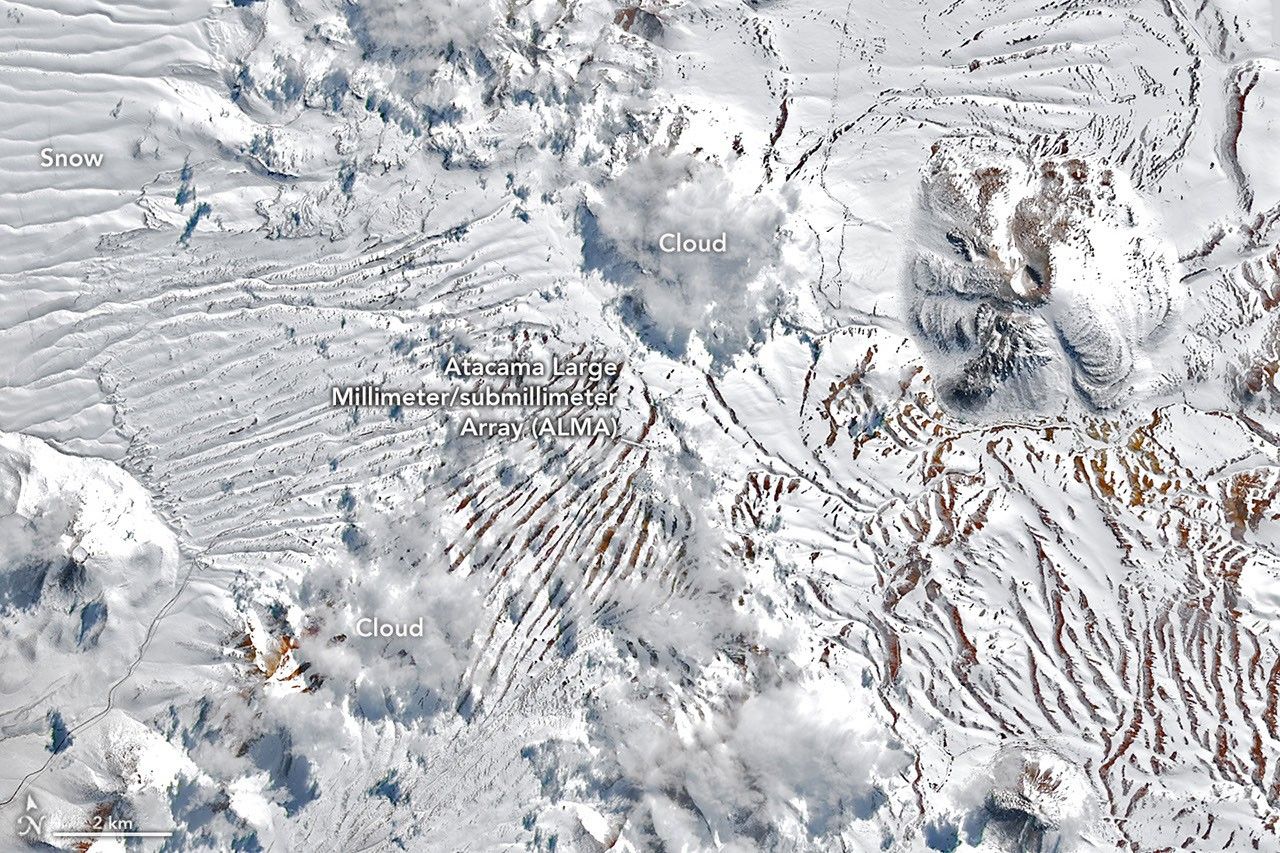
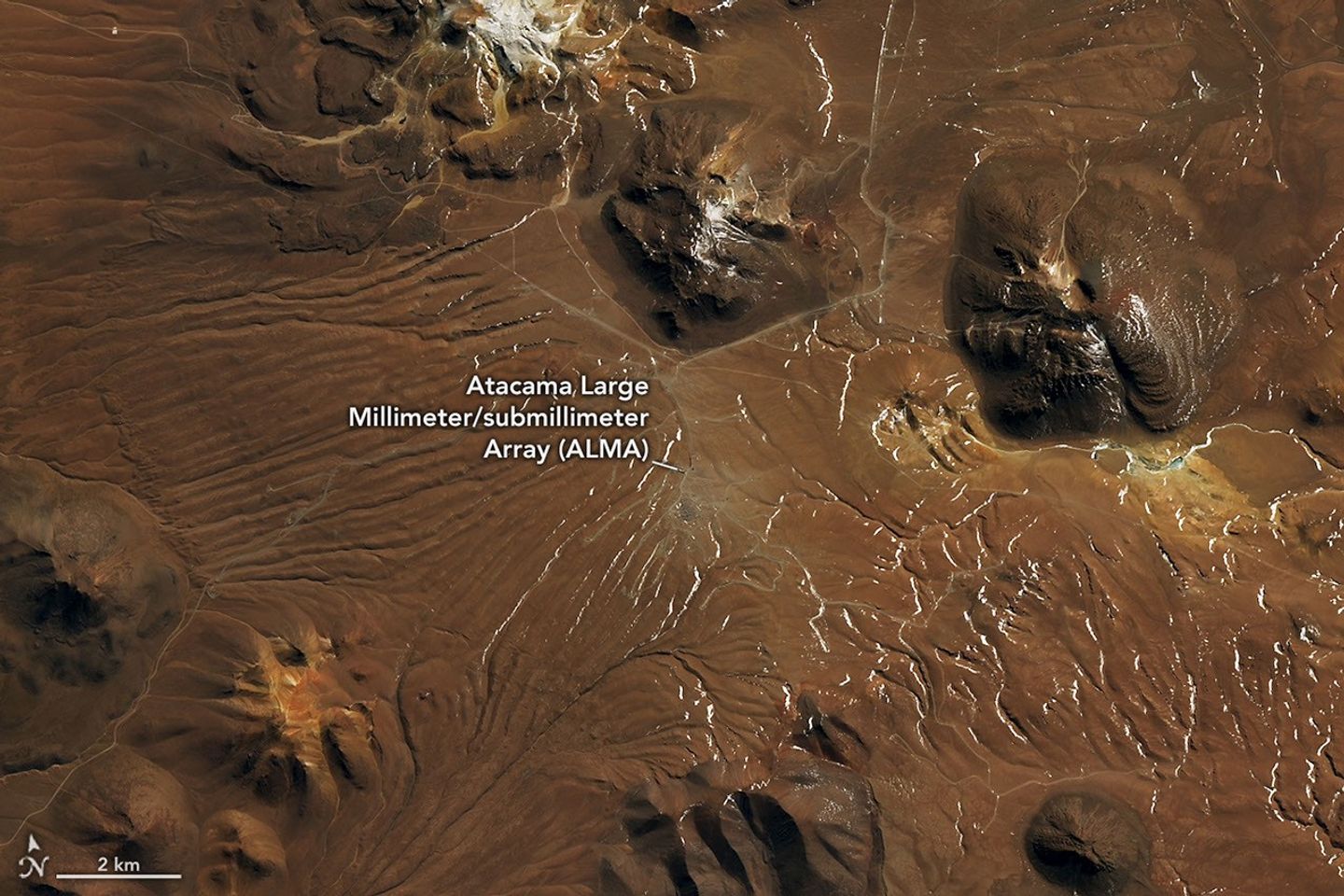
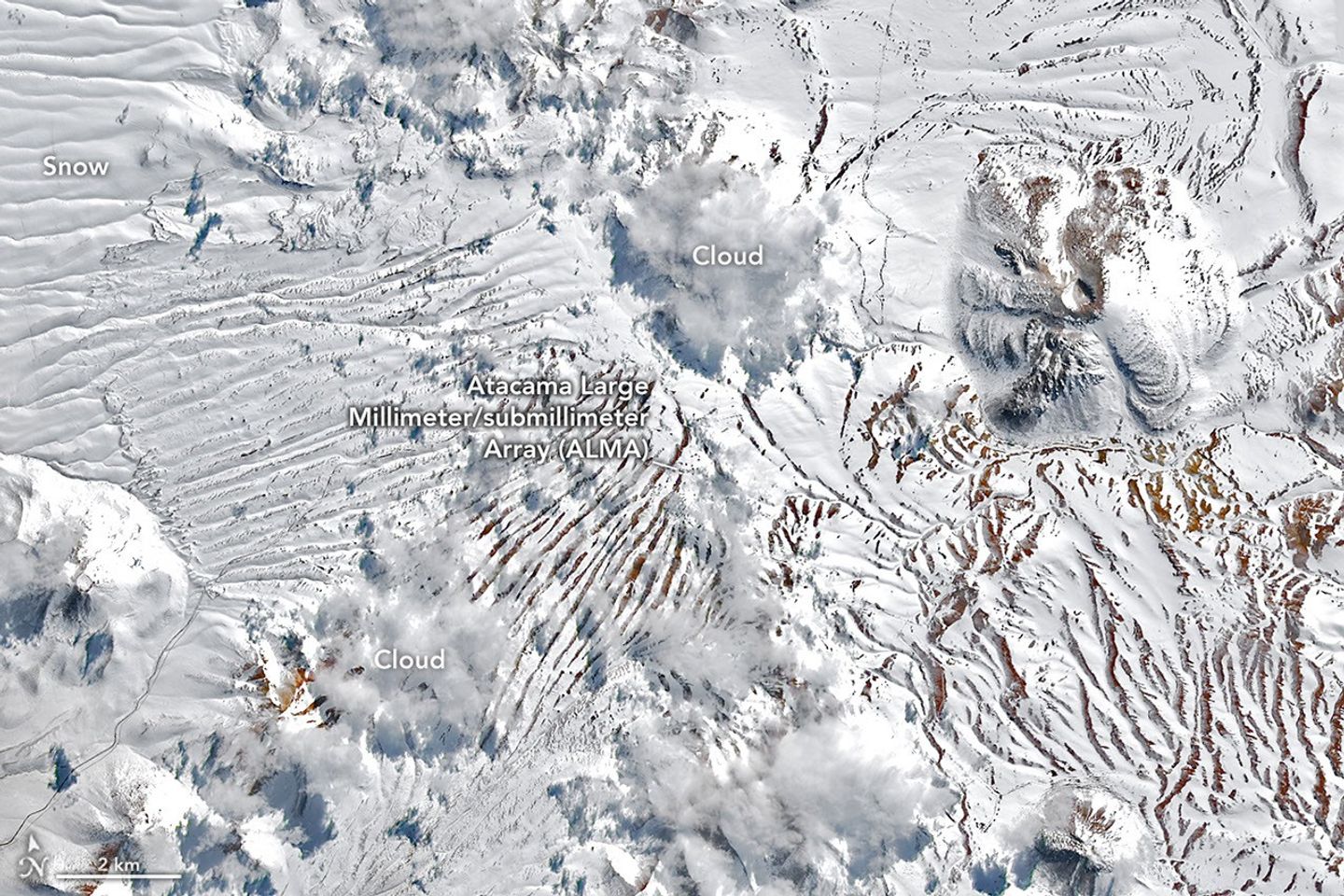
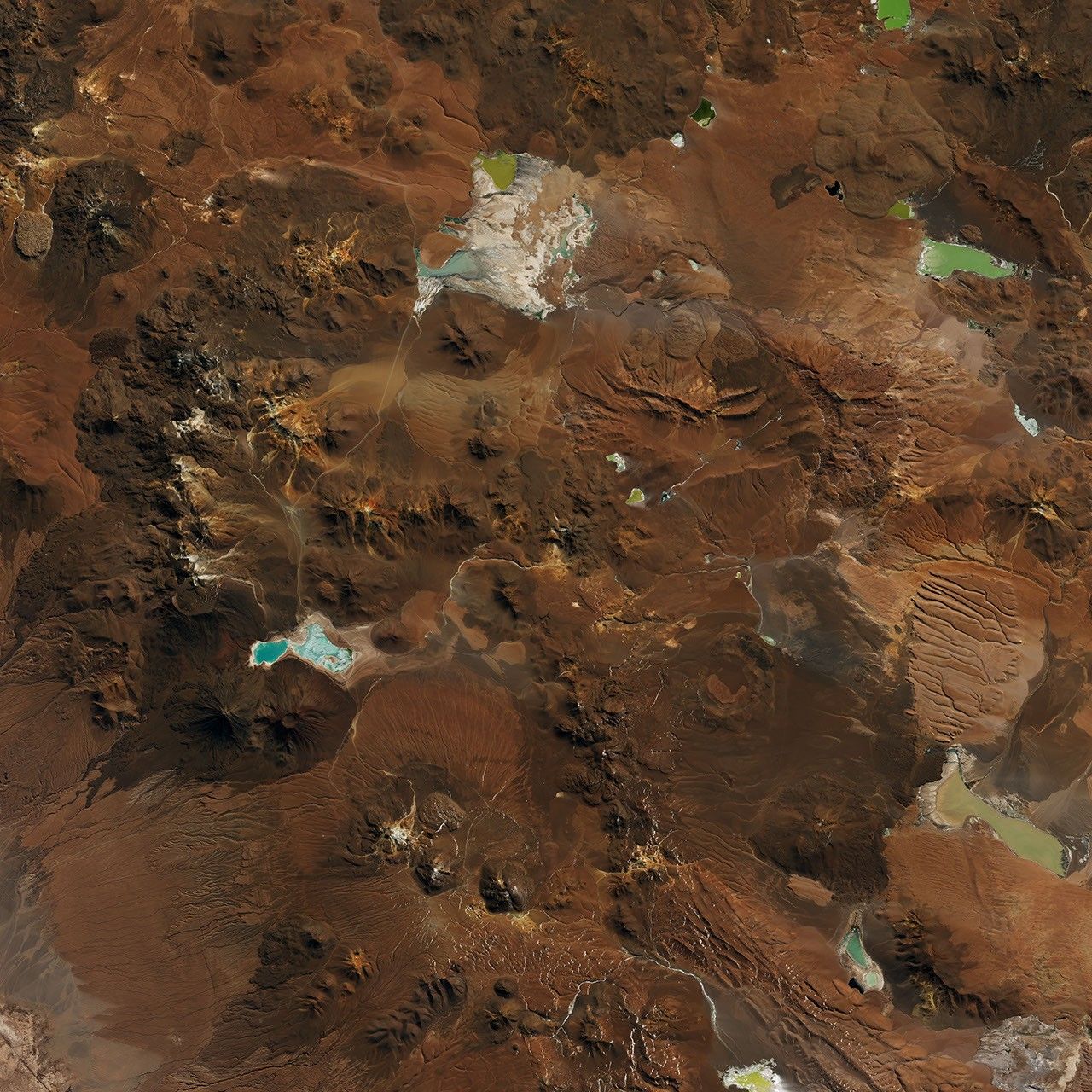
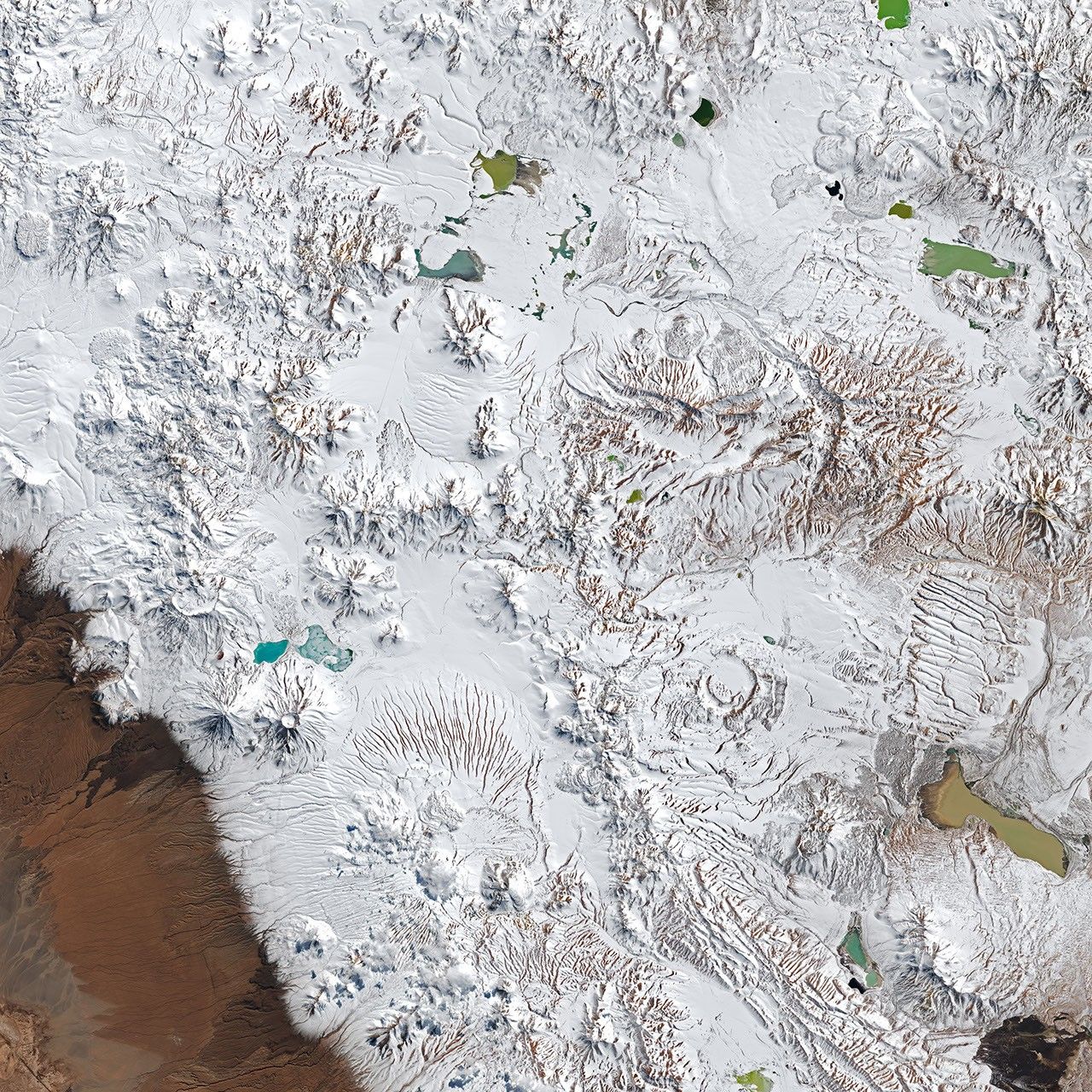
In August 2026, back-to-back winter storms left parts of the Atacama Desert in northern Chile covered in a rare blanket of snow. The typically arid region has seen snowfall before, notably in 2025 and before that in 2011. But one of the 2026 events was unusually widespread, stretching from the Andes to near the Pacific coast.
The OLI (Operational Land Imager) on the NASA-USGS Landsat 8 and Landsat 9 satellites captured these images (above) on August 6 and August 14, before and after a period of severe weather, respectively. They show a detailed view of the Chajnantor plateau within the Altiplano-Puna volcanic complex, home to the Atacama Large Millimeter/submillimeter Array (ALMA)—one of the planet’s most powerful radio telescopes. As snow and high winds set in, ALMA suspended operations, moving its antennas into a protective survival mode.
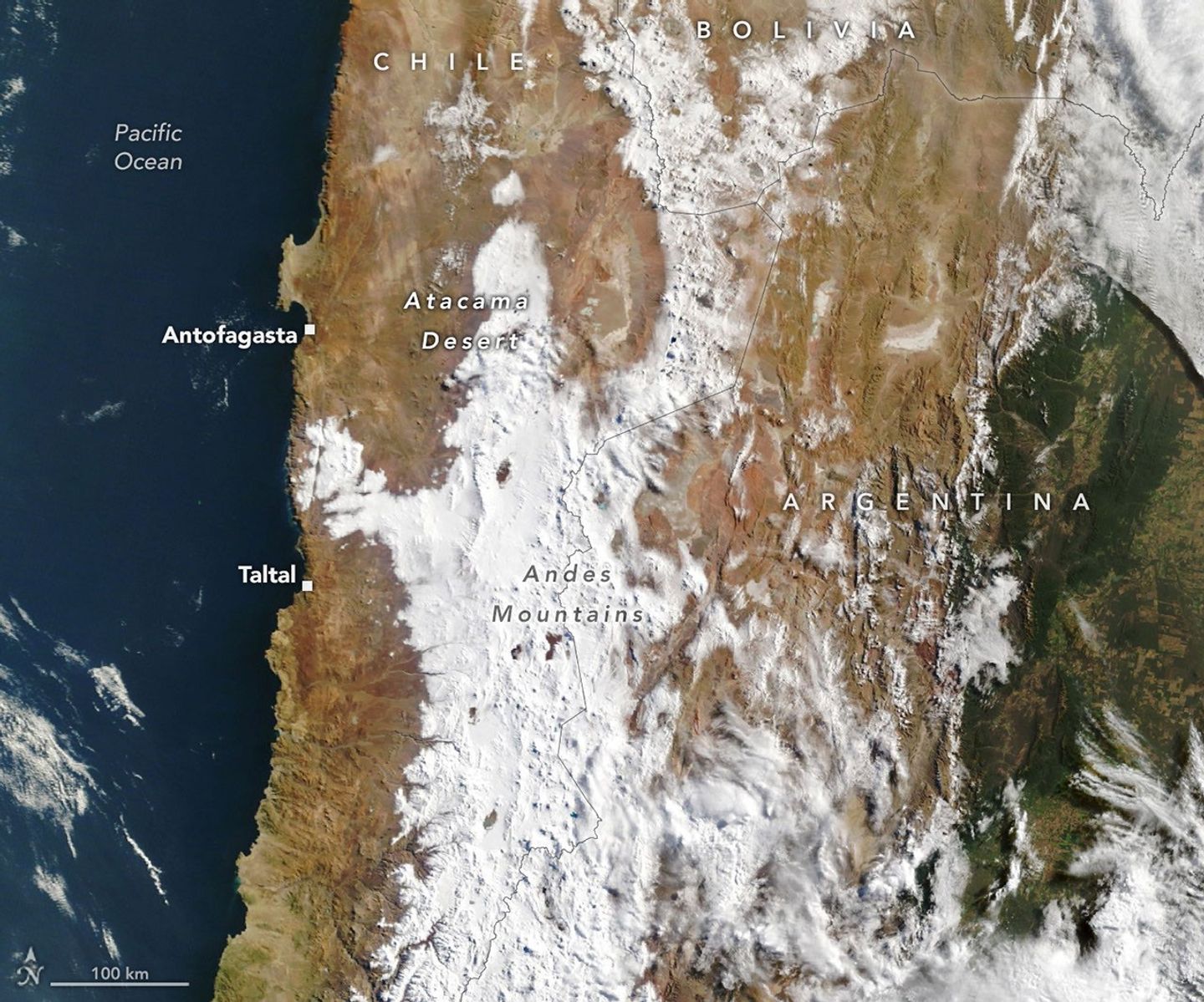
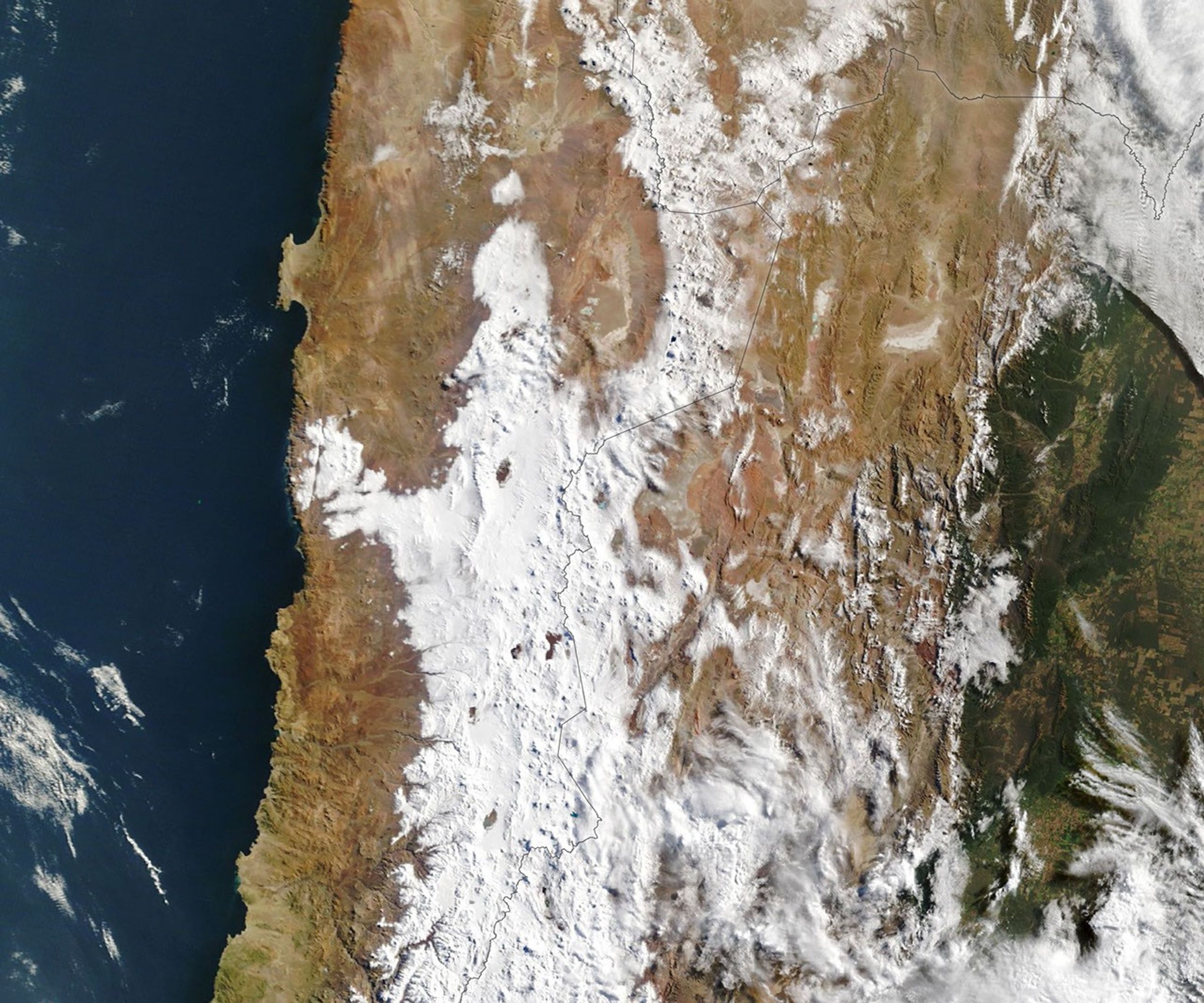
Another storm in the second half of the month blanketed an even wider area with fresh snowfall. This image, captured by the MODIS (Moderate Resolution Imaging Spectroradiometer) on NASA’s Terra satellite on August 19, shows snow extending westward from the Andes, across the desert’s hyper-arid core, and close to the Pacific coast south of the Chilean port city of Antofagasta. This coastal area is home to several other major astronomical observatories, some of which also suspended operations during the event.
Most of the region’s winter precipitation comes from cutoff lows—low-pressure systems that become cut off from the jet stream and can occasionally reach northern Chile. That’s what happened in 2025, said René Garreaud, an atmospheric scientist at the University of Chile. The late-August 2026 storm also came from a cutoff low, but this one spun off from an unusually large trough—an elongated area of relatively low atmospheric pressure—that spanned an enormous stretch of the hemisphere, from the tip of South America up into the subtropics.
The atmospheric disruption, combined with ample coastal moisture, produced precipitation that spanned an unusually wide swath of the region—offshore, along the coast, across the core of the Atacama, and over the Andes. Totals reached a magnitude “rarely seen in the otherwise extremely arid region,” Garreaud said.
In some areas it fell as rain, not snow. Taltal, for instance, on Chile’s northern coast, accumulated nearly 40 millimeters (1.6 inches) of rain in three days—about 10 times its annual mean, Garreaud said. “We see these kinds of events only a few times, if any, per decade.”
The abundant precipitation spurred destructive mudflows and flash flooding in parts of northern Chile. The National Disaster Prevention and Response Service (SENAPRED) reported thousands were affected and hundreds of homes had major damage.
Garreaud noted that the strengthening El Niño is the backdrop for the anomalously wet winter in north-central Chile. In addition to the August storms, a major event in July brought significant impacts to the country’s Norte Chico region. During El Niño, the subtropical Pacific high—which normally keeps the region dry—weakens, while a blocking high tends to form in the South Pacific near the tip of the continent. Together, these shifts push the Southern Hemisphere storm track equatorward.
NASA Earth Observatory images by Lauren Dauphin, using Landsat data from the U.S. Geological Survey and MODIS data from NASA EOSDIS LANCE and GIBS/Worldview. Story by Kathryn Hansen.
Downloads


References & Resources
- CR2 (2026, July 23) The extreme event of July 15-20, 2026, within the context of the developing El Niño. Accessed August 26, 2026.
- NASA Earth Observatory (2025, July 19) Rare Snowfall in the Atacama Desert. Accessed August 26, 2026.
- National Weather Service, Climate Prediction Center (2026, August 13) El Niño/Southern Oscillation (ENSO) Diagnostic Discussion. Accessed August 26, 2026.
- The Watchers (2026, August 18) Snow and 90 km/h (55 mph) winds suspend ALMA observations in the Atacama Desert, Chile. Accessed August 26, 2026.
You may also be interested in:
Stay up-to-date with the latest content from NASA as we explore the universe and discover more about our home planet.
The mountains of Utah and Colorado are among the areas of the western U.S. that are low on snow and…
The first named storm of the 2026 Atlantic hurricane season brought intense rainfall and the threat of flash flooding to…
The sprawling storm promised to deliver torrential rain across a wide swath of southern Japan.
The post Rare, Widespread Snow in the Atacama Desert appeared first on NASA Science.