- home
-
news
- arXiv
- physics
- linux
- nature
- world
- BBC
- Al Jazeera
- earth
- universe
- wiki
- gemini
- python
- An inflatable SLS (Space Launch System) rocket.
- Displays featuring the Starship and Blue Moon human landing systems.
- Information about NASA internship opportunities.
- Photo opportunities featuring NASA exhibits and displays.
-
-
- BBC (2026, October 14) Gales and heavy rain to impact UK as yellow wind warning issued. Accessed October 20, 2026.
- CIMSS Satellite Blog (2026, October 14) Rapidly-intensifying hurricane force midlatitude cyclone passes over Iceland. Accessed October 20, 2026.
- NASA Earth Observatory (2016, September 9) The Evolution of Hurricane Hermine. Accessed October 20, 2026.
- NASA Earth Observatory (2013, March 7) Storms Come in Many Forms. Accessed October 20, 2026.
- NOAA National Ocean Service (2026, September 23) What is bombogenesis? Accessed October 20, 2026.
- RÚV (2026, October 14) Storm moves north. Accessed October 20, 2026.
- Weather & Radar (2026, October 14) Former hurricane to record storm. Accessed October 20, 2026.
NASA Conducts RS-25 Engine Test in Support of Future Artemis Missions
NASA tested RS-25 engine No. 10001 on Oct. 21 on the Fred Haise Test Stand at NASA’s Stennis Space Center near Bay St. Louis, Mississippi. Test teams fired the developmental engine for almost eight-and-a-half minutes (500 seconds), the same amount of time RS-25 engines fire during launch of NASA’s SLS (Space Launch System) rocket. During […]https://www.nasa.gov/image-article/rs-25-engine-test-in-support-of-future-artemis-missions/
NASA Conducts RS-25 Engine Test in Support of Future Artemis Missions
2 min read
Preparations for Next Moonwalk Simulations Underway (and Underwater)
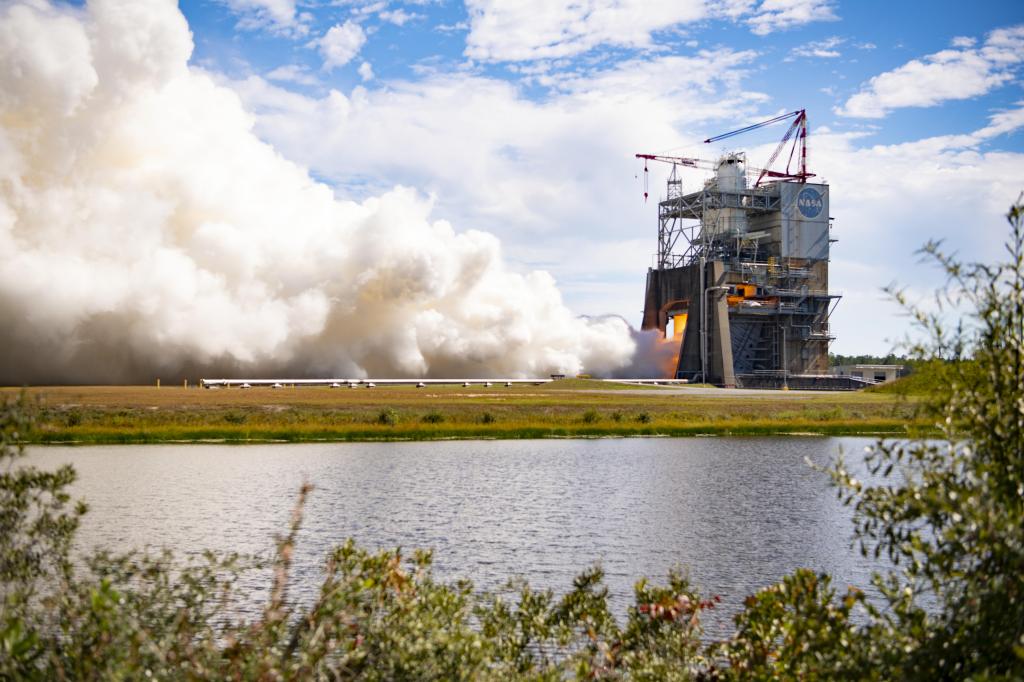
NASA conducts a hot fire of RS-25 engine No. 10001 on the Fred Haise Test Stand at NASA’s Stennis Space Center near Bay St. Louis, Mississippi, on Oct. 21, 2026.
NASA/Danny Nowlin

NASA conducts a hot fire of RS-25 engine No. 10001 on the Fred Haise Test Stand at NASA’s Stennis Space Center near Bay St. Louis, Mississippi, on Oct. 21, 2026.
NASA/Danny Nowlin

NASA conducts a hot fire of RS-25 engine No. 10001 on the Fred Haise Test Stand at NASA’s Stennis Space Center near Bay St. Louis, Mississippi, on Oct. 21, 2026.
NASA/Danny Nowlin
NASA tested RS-25 engine No. 10001 on Oct. 21 on the Fred Haise Test Stand at NASA’s Stennis Space Center near Bay St. Louis, Mississippi.
Test teams fired the developmental engine for almost eight-and-a-half minutes (500 seconds), the same amount of time RS-25 engines fire during launch of NASA’s SLS (Space Launch System) rocket.
During the test, operators also fired the engine up to the 111% power level, matching the thrust needed for new production engines to launch the SLS rocket and the Orion spacecraft to orbit.
The main objectives of the test were to acceptance test RS-25 flight components for future Artemis missions and validate the new thermal protection system, which protects the RS-25 engine nozzle from the thermal environment surrounding SLS during launch.
While this developmental engine will not be used in flight, the hot fire test provides NASA and NASA’s prime contractor L3Harris Technologies with the capability to capture critical data to improve engine performance and reliability.
Four RS-25 engines produce up to 2 million pounds of combined thrust to help launch the SLS rocket for each Artemis mission.
All RS-25 engines are tested and proven flightworthy at NASA Stennis prior to use. Tests are conducted by a team of operators from NASA, L3Harris, and Nova Space Solutions.
https://www.nasa.gov/image-article/rs-25-engine-test-in-support-of-future-artemis-missions/
NASA JPL Looks to Next 90 Years of Innovation, Exploration
Interstellar probes. Lunar drones. Helicopters on Mars. When a group of Caltech graduate students and enthusiasts began conducting rocket-propulsion tests in Pasadena’s Arroyo Seco on Oct. 31, 1936, they had no idea that their work marked the inception of the Jet Propulsion Laboratory. Ninety years later, the lab, now managed by Caltech for NASA, isn’t […]https://www.nasa.gov/centers-and-facilities/jpl/nasa-jpl-looks-to-next-90-years-of-innovation-exploration/
NASA JPL Looks to Next 90 Years of Innovation, Exploration
5 min read
Preparations for Next Moonwalk Simulations Underway (and Underwater)

Clockwise from top: Caltech graduate students and friends carry out their first rocket firing on Halloween, 1936, in a dry riverbed along which JPL would rise. Their work helped make possible missions such as Perseverance and Europa Clipper as well as the future SkyFall and MoonFall missions.
NASA/JPL-Caltech
Interstellar probes. Lunar drones. Helicopters on Mars.
When a group of Caltech graduate students and enthusiasts began conducting rocket-propulsion tests in Pasadena’s Arroyo Seco on Oct. 31, 1936, they had no idea that their work marked the inception of the Jet Propulsion Laboratory. Ninety years later, the lab, now managed by Caltech for NASA, isn’t only celebrating the long line of historic firsts accomplished here; it’s paving the way for many to come.
Initially a contractor for the U.S. Army, JPL launched America’s first satellite, Explorer 1 in 1958. But rather than just orbiting Earth like the Soviet Union’s Sputnik, Explorer 1 became the first spacecraft to conduct science, thanks to an onboard Geiger counter that discovered the protective radiation belts encircling Earth.
The lab joined part of the newly formed NASA that same year. Within six years, in 1964, JPL sent the first U.S. mission to the Moon, Ranger 7. It also went on to lead the first planetary flyby, the first probe to visit all four gas giants, the first infrared telescope, the first rovers to roll on Mars, and the first rotorcraft to fly there, among many other historic milestones.
More firsts are on the way.
“Over the course of 90 years, JPL’s first-of-a-kind missions have transformed our understanding of the universe and our place in it,” said Dave Gallagher, JPL’s director since 2025. In 1992, only a couple years after he started as an engineer at the lab, Gallagher led the JPL team that built and tested the Wide-Field and Planetary 2 Camera for NASA’s Hubble Space Telescope, which delivered many of the mission’s most iconic images. “We stand on an extraordinary foundation, and we’re ready to push the boundaries with exciting new missions so that future generations can go even further.”
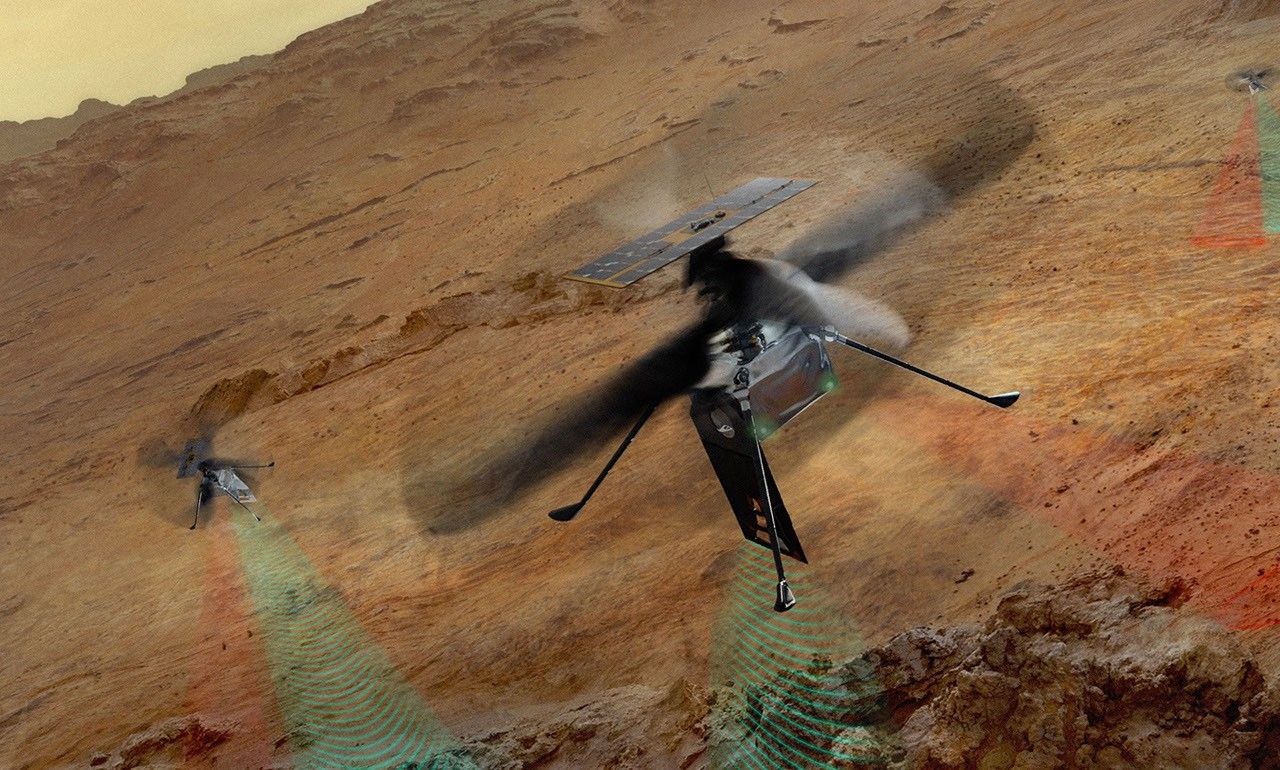
Aiming for a 2028 launch, the JPL-managed SkyFall mission will deploy three helicopters mid-descent over Mars to search to map hidden ice deposits and analyze weather patterns. Helping advance NASA’s Moon Base, JPL is developing MoonFall, a mission that will land a group of large propulsive drones at the lunar South Pole that same year. Set for a 2027 launch, SunRISE (Sun Radio Interferometer Space Experiment) features six toaster-oven-size satellites that will fly in formation to create a miles-wide radio antenna dish in order to study the Sun’s activity. What it reveals could help make space exploration safer for humans.
Protecting humanity is also the goal of the asteroid-hunting NEO Surveyor (Near-Earth Object Surveyor) mission, which, managed by JPL, will hunt for potentially hazardous space rocks that other telescopes can’t find. Once an object is spotted, NASA can offer a threat assessment and plan accordingly.
Closer to home, the same lab that launched the first oceanographic satellite in 1978 is at work on several missions that will offer a deeper reading of Earth’s vital signs. Where one mission will monitor the movement of water by measuring slight changes in gravity, another will study how powerful tropical convective storms form. A third will detail how different types of air pollution affect human health.
They add to a fleet of other Earth missions and projects JPL helps lead, including NISAR (NASA-ISRO Synthetic Aperture Radar) a joint mission with the Indian Space Research Organisation that can pinpoint how Earth’s surface changes in relation to natural disasters. Another, one of a series of instruments called AVIRIS (Airborne Visible Infrared Imaging Spectrometer), can even detect rare Earth elements critical to modern technology.
Flown on airplanes, the AVIRIS sensors were developed at JPL’s Microdevices Laboratory, which invented the “camera on a chip” technology that enables cellphones to take pictures. It’s also where the detectors are being developed for PRIMA (PRobe far-Infrared Mission for Astrophysics), a newly announced NASA mission that will strengthen humanity’s understanding of the universe by studying radiant energy visible only in the far-infrared.
“Bringing together the very best of scientific brilliance and engineering ingenuity from across Caltech and JPL continues to advance NASA’s priorities and empower America’s space leadership,” said Caltech’s president Ray Jayawardhana, who is also a professor of astronomy. “I can only imagine what those Caltech students experimenting with rockets in a little patch of dry riverbed would think if they could to see what Caltech and JPL have accomplished since, and where we’re headed next. Ninety years later, the same spirit of daring is still opening new frontiers and inspiring humanity.”
The 90th anniversary comes just a few weeks before another milestone, when on Nov. 18 Voyager 1 reaches a full light-day — the distance light will travel in 24 hours, which is some 16 billion miles, or 26 billion kilometers — from Earth. Ed Stone led the mission for 50 years, serving as JPL’s director for 10 of them. Stone died in 2024, but the Voyagers are continuing on their journey deeper into interstellar space, a place no other spacecraft have ventured. Turning 50 next year, they rely on NASA’s Deep Space Network (developed by JPL in the Apollo era) to receive commands and send back science data. Stone said that with both Voyagers exploring regions never before visited, “every day is a day of discovery.” The same could be said for JPL.
-end-
Media contact
Matthew Segal
Jet Propulsion Laboratory, Pasadena, Calif.
818-354-8307
matthew.j.segal@jpl.nasa.gov
2026-073
Explore More

Keep Exploring
Discover More Topics From NASA
Jet Propulsion Laboratory
Europa Clipper

SkyFall
NASA’s SkyFall mission to Mars, building on the success of the Ingenuity helicopter, will send a trio of aircraft to…
Mars Perseverance Rover
The Mars Perseverance rover is the first leg the Mars Sample Return Campaign’s interplanetary relay team. Its job is to…

https://www.nasa.gov/centers-and-facilities/jpl/nasa-jpl-looks-to-next-90-years-of-innovation-exploration/
NASA to Conduct NCAA Flyover, Engage Fans at University of Alabama
As part of the agency’s Inspiration Tour, NASA will conduct a flyover at the University of Alabama vs. Texas A&M football game in Tuscaloosa, Alabama, on Saturday, Oct. 24. NASA Administrator Jared Isaacman will pilot one of three F-5 fighter jets during the flyover, highlighting NASA’s contributions to aeronautics and the agency’s continued commitment to […]https://www.nasa.gov/news-release/nasa-to-conduct-ncaa-flyover-engage-fans-at-university-of-alabama/
NASA to Conduct NCAA Flyover, Engage Fans at University of Alabama

NASA’s Freedom 250 F-5 team, including NASA Administrator Jared Isaacman, performs a flyover during the national anthem at an NFL game between the Cleveland Browns and the Carolina Panthers at Huntington Bank Field, Sept. 27, 2026, in Cleveland.
NASA/Jordan Cochran
As part of the agency’s Inspiration Tour, NASA will conduct a flyover at the University of Alabama vs. Texas A&M football game in Tuscaloosa, Alabama, on Saturday, Oct. 24. NASA Administrator Jared Isaacman will pilot one of three F-5 fighter jets during the flyover, highlighting NASA’s contributions to aeronautics and the agency’s continued commitment to advancing aviation technologies.
Ahead of the game, members of the news media are invited to visit the NASA Experience Zone on Champions Lane, where Isaacman will participate in a media opportunity at 11 a.m. CDT. Media interested in attending should confirm their attendance by 12 p.m. Friday, Oct. 23, with Lance D. Davis at lance.d.davis@nasa.gov to receive additional details and instructions.
Supported by NASA’s Marshall Space Flight Center in Huntsville, Alabama, the NASA Experience Zone will be open to the public from 10:30 a.m. to 2:30 p.m. CDT, with no game ticket required. The experience will give visitors an opportunity to meet NASA team members and learn more about the people and technologies advancing the agency’s missions in aeronautics and space exploration.
Attendees can engage with NASA team members and explore exhibits highlighting the agency’s Artemis campaign and efforts to return astronauts to the Moon, including:
With stops across the nation, NASA’s Inspiration Tour convenes academic, industry, and public sector stakeholders to connect the agency with the people, technologies, and organizations that drive American leadership in space.
The tour will culminate in MAX POWER, a public exposition of American air and space innovation, Saturday, Nov. 7, and Sunday, Nov. 8, on and near the agency’s Kennedy Space Center in Florida. Held in honor of America’s historic 250th anniversary, the multi-day, family-friendly event will showcase the next-generation aircraft, spacecraft, autonomous vehicles, and technologies that will help define the future of transportation in air and space.
For more information about MAX POWER and the agency’s missions, visit:
-end-
Lance D. Davis
Marshall Space Flight Center, Huntsville, Ala.
256-640-9065
lance.d.davis@nasa.gov
Details
Last Updated
Oct 21, 2026
Editor
Lee Mohon
Contact
Lance D. Davis
Location
https://www.nasa.gov/news-release/nasa-to-conduct-ncaa-flyover-engage-fans-at-university-of-alabama/
Tracks Along the Longest Drive on Another World
Written by Vandi Verma, Chief Engineer for Robotic Operations at NASA’s Jet Propulsion Laboratory Oct. 12, 2026 Since the last blog update, Perseverance has achieved a major milestone on Mars. On Sol 2006 (Oct. 11, 2026), its odometer reached 45.22 kilometers (28.10 miles), setting a new record for the farthest distance driven on another celestial […]https://science.nasa.gov/blog/tracks-along-the-longest-drive-on-another-world/
Tracks Along the Longest Drive on Another World

This image, taken by Perseverance on Mars, shows wheel tracks from the drive that broke the record for the farthest distance driven on another celestial body. The image was acquired with its Left Navigation Camera on Oct. 11, 2026 (Sol 2006) at a local mean solar time of 14:40:39.
NASA/JPL-Caltech
Written by Vandi Verma, Chief Engineer for Robotic Operations at NASA’s Jet Propulsion Laboratory
Oct. 12, 2026
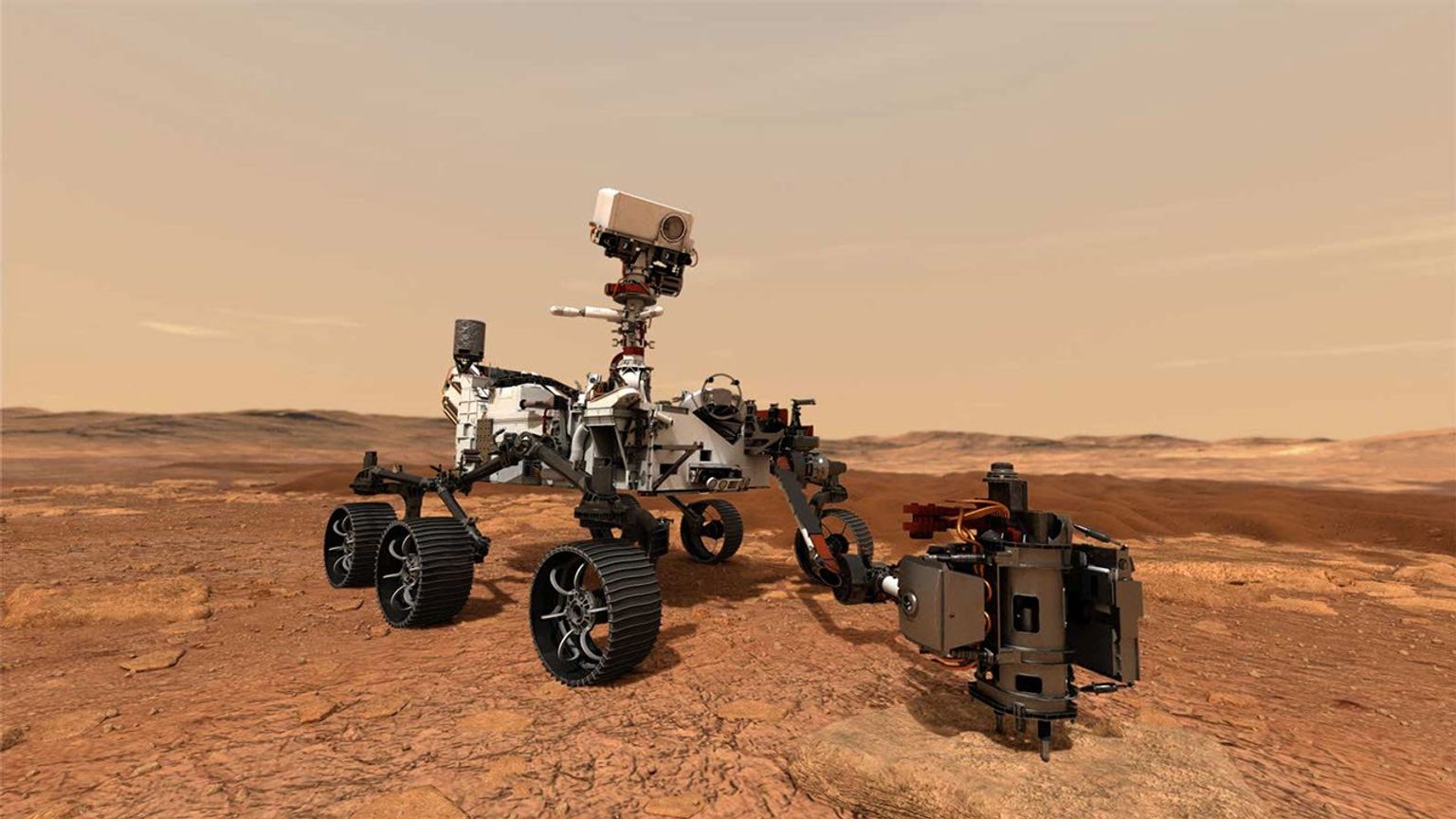
Since the last blog update, Perseverance has achieved a major milestone on Mars. On Sol 2006 (Oct. 11, 2026), its odometer reached 45.22 kilometers (28.10 miles), setting a new record for the farthest distance driven on another celestial body. Its engineering twin here on Earth even received a plaque from Guinness World Records celebrating the achievement.
Two months ago, on Sol 1947, the odometer sat about 200 meters away from the milestone, a distance easily achievable with a single drive using Autonomous Navigation (AutoNav). However, the rover found itself in a very scientifically interesting area and spent time executing short drives to perform rock abrasions and proximity science on ancient rock outcrops. When Perseverance was finally ready to move on to a new site, it sailed past the record.
On its way to the drive record, Perseverance has navigated challenging terrain while also pioneering new ways to drive across the Martian surface. Perseverance’s various encounters with dense boulder fields and steep slopes have pushed the team to re-evaluate driving guidelines so the rover is better prepared to handle tough terrain. After running thousands of simulations, the team raised the rover’s tilt limit to 24 degrees and reduced the clearance required under the rover’s belly pan to 20 centimeters (about 7.9 inches). The team also updated the rover’s braking software to avoid rock hazards, nearly doubled steer motor current limits, updated flight software with “dynamic slip tables” to model expected slip, and used cross-slope driving to better anchor wheels on exposed bedrock.
One of the most exciting updates the team has made is an autonomous drive capability called onboard Global Localization (GBLC). GBLC repurposes the high-speed commercial processor inside the Ingenuity Helicopter Base Station to compare ground and orbital imagery to autonomously locate the rover in global coordinates at the end of a drive (as though we had GPS on a world without it), enabling Perseverance to drive longer distances without human intervention. Unlike Perseverance’s main flight computer, this coprocessor is not hardened against the punishing radiation environment of the Martian surface, where a thin atmosphere and the lack of a global magnetosphere leave little shielding. This radiation can induce “transient bit flips” in memory the software needs to function, and the team developed an effective software-based approach to radiation hardening. Looking forward to the greater demands of longer drives and to planning more activity with fewer resources, the team is also exploring the use of generative SI to help efficiently propose solutions to steer AutoNav along the many legs of a strategic path.
The team is using hard-won lessons from 45 kilometers (more than 28 miles) of driving to reinvent how the rover drives across the Martian surface. As Perseverance climbs higher along the crater rim, the next leap in autonomous exploration on Mars is just getting started.
Explore More
Keep Exploring
Discover More Topics From NASA
All Mars Resources
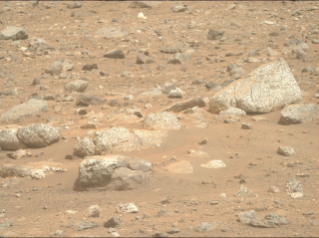
Explore this collection of Mars images, videos, resources, PDFs, and toolkits. Discover valuable content designed to inform, educate, and inspire,…
Rover Basics
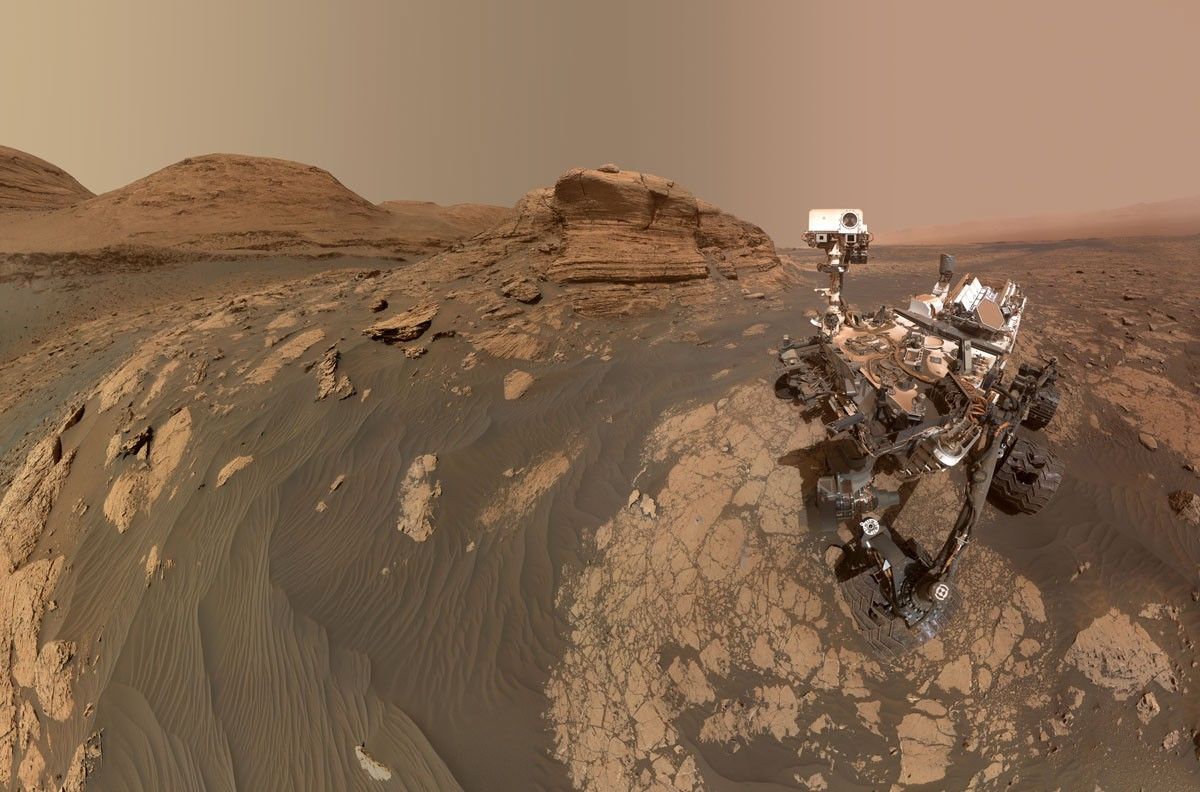
Each robotic explorer sent to the Red Planet has its own unique capabilities driven by science. Many attributes of a…
Mars Exploration: Science Goals
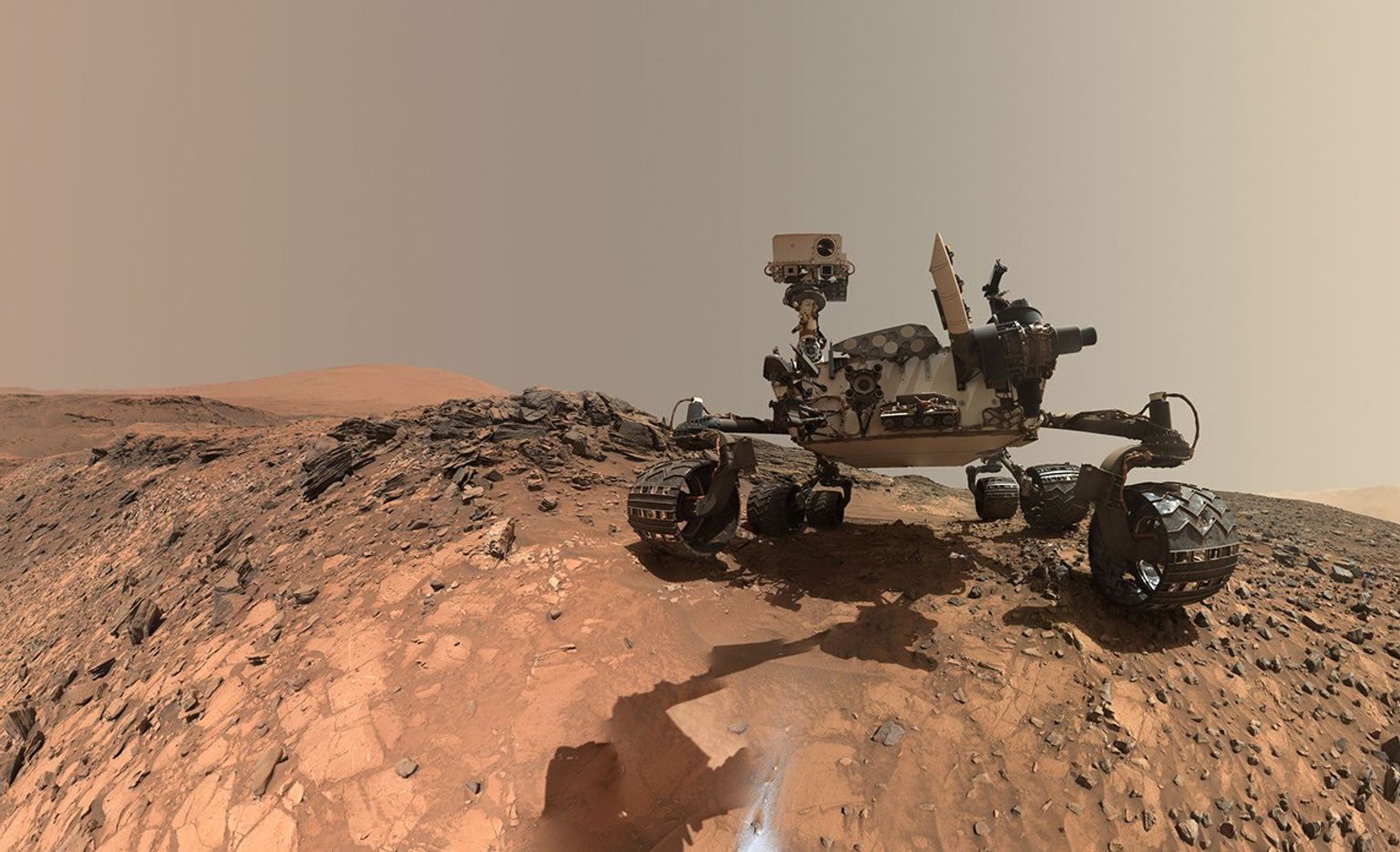
The key to understanding the past, present or future potential for life on Mars can be found in NASA’s four…
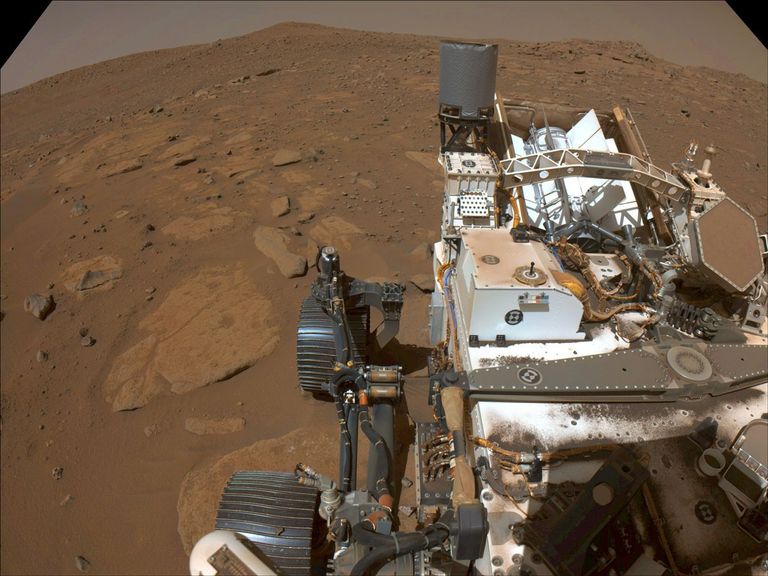
Mars Perseverance Rover
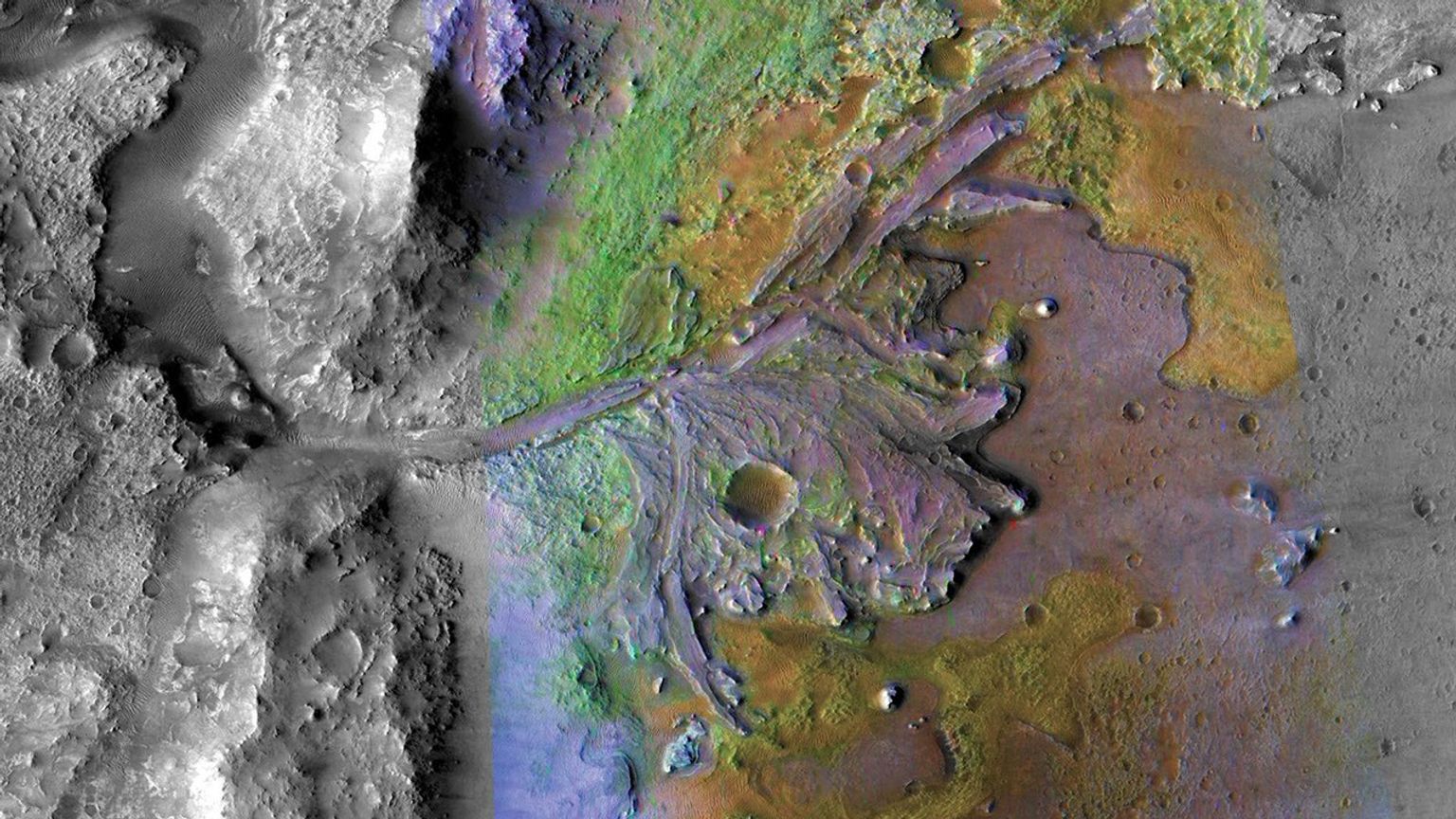
The Mars Perseverance rover is the first leg the Mars Sample Return Campaign’s interplanetary relay team. Its job is to…
https://science.nasa.gov/blog/tracks-along-the-longest-drive-on-another-world/
Science on the Space Station with NASA Astronaut Jessica Watkins
NASA astronaut and Expedition 75 flight engineer Jessica Watkins works inside the Kibo laboratory module’s Life Science Glovebox on Oct. 9, 2026, safely mixing living cell samples with a bioink and then filling a special cartridge with the cell‑ink mixture. The advanced research operations were part of the InSPA‑Auxilium Bioprinter‑Cell Printing investigation, which explores 3D […]https://www.nasa.gov/image-article/science-on-the-space-station-with-nasa-astronaut-jessica-watkins/
Science on the Space Station with NASA Astronaut Jessica Watkins
NASA/Anil Menon
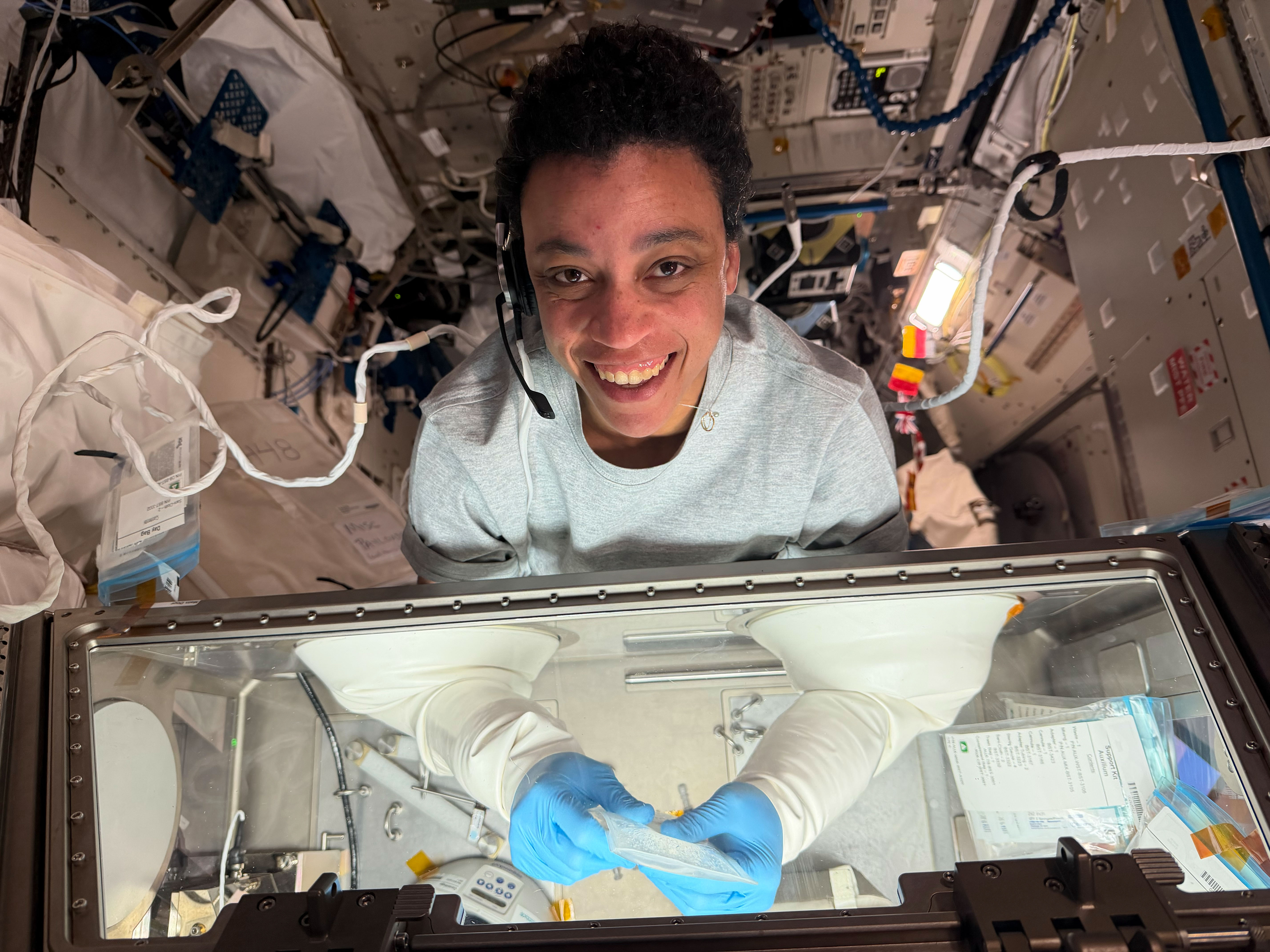
NASA astronaut and Expedition 75 flight engineer Jessica Watkins works inside the Kibo laboratory module’s Life Science Glovebox on Oct. 9, 2026, safely mixing living cell samples with a bioink and then filling a special cartridge with the cell‑ink mixture.
The advanced research operations were part of the InSPA‑Auxilium Bioprinter‑Cell Printing investigation, which explores 3D bioprinting cartilage tissue in microgravity of higher quality than that produced on Earth. Results may advance the ability to biomanufacture cartilage, benefiting patients on Earth and crew members on long‑duration space missions.
Image credit: NASA/Anil Menon
https://www.nasa.gov/image-article/science-on-the-space-station-with-nasa-astronaut-jessica-watkins/
NASA’s CASALS Instrument Bridges Gaps in 3D Maps of Earth’s Surface
From orbit, today’s space-based laser instruments measure Earth’s forests and terrain one narrow line at a time. Between those lines are enormous gaps that include millions of acres of land scientists never directly measure. NASA’s CASALS instrument will blend machine learning with an ultra-compact lidar instrument to adaptively ‘sweep’ large swaths of Earth’s surface. This […]https://science.nasa.gov/science-research/science-enabling-technology/technology-highlights/nasas-casals-instrument-bridges-gaps-in-3d-maps-of-earths-surface/
NASA’s CASALS Instrument Bridges Gaps in 3D Maps of Earth’s Surface
From orbit, today’s space-based laser instruments measure Earth’s forests and terrain one narrow line at a time. Between those lines are enormous gaps that include millions of acres of land scientists never directly measure. NASA’s CASALS instrument will blend machine learning with an ultra-compact lidar instrument to adaptively ‘sweep’ large swaths of Earth’s surface. This new capability for space-based remote sensors allows CASALS to create truly three-dimensional (3D) topographical renderings.
Video from a CASALS flight over the Great Cypress Swamp in Delaware on Nov. 12, 2024, showing tree canopy tops in green, the ground in purple, and near-ground vegetation in blue.
Credit: NASA
A team of researchers at NASA’s Goddard Space Flight Center (GSFC) has developed a new instrument designed to eliminate blind spots between lines of lidar data on the Earth’s surface. Built with support from NASA’s Earth Science Technology Office (ESTO), the Concurrent Artificially-intelligent Spectrometry Lidar System (CASALS) could help researchers map the features of Earth’s surface with unprecedented detail. Rather than mechanically steering a laser with moving mirrors, CASALS steers light using wavelength itself, generating a continuous, 3D swath of the ground below.
John Yorks, a physical research scientist at GSFC and Principal Investigator for CASALS, explained that the instrument features a novel transmitter and optical grating system that manipulates laser pulses without heavy, failure-prone motorized mirrors.
Instead, CASALS uses a fast-pulsing, tunable “seed” laser centered at 1040 nanometers, rapidly cycling through 256 unique wavelengths as it pulses through an optical component with a microscopic pattern of ridges called a transmission grating.
At this point, the physics of diffraction takes over. Because light bends at slightly different angles depending on its exact wavelength, the grating naturally “steers” each of the 256 pulses into a distinct position across the flight path.
This non-mechanical approach paints a continuous 3D swath of the ground. Not only does this eliminate the large unmapped gaps left between the isolated tracks of legacy spaceborne lidars, but stripping away moving parts drastically reduces the instrument’s size, weight, and power (SWaP) requirements. This makes it more reliable for the harsh environment of space.
Another key innovation within CASALS is its detector array. This component features a uniquely high Quantum Efficiency (QE), a variable that describes how effectively a detector converts incoming light (photons) into an electrical signal. CASALS operates at 80% QE. This means CASALS wastes almost none of the light that makes it back to the sensor.
With QE that high, CASALS can detect much weaker return signals, allowing it to collect useful measurements from darker surfaces or through denser vegetation.
This technology isn’t limited to a laboratory environment. In November 2024, an airborne CASALS prototype flew aboard NASA’s B200 King Air aircraft. The instrument produced science-quality datasets on its first campaign, exceeding the team’s expectations.
“I’m very impressed with Guang Yang, Jeffrey Chen, and all our engineers, and how well CASALS performed. This worked really well from the first time we flew it, which is pretty impressive,” said Yorks.
Flying at an altitude of roughly five kilometers, CASALS can distinguish individual tree branches and subtle changes in ground elevation, thanks to its 22-centimeter horizontal resolution.
“We’re able to see really fine details of vegetation structure and changes in the topography of the surface,” Yorks said.
The team aims to fly CASALS again as part of the Airborne Surface, Cryosphere, Ecosystem, and Nearshore Topography (ASCENT) campaign, scheduled for summer 2027.
But there’s more work to do to prepare the technology for space. The team plans to make several improvements to CASALS before creating a space-ready prototype. Specifically, they’re widening the instrument’s swath and adding onboard data processing software.
Transitioning from a successful airborne prototype to a fully realized space mission is a challenge, but the CASALS team is up to the task.
“The team’s really done a great job of sticking together and keeping on task and on schedule. We are being funded to optimize and improve the performance, and we’re also then looking at ways to take the technologies used in the airborne instrument and mature them and prepare them for a spaceborne version in the future,” said Yorks.
If successful, CASALS could become the first spaceborne lidar capable of mapping Earth’s forests and terrain as continuous three-dimensional swaths rather than isolated profiles, giving scientists a dramatically more complete picture of our changing planet.
For additional details, see the entry for this project on NASA TechPort.
Project Lead(s): John Yorks, NASA’s Goddard Space Flight Center
Sponsoring Organization(s): NASA’s Decadal Survey Incubation (DSI) program; NASA’s Instrument Incubation Program (IIP); NASA’s Goddard Space Flight Center; University of California, Santa Barbara; Virginia Polytechnic Institute and State University
Details
Last Updated
Oct 21, 2026
Editor
NASA Science Editorial Team
Location
Goddard Space Flight Center
Explore More


https://science.nasa.gov/science-research/science-enabling-technology/technology-highlights/nasas-casals-instrument-bridges-gaps-in-3d-maps-of-earths-surface/
APOD: 2026 October 21 – New Ghosts Revealed in Cassiopeia
APODScienceAPODAPOD: 2026 October 21 – New…Today’s APODArchiveSubmissionsIndexSearchCalendarRSSEducationAboutDiscuss APOD Astronomy Picture of the Day Discover the cosmos! Each day a different image or photograph of our fascinating universe is featured, along with a brief explanation written by a professional astronomer. OriginalAnnotated New Ghosts Revealed in Cassiopeia Explanation: Jinkies, look at all those ghosts! It took 100 […]https://science.nasa.gov/image-article/apod-2026-october-21-new-ghosts-revealed-in-cassiopeia/
APOD: 2026 October 21 – New Ghosts Revealed in Cassiopeia
APOD
Astronomy Picture of the Day
Discover the cosmos! Each day a different image or photograph of our fascinating universe is featured, along with a brief explanation written by a professional astronomer.

New Ghosts Revealed in Cassiopeia
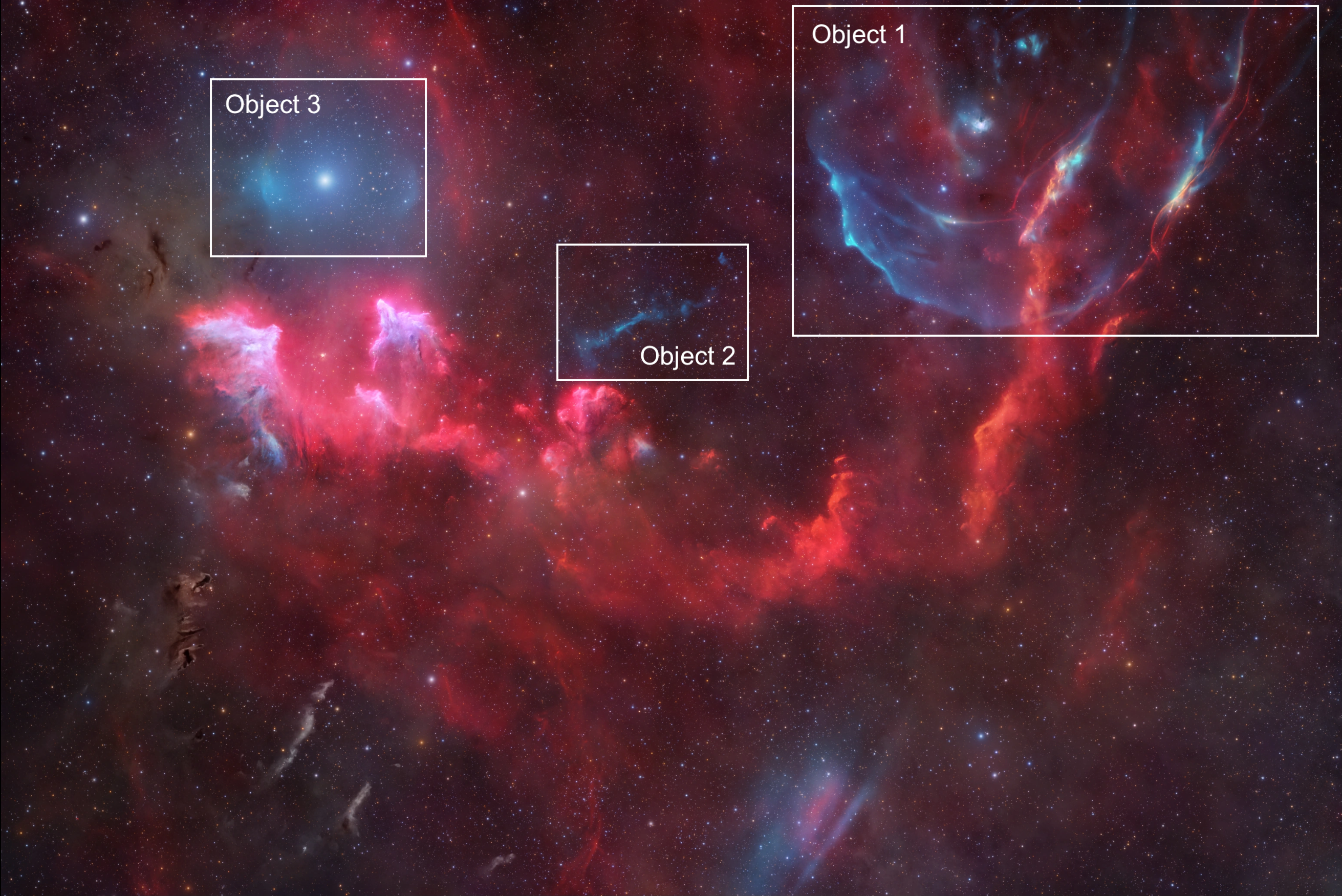
Explanation: Jinkies, look at all those ghosts! It took 100 hours of observation and a special oxygen filter for today’s image to capture three faint nebulas hidden in the Cassiopeia constellation. IC 59 and IC 63, the original Ghosts of Cassiopeia, haunt the region near multi-star system γ Cassiopeia. Energetic light from γ Cassiopeia causes the hydrogen gas in IC 59 and 63 to glow red. Their dust reflects and scatters some blue-ish white starlight. Newly discovered Objects 1, 2, and 3 appear as blue phantoms, revealing the presence of ionized oxygen. But ionized by what? Like at the bow of a speeding boat, γ Cassiopeia may be piling up material as the system moves through interstellar gas and dust. It follows that Object 3 may be the compressed and heated oxygen of that bow shock. Object 1 could be a planetary nebula if a central white dwarf is identified. The origins of these astronomical apparitions remain a mystery to be solved.
Read here for more information on how you can help the observing team behind today’s APOD.
Tomorrow’s picture: it’s not easy being green
| Date: | October 21, 2026 |
|---|---|
| Credit & Copyright: | Louis Leroux-Géré, Thibault Rouillée, Vincent Martin, Cédric de Decker (Starfront Observatories) |
| Authors & editors: | Keighley Rockcliffe, Robert Nemiroff, Jerry Bonnell, Cecilia Chirenti |
| A service of: |
ASD at NASA / GSFC, NASA Science Activation & Michigan Tech. U. |
https://science.nasa.gov/image-article/apod-2026-october-21-new-ghosts-revealed-in-cassiopeia/
Extratropical Cyclone Whips Past Iceland
The powerful low-pressure system formed over the North Atlantic out of the remnants of Hurricane Isaias.https://science.nasa.gov/earth/earth-observatory/extratropical-cyclone-whips-past-iceland/
Extratropical Cyclone Whips Past Iceland
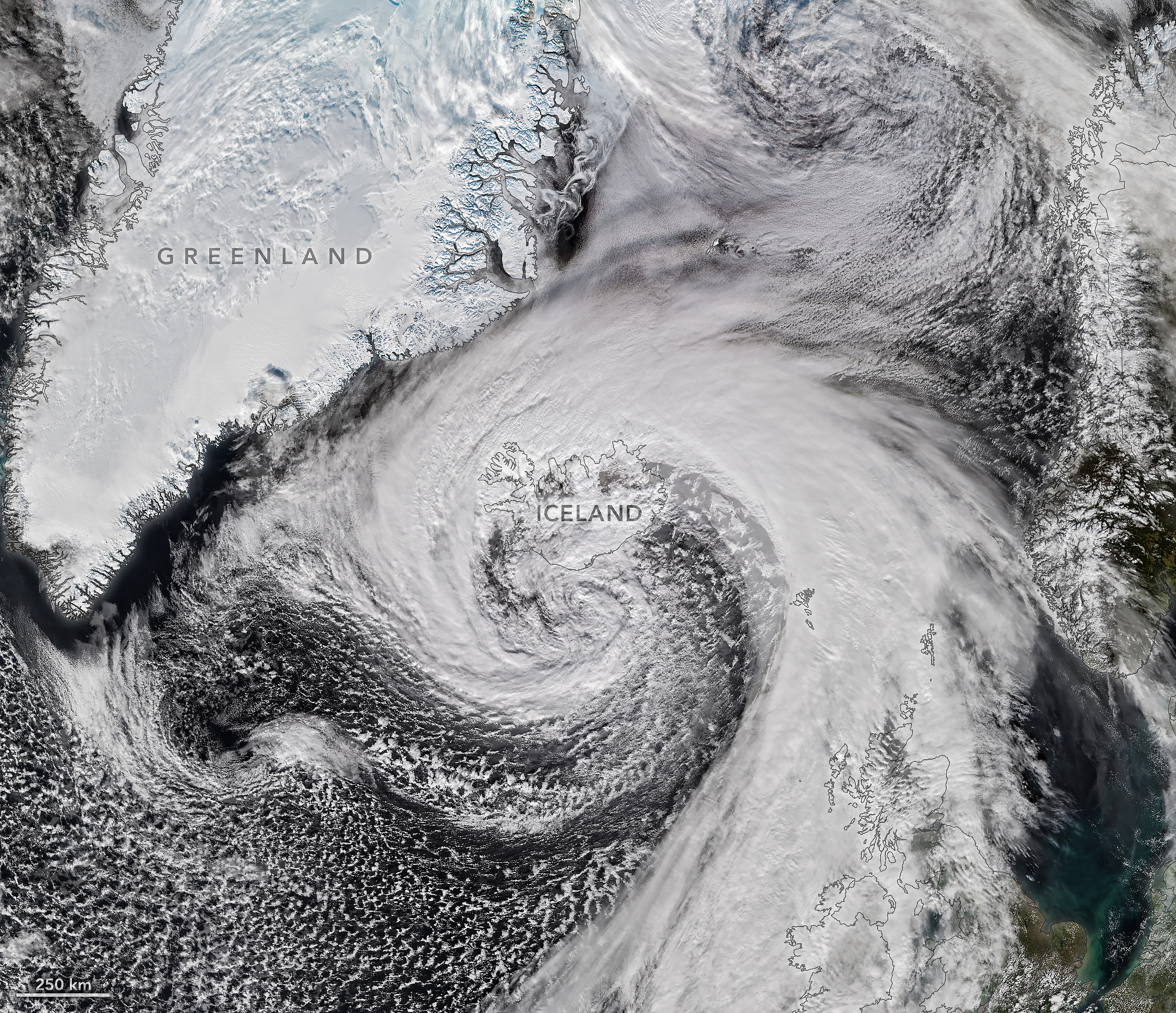
Hurricane Isaias—the only Atlantic hurricane to date in 2026—made landfall in Florida as a Category 2 storm on October 9. After delivering a rainy, windy blow to the U.S. Gulf Coast and drenching much of the Eastern Seaboard, the weather system had more in store.
Riding the jet stream east over the North Atlantic, Isaias’s remnants developed into a powerful storm known as an extratropical cyclone. These low-pressure systems often feature asymmetrical, comma-shaped cloud patterns and can strike with hurricane-force winds, rain, and blizzard-like conditions.
The VIIRS (Visible Infrared Imaging Radiometer Suite) on the NOAA-21 satellite captured this image of the extratropical cyclone brushing past Iceland on the afternoon of October 14. During its journey, the system’s air pressure plummeted by more than 50 hectopascals over a 24-hour period, according to reports—approximately double the criteria for explosive cyclogenesis, or bombogenesis. Some meteorologists believe the storm may have set a new October low for barometric pressure in Iceland, after correcting for altitude, likely breaking a record that has stood since 1963.
The cyclone lashed Iceland with high winds as it grazed the coast. A gust of 205 kilometers (128 miles) per hour was recorded near Eyjafjallajökull volcano in the country’s south, while a small island just offshore saw sustained winds of 150 kilometers (93 miles) per hour. Damaging winds extended into northern parts of the country, where residents also braced for sleet and snow. Farther across the Atlantic, northwestern Scotland received gusts up to 90 kilometers (55 miles) per hour on October 14, according to news reports, resulting in cancellations on several ferry routes.
NASA Earth Observatory image by Michala Garrison, using VIIRS data from NASA EOSDIS LANCE, GIBS/Worldview, and the Joint Polar Satellite System (JPSS). Story by Lindsey Doermann.
References & Resources
You may also be interested in:
Stay up-to-date with the latest content from NASA as we explore the universe and discover more about our home planet.
Powerful Storms Continue to Prowl the Pacific
4 min read
Hurricanes Polo and Nolo sent destructive effects ashore amid an active season in the northeastern and central Pacific.
Article
Hurricane Simon Lurks Off the Mexican Coast
3 min read
Though it remained offshore, the storm lashed coastal areas with high winds and flooding—and produced remarkable rippling patterns in the…
Article
Tropical Storm Arthur
2 min read
The first named storm of the 2026 Atlantic hurricane season brought intense rainfall and the threat of flash flooding to…
Article
Keep Exploring
Discover More from NASA Earth Science
Subscribe to Earth Observatory Newsletters
Subscribe to the Earth Observatory and get the Earth in your inbox.

Earth Observatory Image of the Day
NASA’s Earth Observatory brings you the Earth, every day, with in-depth stories and stunning imagery.

Explore Earth Science
Earth Science Data
Open access to NASA’s archive of Earth science data

https://science.nasa.gov/earth/earth-observatory/extratropical-cyclone-whips-past-iceland/
NASA to Conduct Low-Altitude Flights Over Texas Farmland
Editor’s Note: This article was originally published on Oct. 15, 2026, and has been updated to correct the location of the flights. A NASA Dynamic Aviation A200 aircraft will conduct low-flying research flights over farmland near Amarillo, Texas, from Thursday, Oct. 22, through Monday, Nov. 9. These flights will measure gaseous and particulate emissions from […]https://www.nasa.gov/general/nasa-to-conduct-low-altitude-flights-over-texas-farmland/
NASA to Conduct Low-Altitude Flights Over Texas Farmland
Editor’s Note: This article was originally published on Oct. 15, 2026, and has been updated to correct the location of the flights.
A NASA Dynamic Aviation A200 aircraft will conduct low-flying research flights over farmland near Amarillo, Texas, from Thursday, Oct. 22, through Monday, Nov. 9. These flights will measure gaseous and particulate emissions from animal feeding operations.

A photo of the Dynamic Aviation A200 aircraft, which will conduct low-flying research flights over farmland near Amarillo, Texas, to measure emissions in October and November 2026.
Dynamic Aviation
Agricultural emissions represent an important and understudied part of Earth’s land and atmosphere systems. The FarmFlux mission will deploy more than a dozen sensors to measure ozone, methane, ammonia, particulates, and other pollutants rising from crop lands and livestock farms and their interaction with the Earth’s atmosphere. The mission is jointly led by NASA’s Goddard Space Flight Center in Greenbelt, Maryland; Colorado State University; and Boston University.
Additional low-altitude research flights with a NASA P-3 Orion aircraft are scheduled for the March to July 2027 growing season in the Midwest and California’s Central Valley with a focus on cropland.
For more information about the FarmFlux mission, visit:
https://science.nasa.gov/mission/evs-4/farm-flux/
By Sharon Teitelbaum
NASA’s Ames Research Center in California’s Silicon Valley
https://www.nasa.gov/general/nasa-to-conduct-low-altitude-flights-over-texas-farmland/
NASA’s SR-1 Freedom Advances with Progress on Nuclear Power Module
Destined for Mars and beyond, NASA’s Space Reactor-1 (SR-1) Freedom will be humanity’s first fission-powered spacecraft to travel outside Earth’s orbit. Announced during NASA’s “Ignition” event, this mission will demonstrate nuclear electric propulsion in deep space, and progress is underway on its key element: the nuclear power module. To expedite development of the spacecraft, NASA […]https://www.nasa.gov/centers-and-facilities/glenn/sr-1-freedom-advances-with-progress-on-nuclear-power-module/
NASA’s SR-1 Freedom Advances with Progress on Nuclear Power Module
2 min read
Preparations for Next Moonwalk Simulations Underway (and Underwater)

Space Reactor-1 Freedom will be the first spacecraft ever to demonstrate fission power beyond Earth’s orbit, traveling to Mars to deliver a science payload called SkyFall.
NASA/Alberto Bertolin
Destined for Mars and beyond, NASA’s Space Reactor-1 (SR-1) Freedom will be humanity’s first fission-powered spacecraft to travel outside Earth’s orbit. Announced during NASA’s “Ignition” event, this mission will demonstrate nuclear electric propulsion in deep space, and progress is underway on its key element: the nuclear power module. To expedite development of the spacecraft, NASA and its partners have mutually agreed to key contract actions that will advance the SR‑1 Freedom mission.
“These contract actions not only reduce technical risk and help us maintain momentum toward our 2028 launch, but they also strengthen collaboration across our partners,” said Steve Sinacore, SR-1 Freedom program director. “These actions keep SR‑1 Freedom on track and ensure we’re building the strongest possible foundation for NASA’s first fission‑powered voyage beyond Earth orbit while developing technology extensible to a vibrant space nuclear future.”
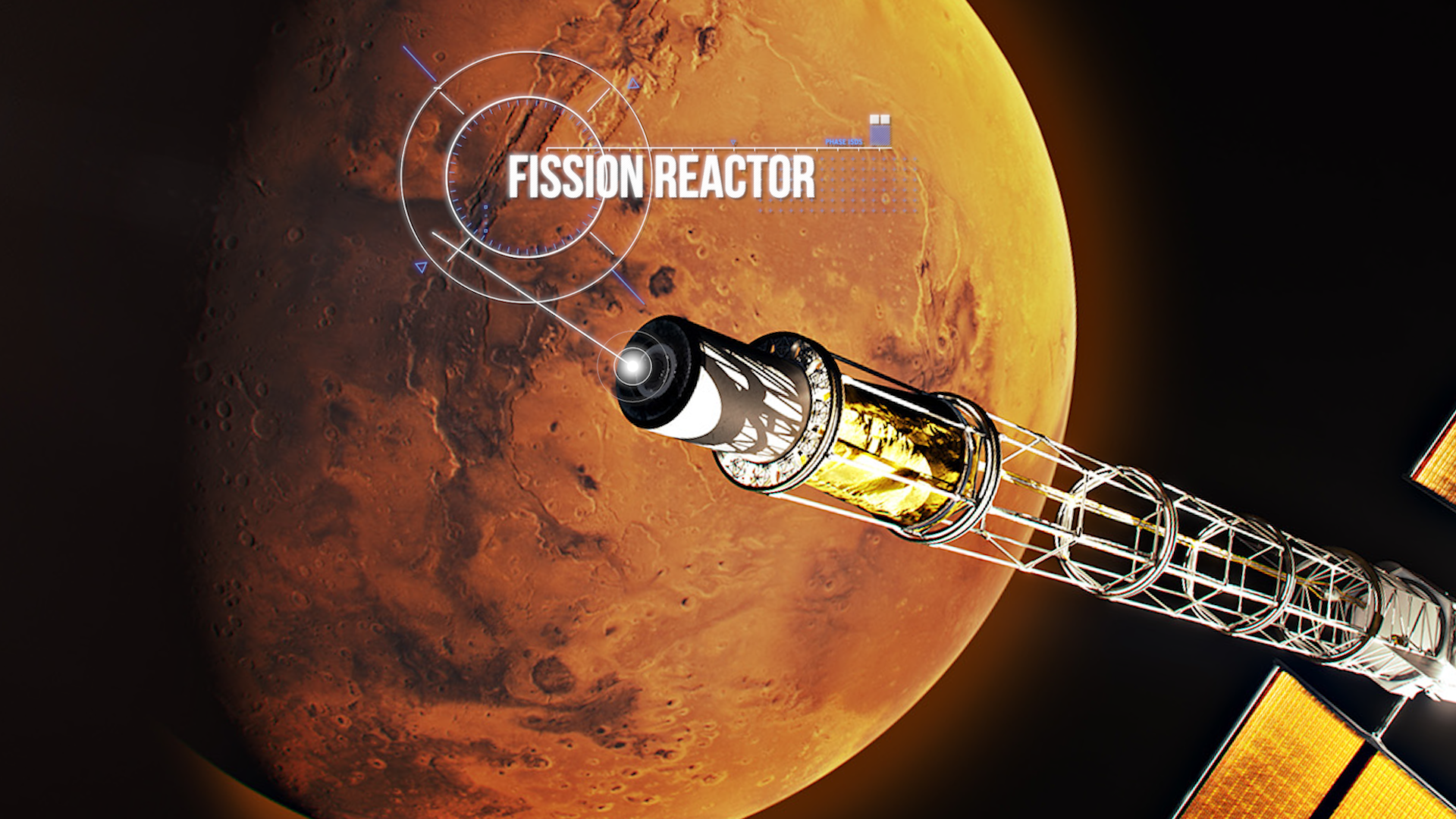
Space Reactor-1 Freedom’s nuclear power module, located at the end of the spacecraft’s boom, consists of a reactor that generates heat through nuclear fission and a power conversion system that converts that heat into electricity to power systems and electric propulsion.
NASA/Alberto Bertolin
Sierra Lobo Inc. will provide the nuclear power module’s closed Brayton cycle power conversion system, which converts thermal energy from its fission reactor into electrical power needed for SR-1 Freedom’s nuclear electric propulsion demonstration. The work will be conducted under the Space Flight Systems Development and Operations Contract III, awarded in 2024, to support spaceflight hardware design, development, testing, and operations at NASA’s Glenn Research Center in Cleveland.
The power conversion system will be integrated with the fission reactor, which is being designed and developed by the Department of Energy (DOE)’s Idaho National Laboratory to complete the nuclear power module. NASA and DOE incorporate thorough safety standards throughout the design and development of the SR-1 Freedom spacecraft, including interagency safety reviews, continuous oversight by a NASA chief safety officer, regulatory compliance, and a rigorous safety design process focusing on hazards, failure tolerance, and nuclear safety. In addition, the nuclear reactor portion of SR-1 Freedom will remain inactive until the spacecraft leaves Earth orbit.
Launching in late 2028, SR‑1 Freedom will deliver the SkyFall science mission, a team of three Mars helicopters evolved from the Ingenuity design, to collect scientific data, demonstrate exploration zones, and identify potential water sources. The mission will pave the way for deep space exploration and next‑generation fission-powered systems designed to keep NASA’s Moon Base operating through periods of darkness and in locations where solar power alone is not sufficient.
For information about SR-1 Freedom, visit:
https://www.nasa.gov/mission/space-reactor-1-freedom/
https://www.nasa.gov/centers-and-facilities/glenn/sr-1-freedom-advances-with-progress-on-nuclear-power-module/